Jordi Pujol and the damned "immediacy"
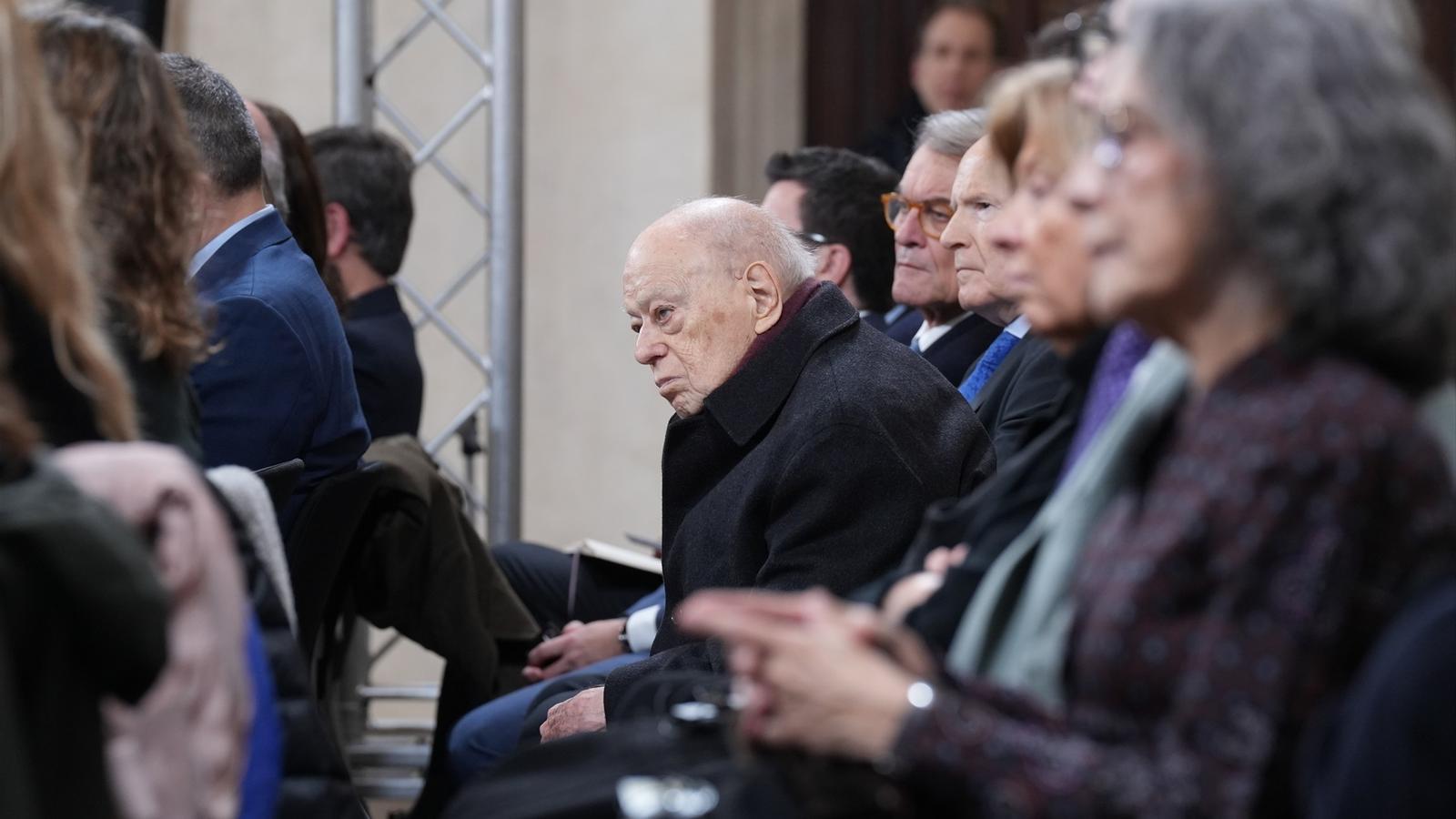

Former president Jordi Pujol, as was foreseeable, has been excluded from the trial against him and his family in the National Court. The reason has been the same that at the time removed his wife from the process: the lack of mental health, declared by the forensic doctors of Barcelona. And now from Madrid. A second examination was not necessary, because they belong to the same national body. And even less necessary was an examination by judges, because they are not doctors.
Making Pujol go to Madrid constitutes an unfortunately erroneous decision in substance and form that, even so, any other court would have made. The reason for the error is called “immediacy”, and it means, in this case, that judges must see the interrogated directly in a trial. The basis of immediacy, today forgotten, is that historically judges have been attributed the ability to know if someone is lying or not by looking at their gestures and general expressiveness. Thanks to the psychology of testimony, we now know for certain that this supposed ability is pure pseudoscience. Furthermore, a person's gesturality provides information that can provoke all sorts of sociological biases in judges, which can end up, in plain terms, by them valuing someone's credibility simply because they like or dislike them without being minimally aware.
Therefore, it is not essential for the judge to have the interrogated in front of him. The statements could all be made remotely, and in fact, laws try to promote this, although this specific use of technology still encounters too many resistances from judges, which will surely disappear sooner or later, as is already happening or happened a long time ago in almost all of Europe. Pujol's statement could have been, therefore, remote. Furthermore, we must add the fact that the accused have the right to remain silent. If the former president had exercised it, the trip would also have been in vain.
But apart from all of the above, what also made no sense is that a 95-year-old person with cognitive problems was being judged. Even without these problems, judging someone of such an advanced age should be impossible, because criminal proceedings are not held for nothing, but to ascertain facts, apply the law to them, and establish a treatment for the defendant that we call "penalty." Currently, even if it is always done, penalty should not be spoken of as "punishment," but, as has been said, as "treatment" to reintegrate the culprit into society. If this last purpose has not even the slightest prospect, the criminal proceeding ceases to make sense. And this is precisely what happens with a person of such an advanced age: what future prospect of reintegration does someone so extremely old have? None. When a proceeding is held, whether or not, against someone so old, the purpose is more of a truly questionable kind of social satisfaction, but one that has not prevented war criminals around 100 years old from being tried.
A separate issue is mental health. No one without full judgment can be tried in a criminal proceeding, out of respect for an institution that is also quite debatable today: self-defense. That is, the possibility for the defendant to defend himself, beyond his lawyers. The institution is outdated, and it has much more of literary romanticism than science, because the reality is that no one is in a psychological condition to defend himself any more or less than when a prison sentence is demanded of them. But the fact is that, debatable or not, the impossibility of this self-defense is what has justified the exclusion of the former president from this proceeding.
Two issues remain. When a defendant who played a very prominent role in the events being judged no longer has to be judged –usually due to incapacity or death–, it often simplifies the defense of the remaining accused, who can always blame everything on the absent party without any consequence.
The second issue is even more delicate: why do trials take so long to be held? This one began in 2014, and its first phase –the investigation– ended in July 2020, and since then we have been awaiting the current trial. The answer is the collapse of cases suffered by a court that long ago, as the heir to the Transition's “Public Order Tribunal”, should have disappeared: the Audiencia Nacional. One would have to ask if this inevitable delay in trials –the court is, in fact, small–, along with the political relevance of many of these processes, mean that there are no legislative plans for its essential abolition.
