The transfer of 70 children from an improvised camp in Ceuta: "It's like saying goodbye to mom"
The State places them in a new warehouse awaiting their transfer to the Peninsula and social entities lash out at the inaction

-
CAT -
CAST
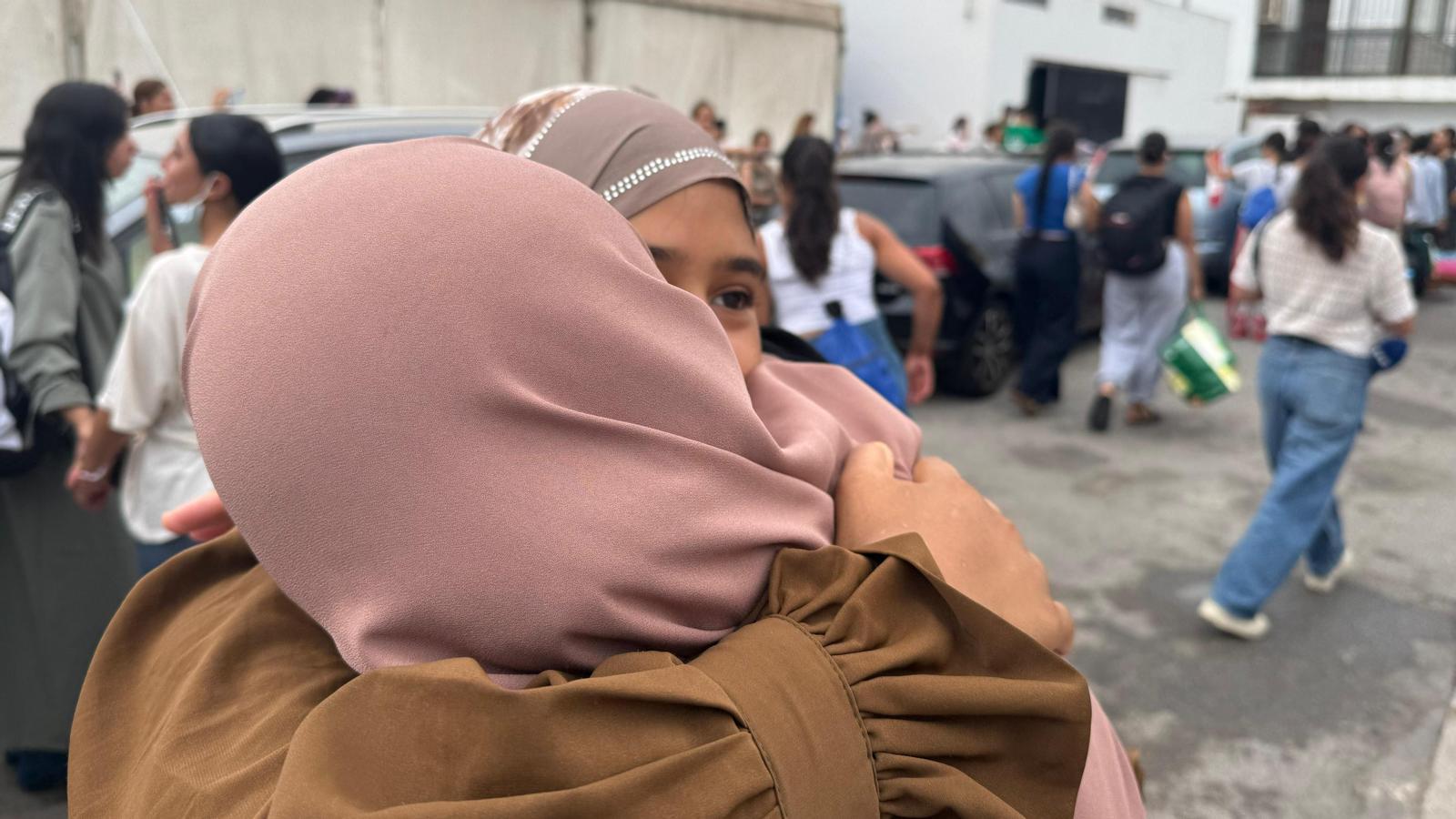
CeutaKarima Mustafá probably had never received so many expressions of affection in a row as this Tuesday. She is, along with her son Abdellah, the coordinator of the Sidi Embarek camp in Ceuta, next to the mosque that bears the same name, where in the last month many of the minors and women who arrived in the city during the massive influx of people at the end of July have slept. She doesn't stop shouting and gesturing with her arms at the entrance of the enclosure, where there is a sign indicating that no one else can enter, that they have been full for days. In her hand, she holds the paper with the names of the almost 70 girls that the State is transferring this morning to a new space set up just for them. She tries to organize them, to make them form a line, but they don't pay much attention to her and instead of positioning themselves where Karima asks them to, they throw themselves into her arms and thank her.
"I try not to cry, but I get emotional, I'm very happy for them. But I don't want them here anymore anymore," explains this Ceuta resident, laughing, who in the last month has had to do everything possible to respond to all these people. While she attends to them, she gives kisses and hugs; no one wants to leave without saying goodbye to Karima, many of them with teary eyes and sobbing. "This was like their home, we have been a big family. They cry because it's like saying goodbye to their mother," assures the head of the camp, who puts on a brave face and diverts attention with jokes. "I'm a little surprised, considering how many arguments we've had, huh," she says between hugs. National Police agents coordinate the operation and check that all the girls on the list are in line. Finally, the State will assume their care, one month after they arrived in the City.

"It is a situation that the Administration should have faced," laments Abdellah, Karima's son, who along with her coordinates this camp. There are still about 250 women in the tent, but he clarifies that they will have to triage again because there are people who have voluntarily returned to Morocco after a month of being helpless. In addition, many do not notify them when they leave, which makes it difficult to know how many people are sleeping there. It is a device that these city residents improvised to attend to newly arrived girls and women so that they would not have to sleep on the street, at the mercy of any kind of violence. Since the massive entry a month ago, the Prosecutor's Office has recorded 23 sexual assaults – five of which are rapes – among the migrants in Ceuta. Nine of these victims are girls between 14 and 17 years old.

"We will continue until we can"
Abdellah believes that the Spanish government has been unprofessional in managing this migratory crisis, the worst in recent years in which at least 140 people have died. "They haven't told us anything, nor have they given us any explanation. 25 days ago [the transfer of the rest of the women] was supposed to be imminent and yesterday they were telling us it was supposed to be imminent. That is to say, they continue to do nothing," he laments. He explains that he is exhausted and admits that there have been times when they have considered laying off all these people and letting them fend for themselves, but for now he assures that they will continue to make an effort to assist them. "There is no other choice, we will continue as long as we can, because we will surely reach a point where we can no longer."
He does rule out, however, that with the departure of these seventy or so girls, more people will enter the camp, because after this last month they want to rest and will only assist those people they have already registered. The unknown remains how long they will stay, and Abdellah responds forcefully when asked what timelines they have planned. "When the government of the nation feels like working. Then we will have the tent empty," he snaps.
"What will become of us"
The hundreds of women who will continue to sleep in the camp in the coming days observe how the youngest continue to queue under the watchful eye of the police to move to a new space. As ARA has learned, it is a warehouse located in El Tarajal, next to the border that many of them crossed a month ago. This new space began to operate this Tuesday and will receive girls from different parts of the city. In addition, there are about 250 in another warehouse that had already been relocated a few days ago, as sources familiar with the matter told this newspaper. The child protection system has registered 1,478 unaccompanied migrant children in Ceuta, but it is estimated that around 1,200 more are still waiting to be identified.
Now it is the turn of the girls from Sidi Embarek, who no longer have time to say goodbye and are already beginning to parade. Karima explains that the question they asked themselves the most was "what will become of us", they were worried and there have been nights when they have been very nervous. Now they smile and wave goodbye as they move away from the camp to those who are staying. They still have no certainty a month after their arrival in the city.
