Global oligarchies, local inequalities
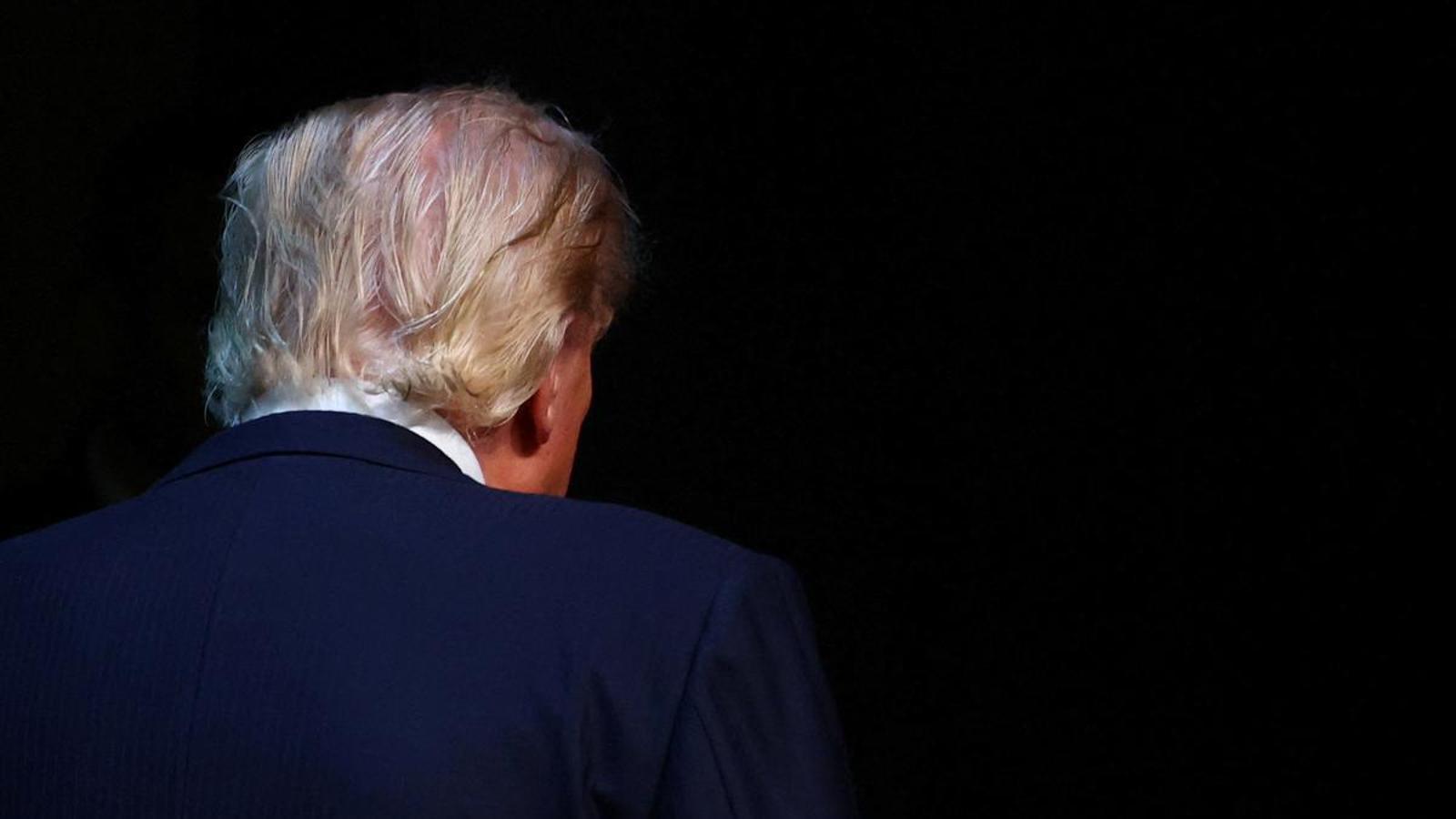

The level of enrichment of Donald Trump since the presidency of the United States is historically unprecedented. During his first year back in the White House, Trump has obtained approximately 1.4 billion dollars in new income from cryptocurrency companies that directly benefited from his decisions as president. According to a report from the Office of Government Ethics, in 2025 Trump's income grew by a minimum of 2.2 billion dollars, compared to the 622 million achieved in 2024, before returning to occupy the Oval Office. In addition, the real estate operations of the Trump empire – both in the Persian Gulf and around the world, from Vietnam to Romania – have also generated tens of millions of dollars in new income for the presidential family conglomerate.
Trump has become a symbol of excess, wealth concentration, resource capture, and a disregard for conflicts of interest that fully erodes the American democratic system.
Economist Paul Krugman has recently written about how the United States has ended up becoming an oligarchy, from the financial engineering of the mid-1980s to the monopolistic power of today's big tech companies. But the problem is not just about figures and concentration, but about how this money is distorting politics and democratic processes, and transforming societies and interpersonal relationships.
The enormous wealth inequality gap in the United States is mainly determined by the difference between those who own the technology of the future and those who work for a living. AI has become a decisive factor. Furthermore, some of the most prominent figures in this new Silicon Valley aristocracy boast of publicly declaring themselves skeptical about concepts like egalitarianism and talk about the consolidation of a “underclass” determined by the impact of technology on jobs.
We find ourselves at a time when new and old uncertainties converge in a context of exceptional turbulence. The global economy faces a “polycrisis of globalization”, as some experts call it, a consequence of a superposition of interconnected challenges: the trade war between the United States and China, the impact of technology, the retreat brought about by the covid-19 pandemic, and the crisis of liberal democracy, which translate into economic and political fragmentation. But global rivalry also has a local impact.
Therefore, although inequalities between countries have decreased in recent decades, the gap between individuals within the same society has widened. The rapid growth of so-called emerging economies – especially in China and India – lifted hundreds of millions of people out of poverty and integrated them into a global middle class. This reduction in inequality occurred, above all, between 1990 and 2015. But since then, this dynamic has stagnated and convergence has faded. Meanwhile, inequality within countries has skyrocketed almost everywhere. The sense of grievance also grows, because while inequality between countries is abstract, inequality within a territory or society is profoundly personal.
In Europe, the top 10% of fortunes accumulate almost 60% of all continental wealth, while the bottom 50% own only 5%. In Latin America, the richest 10% own 77% of all wealth, while the bottom 50% reach only 1%. Fifteen years ago, the combined wealth of billionaires worldwide was 4.5 trillion dollars. In 2024, this figure had more than tripled, reaching 14.2 trillion dollars. These are figures from the International Tax Observatory, a research organization funded by the European Union, led by the French economist Gabriel Zucman.
Inequality is not just an economic problem; it is also social and political. The European Union has seen how this concatenation of crises that have marked the 21st century have profoundly eroded the redistribution system of the European social model and how this has translated into a crisis of confidence in the legitimacy of the community's economic and political system. But it is not solely a challenge for democratic societies. The revolts of Generation Z, which from 2024 to today have spread around the world, demonstrate that discontent over wealth disparity and lack of opportunities is a global problem, regardless of the governmental systems complicit with these inequalities.
