From happiness to Trump
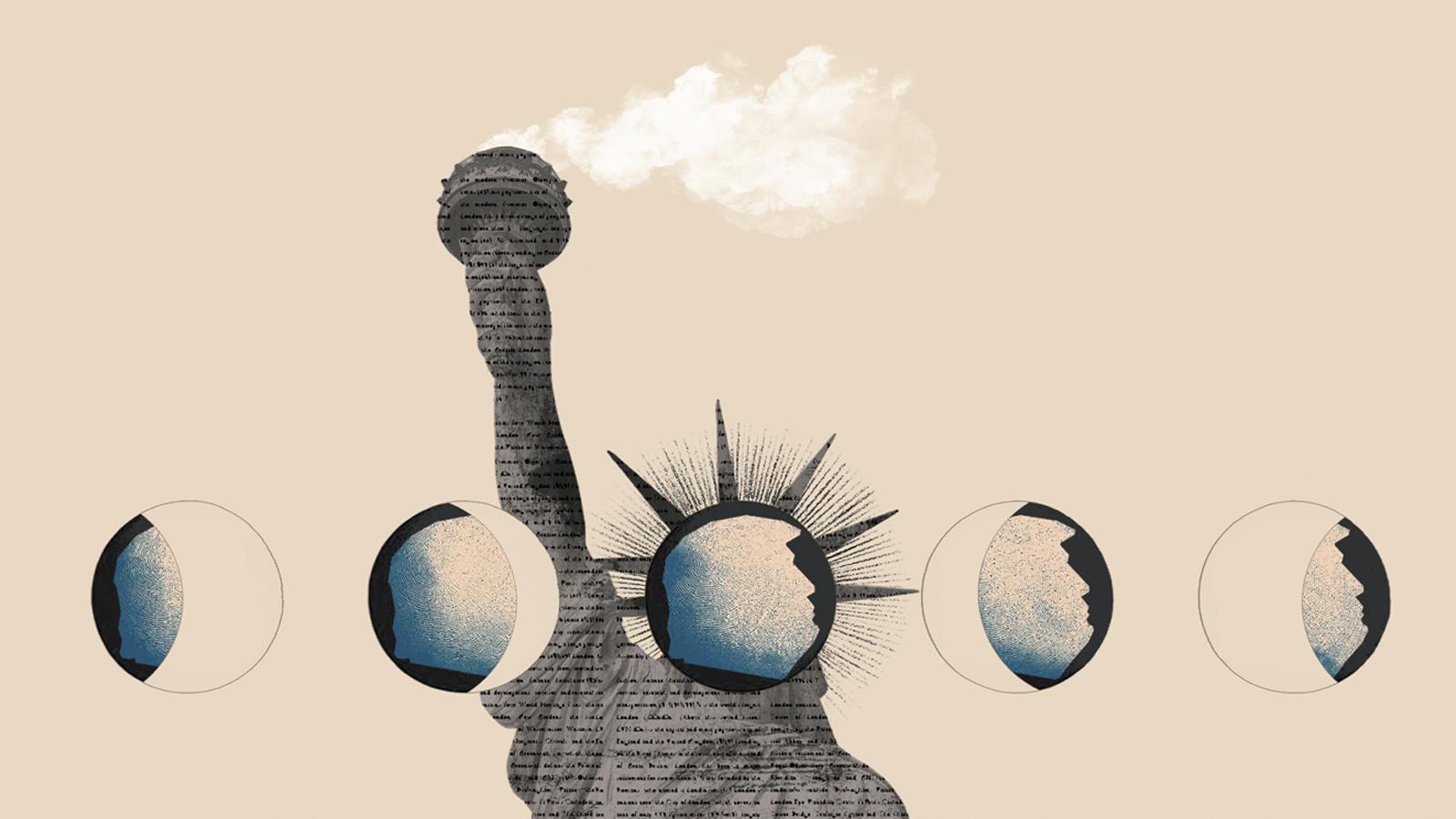

Barcelona“Life, liberty and the pursuit of happiness”. Few political formulas have had such a long life and such great force as these words from the Declaration of Independence of the United States. Approved on July 4, 1776, they represent a historical break: power could not derive from blood, from the crown, or from divine will, but from the rights of individuals and the consent of the governed.
The formula remains powerful because it is simple and radical. Life, liberty, and the pursuit of happiness are not privileges granted by rulers; they are rights that precede power. Government exists to protect them. And when it fails to do so, it loses its legitimacy.
This is the foundational intuition of the American republic. But it is also one of its deepest contradictions. The same men who proclaimed that “all men are created equal” held slaves, excluded women from political citizenship, and advanced westward at the cost of destroying indigenous peoples. The Declaration opened a universal promise, and the history of the United States has been, since then, a dispute over who could truly be part of that “all”.
American democracy was born as an aspiration and as a struggle. And, like almost everything, it has depended less on the nobility of its words than on the ability to make them effective. Democracies can fail not only due to a coup d'état, an invasion, or the arrival of a dictator. They can also degrade from within, when fear, polarization, and resentment lead a part of society to consider that the rules are no longer common.
John Adams, one of the founding fathers, understood this early on. He distrusted personal power as much as collective passions. He knew that leaders can present themselves as saviors while concentrating power, and that citizens can give up essential liberties when convinced that the internal enemy is more dangerous than the abuse of power.
Adams did not believe that liberty depended on having good rulers. He believed it depended on having institutions capable of limiting them. Hence his defense of the separation of powers, checks and balances, and constitutional equilibrium. Not because of human virtue, but because he knew ambition, vanity, and the capacity of power to justify itself all too well.
The difference with Thomas Jefferson was profound. Jefferson trusted the people more and the regenerative energy of revolutions. Adams feared that politics would turn into a war of factions, that the adversary would cease to be a fellow citizen with whom to disagree and become an enemy to be eliminated. When this happens, democracy ceases to be an imperfect form of coexistence and becomes a moral battle without limits.
The most uncomfortable thing is that Adams did not escape this temptation either; he supported the Alien and Sedition Acts, which allowed dissidents to be prosecuted and foreigners considered dangerous to be expelled, and Trump uses it today. The lesson is important: democracies do not lose freedoms solely to authoritarian leaders. They can also lose them when republican rulers, convinced they are facing an emergency, assume that security or national unity justify the exception.
This is the most profound mechanism of democratic suicide. It does not consist only in the powerful overstepping the limits. It consists in a part of society accepting that they overstep them. That fear makes arbitrariness tolerable. That indignation makes abuse acceptable. That the obsession with defeating the other side makes secondary the guarantees that should protect everyone.
The promise of 1776
The history of the United States offers another particularly harsh example. After the civil war, the country had a real opportunity to build a multiracial democracy. The abolition of slavery, constitutional amendments, and the political participation of African Americans opened up the possibility of giving effective content to the promise of 1776.
But that opportunity was abandoned. They turned African Americans' rights into a bargaining chip. The commitment to the withdrawal of federal troops from the South left the way open to segregation, racial terror, and disenfranchisement for decades.
It was not inevitable. It was a political decision. Multiracial democracy did not fail because it was impossible; it failed because order, stability, and reconciliation among whites took precedence over equality. There is always an apparently pragmatic justification for postponing some people's rights: an economic crisis, a decisive election, a national emergency, the need not to divide the country further. And, meanwhile, the postponement becomes a system.
The 250th anniversary of independence arrives at a time of crisis. The flag, the nation, and historical memory are partisan weapons. One part of the right demands a purified history, without slavery, without indigenous extermination, without segregation or exclusion. A history that confuses national pride with amnesia. And one part of the left runs the risk, at times, of speaking of the country only through its crimes, as if the democratic promise were an imposture.
But a democratic society does not need a clean history. It needs a certain history. It needs to be able to recognize that the Declaration of Independence of the United States was at once one of the great modern affirmations of freedom and a text born in a slave society. It needs to understand that that contradiction does not invalidate the promise, but rather obliges us to fulfill it.
