The Catalan Traffic Service and the Department of the Interior of the Generalitat de Catalunya are not participating in the Ministry of Transport's pilot plan, which is why this initiative will not reach the Catalan road network for the moment.
What are the red lanes that the DGT has already implemented in Madrid?
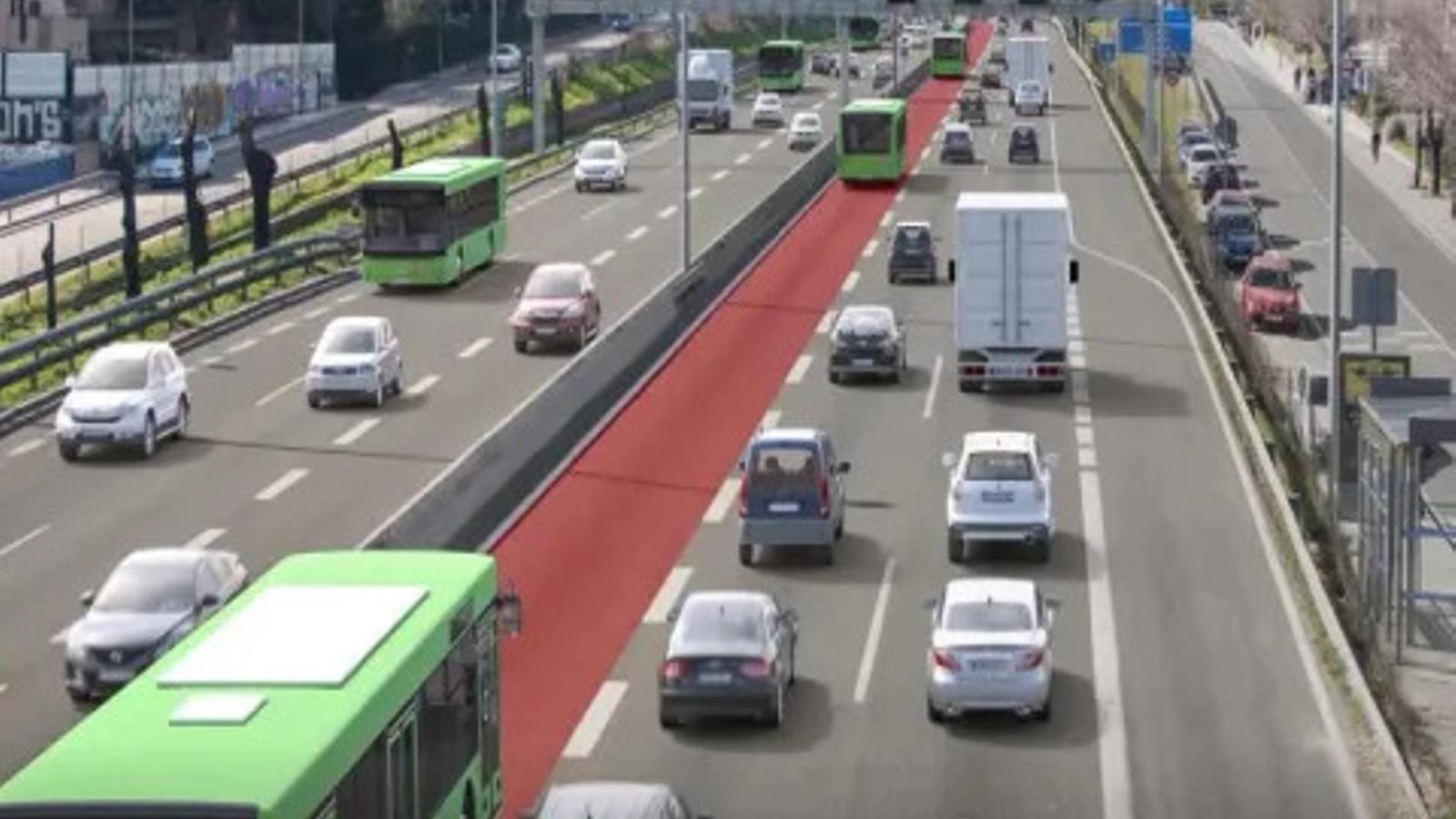
The A-2 highway premieres a new system of high-occupancy lanes in the stretch between the exit of Madrid and Torrejón de Ardoz
14/08/2026 - 20:41 h
-
CAT -
CAST
According to data from the Directorate-General for Traffic (DGT), 85% of vehicles circulating daily on the main access roads to Madrid do so with a single occupant, which generates significant traffic jams in the Spanish capital. One of the objectives of the director of the DGT, the Catalan Pere Navarro, is to reduce the volume of vehicles circulating with a single occupant by promoting shared vehicles for daily commutes, through the promotion of BUS-VAO lanes, that is, vehicles with an average occupancy significantly higher than that of the majority.During this month of August and during the first week of September, the DGT has promoted a new BUS-VAO lane model on the A-2 highway between the towns of Madrid and Torrejón de Ardoz, which has the peculiarity of painting the left lane of the road red for each direction of circulation. The initiative is born from a collaboration agreement between the Ministry of Transport of the Spanish government, the transport consortium of the Community of Madrid and the Madrid City Council.This is not a lane with a physical separation like most high-occupancy lanes we know, but it will function as a free-flow lane for most of the day, but it will be reserved for buses, vehicles with two or more occupants, and other authorized vehicles between 7:00 AM and 9:00 AM on weekdays in both directions of traffic, and between 3:00 PM and 5:00 PM heading out of the capital, also on weekdays. At this point, it is important to highlight that this new lane system does not discriminate against vehicles based on their propulsion type (electric, hybrid, gasoline, or diesel) or their environmental sticker, and motorcycles will also be able to use it as long as they travel with two occupants.

The objective of the three participating administrations is to collect data on whether the measure is effective on the intense traffic flow while familiarizing drivers with this new signage system to evaluate its large-scale implementation in other cities in Spain. Signage using signs and beacons
To indicate the availability of circulation on the new high-occupancy lane painted red, a system of green or yellow beacons will be enabled, which will indicate the possibility of accessing the BUS-VAO lane, or which indicate freedom to access it if they are off. In addition, informative signs and gantries will also warn drivers through signals and pictograms of the points enabled for accessing or leaving it, as well as the control systems enabled to guarantee its operation.The DGT will enable a traffic camera system (many of which already exist) that have license plate reading systems and occupancy detectors to monitor the correct use of this new high-occupancy lane system. The current penalty for incorrectly driving in these lanes is 200 euros (100 euros in case of immediate payment) and does not result in any loss of points on your driver's license.
And Catalonia, what?
