Disoriented
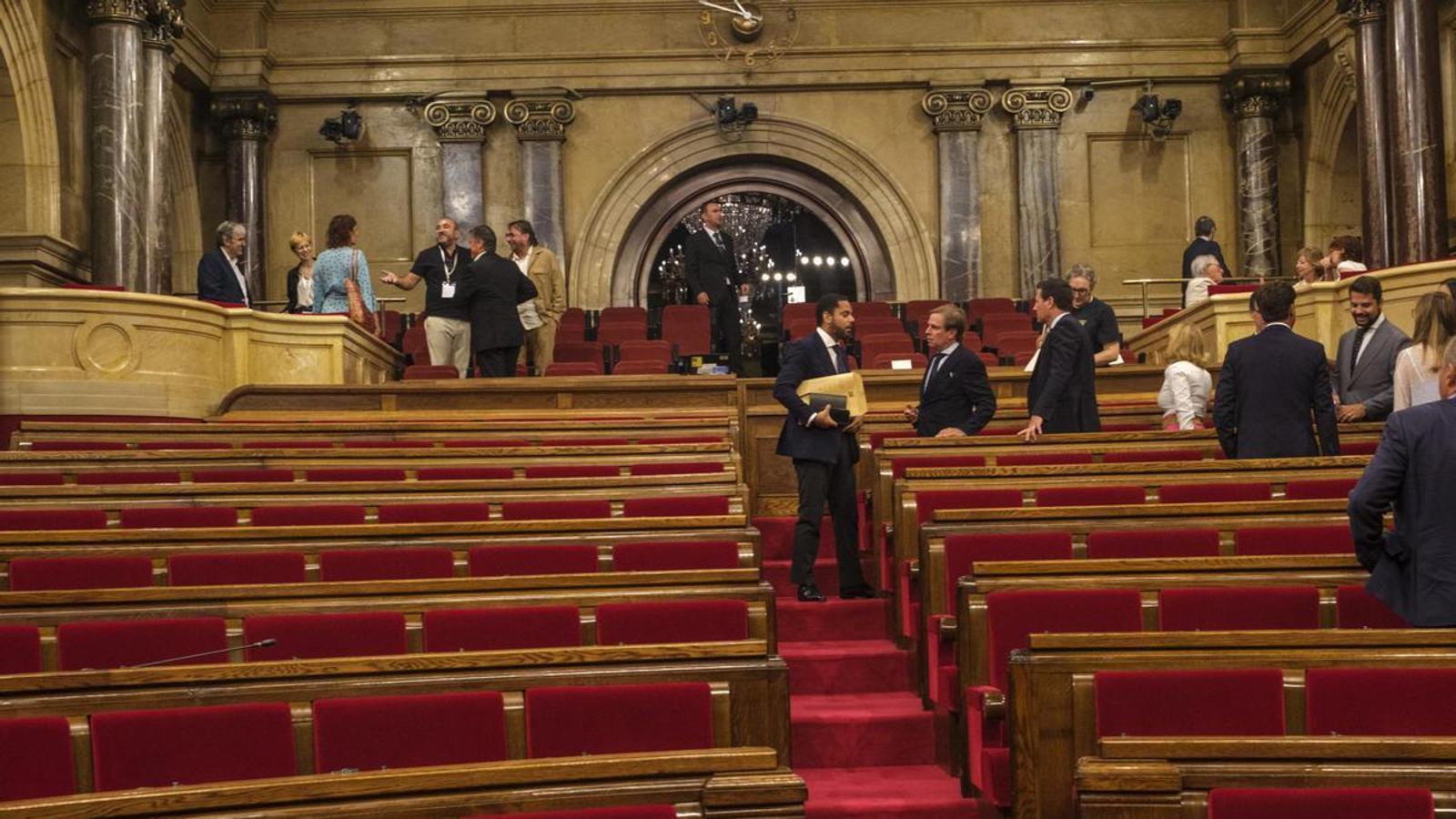

In relation to a large truck, a moped is small; in relation to a child's tricycle, large. In relation to a luxury car it is cheap; in relation to a bicycle bell, expensive. Etc. To understand why it is so problematic to characterize the notion of political center one must consider the example I have just given. The center seems to be defined in light of two poles that can be extremely opposite in some aspects and that are much more complex than notions like large or small. Furthermore, there is a relevant historical issue. Unlike the concepts of "right" and "left", the political center was not born in the French Revolution. Within the Constituent Assembly there was no explicit “center”, in the modern sense. There were more moderate people and more ardent people, of course, but not a political center. The hemicycle of 1789 only defined, in terms of physical location, the right (defenders of the Ancien Régime, to put it simply) and the left (reformists and revolutionaries, simplifying a bit). The center is a concept that came much later. It emerges when parliamentary systems of the mid-19th and early 20th centuries encounter situations that recommend new spaces for moderation and ideological transaction between confronting ideological blocs, which, out of sheer inertia, prevented any area of consensus.The then-called centre gauche was a key piece of French politics in the late 19th century and is often cited as one of the first parliamentary spaces to explicitly use the label "centre" in a modern sense. Note: it was not a centrist party, but a parliamentary group in the context of the Third Republic. What exactly was this centre gauche around the 1870s and 1880s in France? A grouping formed by moderate republican deputies, heirs of the liberalism of 1830, situated between the centre droit (moderate monarchists, that is, not in favour of reinstating the Ancien Régime) and the radical republicans. To get by, we could say they had a centrist sensibility, but that would be a recursive definition, besides an attempt to dodge the question. Let's be a bit more specific. How did they approach things? They accepted the Republic, but rejected anti-clerical radicalism; they defended a strong executive and a stable Parliament, but not hard Jacobinism; they wanted to reconcile public liberties with social stability and a free market with occasional state interventions. They were not anti-clerical, but they were in favour of limiting the political power of the Church. Here we could easily arrive at a wrong conclusion: they were centrist because they were moderate in relation to the two ideological extremes of that moment.
No, the political center is not just a point equidistant between the right and the left, but has its own logic. It has been capable of building cross-party majorities, not by lowering its positions, but by identifying points of convergence between diverse social interests. In ideal circumstances, it has functioned as a mechanism for stability: it prioritizes strong institutions, encourages lasting agreements, and makes gradual reforms (but reforms, after all). It is also a political culture based on negotiation, on partial renunciation, on the search for agreements that allow progress without fracturing. The center does not mean half-measures or truncated ideas, but viable solutions in complex contexts. It redefines itself according to the historical moment: it can be modernizing, liberal, conservative, progressive... We would now reach a second erroneous conclusion if we understood that all this is nothing more than a form of indefiniteness. It is something else: a versatile and pragmatic adaptation that, in general, took note of the concerns of the middle classes. Am I speaking in the past tense because the center no longer exists? No: I am speaking in the past tense because the middle class is a dwindling reality, in full decline. In 2006, Massimo Gaggi and Edoardo Narduzzi published The end of the middle class and the birth of the low-cost society. It is, therefore, a work immediately preceding the 2008 megacrisis. Cheap clothes ready-to-wear but signed by some festival or cruises at 299.99 euros per person generate social fantasies that, sooner or later, distort the perception of our real economic potential and, consequently, our class self-positioning. In this new context, the center of all life is no longer very sexy. Now in the false middle classes low cost they are more attracted to false center parties low ideas, also known as populist rat traps for the unwary.
