'Cleanliness Law': what is at stake
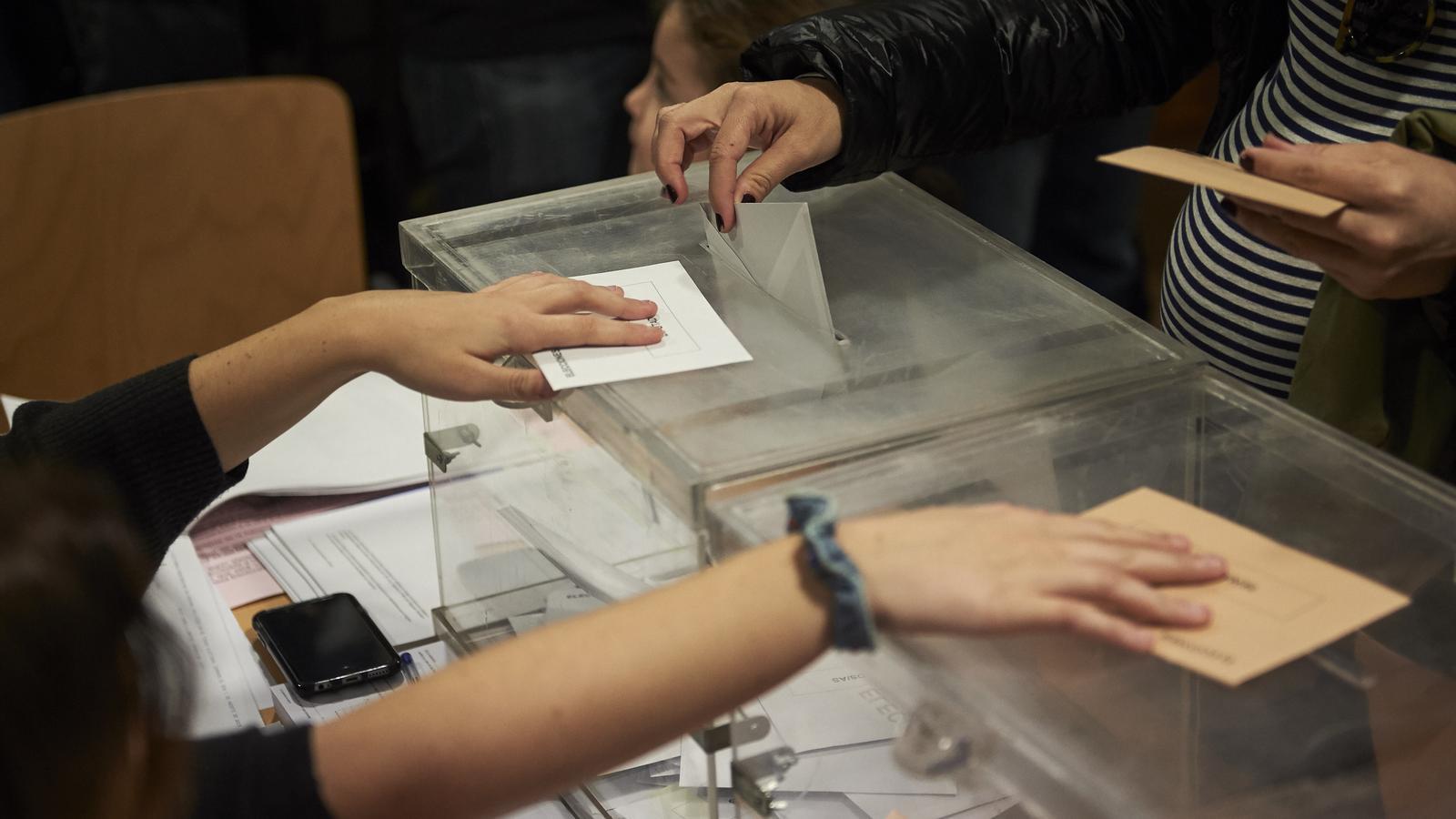

One of the side plots of the turbulent season of Spanish politics this autumn is that of the misnamed grandchildren's law. The 2022 Democratic Memory Law provided for the recognition of Spanish nationality for descendants of those exiled for political, religious, or sexual orientation and gender identity reasons. Faced with the complexity of proving the reasons for exile, an instruction from the Ministry of Justice decided to apply the "presumption of exile" to all those who left Spain between July 1936 and 1955.
This has generated a heated legal debate, because there are those who say that the instruction has substantially modified the scope of the law and, therefore, that the executive branch has tried to act as a legislator through the back door. But, above all, the issue has stirred up a strong political storm because the right has wanted to interpret it as an attempt at electoral manipulation, following the Trumpist manual to the letter. They suspect that these descendants of emigrants and exiles will vote for the left disproportionately. I suspect that this theory, like the one about the postal vote that Isabel Díaz Ayuso fueled, will last very little, and when they win the elections they will forget about it. And if one day they discover that voters abroad also vote for them, they will probably forget their misgivings.
In any case, as often happens in Spain, formal and procedural issues and short-term politics have covered up a very interesting substantive debate. Beyond a few hundred thousand votes and dubious electoral effects, what is at stake is a central element in democracy: the delimitation of the demos, who is part of the political community and, above all, what translation this belonging has in terms of political rights.
The Spanish state is one of the most "generous" countries in practice with emigrants and their descendants: it recognizes their citizenship without residence requirements and without a limit on generations, provided that the will to maintain it is expressed and that the chain of transmission has not been broken. It is, therefore, a logic of belonging based on descent – what is known as ius sanguinis.
The 2022 Democratic Memory Law expands this even further and provides for important exceptions to the need to preserve the chain of transmission. It does so under solid arguments for the reparation of historical injustices, such as those caused by the Francoist repression. In the same vein is the so-called 2015 Sephardic law, which took the idea of the possibility of inheriting citizenship across generations to the extreme.
In the Spanish case, furthermore, it must be taken into account that this broad conception of nationality is automatically linked to the right to vote. In general, legal doctrine is reluctant to establish differences between citizens and, therefore, citizenship is always full and implies fullness of political rights. However, there are many countries in which limits, additional requirements of residence or connection, or practical measures (such as in-person voting in the country) have been established that de facto weaken the automatic link between the status of citizen and the right to vote for non-residents.
Therefore, the circumstance arises that hundreds of thousands of descendants of Spanish citizens who have never lived in the State nor have any biographical connection beyond their ancestors have the right to vote and, therefore, decision-making power over laws that, for the most part, do not affect them. Furthermore, unlike what other countries such as Italy, Portugal and France do, which reserve some seats for citizens abroad with the effect of limiting their potential political weight, in Spain the votes of non-residents are counted in their "constituencies of origin" and, therefore, have as much weight as the vote of residents in the territory of the State, who pay taxes there and live subject to the laws of the State.
This expansive conception of the political rights of non-residents raises an important debate, discussed in the political philosophy of recent decades. There are those who think that non-residents should in no case determine political decisions that will not mostly affect them. This is the position, for example, of the philosopher Claudio López-Guerra. Other authors believe that emigrants and their descendants are in any case affected by the decisions of their countries of origin (if they have properties there, or receive pensions, or have relatives living there, or simply consider the possibility of returning) and, therefore, must be included in the electoral body. The problem with this argument is that in a globalized world it is very difficult to draw the lines and, in one way or another, we are all affected by the decisions of other governments in the world. Rainer Bauböck, possibly the most influential theorist in this debate, defends an intermediate position, in which generally the first generation of emigrants has legitimate reasons to be included in the electoral body, but with the passage of time and generations these reasons weaken. And, in any case, to avoid excessive distortions of the demos, Bauböck tends to defend measures that limit their political weight, such as specific constituencies for citizens abroad.
In any case, the paradox is especially stark if we put this issue in relation to the fact that there are currently approximately 6.2 million adult residents in the State who do not have Spanish citizenship and, therefore, will not be able to vote in the elections on November 29th. This population group has no political rights even though they live, work, pay taxes, and are subject daily to the laws of the State. And it contrasts sharply with the nearly 2.8 million "absent residents," many of whom have never lived in the State and, conversely, have full voting rights. Obviously, this generates a significant theoretical and political tension. But it has not been talked about much, distracted as we are by the circus of daily politics that covers everything up.
