Ceuta: realism and empathy
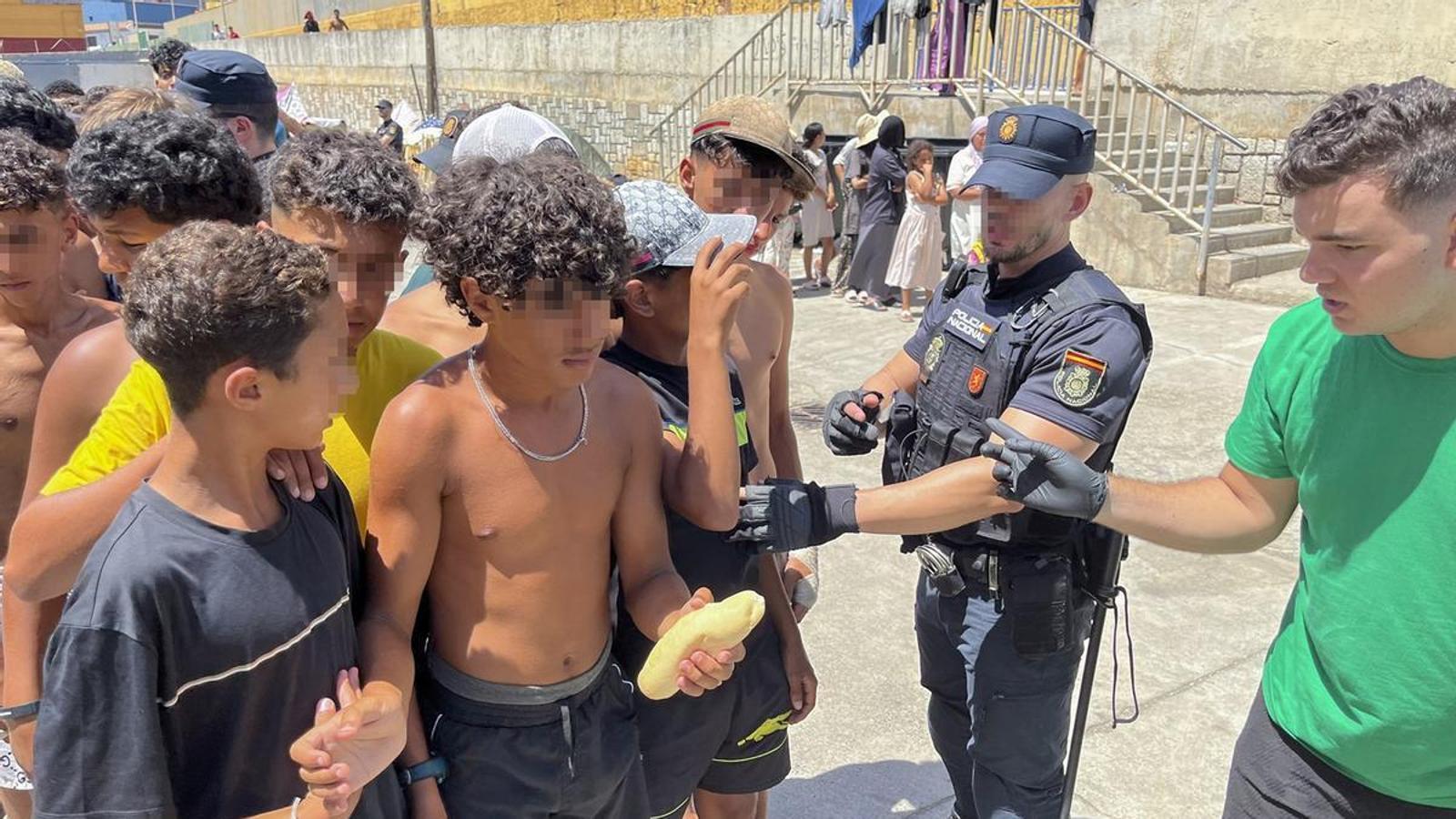

The figure of the president of Ceuta, Juan Jesús Vivas, was not familiar to me, but I must say that his reaction to the dramatic situation he found himself in has impressed me very favorably because it has been characterized by the two traits that are what should inform European immigration policy: realism and empathy.
Realism. The drama of Ceuta is above all that of the loss of lives at sea. We do not know the final toll of this episode. But it will be more than 150 dead. The evidence that this happens repeatedly should make us lose sleep. It is not a morally tolerable normality. However: the facts of Ceuta confirm us with great clarity that there are only two ways to reduce the probability and, therefore, the number of these deaths to zero: to open the doors completely to immigrants or to close them completely. There is no middle ground. Opening the doors is what Morocco did, I don't know if with an instruction from above or by an overflow from below. And it's lucky they opened because you try to imagine how many deaths we would have if the tens of thousands who entered on foot had tried by sea. In any case, the fact demonstrates, if it needs to be demonstrated, that a policy of complete openness is not possible. Entry must be rationed, with annual quotas that, given Europe's demographic reality, will have to be very generous. But the selection mechanism cannot be the survival of the crossings at sea or swimming between two beaches in Ceuta. It is not reasonable, and it inevitably produces deaths. The mechanism must be orderly and must make illegal entry by sea impossible. As long as this is possible, many people aspiring to a better life will throw themselves into the sea. And there will be more deaths.
We thought we could delegate border control to Morocco. It has become clear that we cannot. Either because Morocco wants to transform Europe's dependence on its border surveillance into Europe's vulnerability, or due to an inability to exercise control. And this is how Vivas's demand to fortify Ceuta must be understood. Indeed: there is no alternative. Europe must fortify itself against immigration that does not arrive through legal channels. It will be when illegal entry generates no expectations of success that there will be no pushbacks and that the detention centers in Albania can remain empty.
Empathy. It is what recognizes that we and immigrants, however they arrived, are part of the same humanity. It is what tries to welcome them with dignity, without discrimination and without "national priorities". Regarding the distribution of minors, it seems that the fact that the administration of Ceuta is from the PP has led to the acceptance of the principle that the autonomous communities will take charge proportionally. On this matter, Catalonia complies and must continue to do so. To the usual logistical and public service responsibilities, Catalonia adds an additional difficulty: while Spain's cultural Spanishness is not in danger, Catalonia's cultural Catalan identity is, and yet, the legal processes of incorporation into the community place the Catalan language, the weaker one, in an inferior position to Spanish. It is a situation that demands decisive political action to symmetrize, but also a lot of empathy towards immigrants. It is what can make them see language not as an element that delays their social ascent but as an accelerator. And that empathy eventually becomes reciprocal.
Empathy is also important to exercise towards the countries of origin and, in particular, those of the Maghreb. We must work for the day to come when the borders of Morocco or Algeria are not fortified and entry quotas are not necessary. This will come with economic prosperity. We must help promote it. Protectionism towards these countries would be a double blow to ourselves: that we manufacture in Europe instead of Morocco is paid for partly by the European consumer and partly by the Moroccan worker, who, consequently, increases their desire to emigrate and enter the EU economic perimeter. By the way, the fortification of the border must facilitate collaboration with Morocco. If the highly destabilizing instrument of unilaterally regulating the entry of immigrants disappears, so will the temptation to use it, and therefore, cooperation can be considered on normalized bases that, on the Spanish side, should be very empathetic. It can be helped by the fact that we already have a significant population of Moroccan origin. They are natural intermediaries.
