Swedish and Finnish fighter jets intercept Russian warplanes over the Baltic
It is the first joint operation of the two Nordic countries within the framework of the cooperation to reinforce surveillance on the north and east flanks of NATO

-
CAT -
CAST
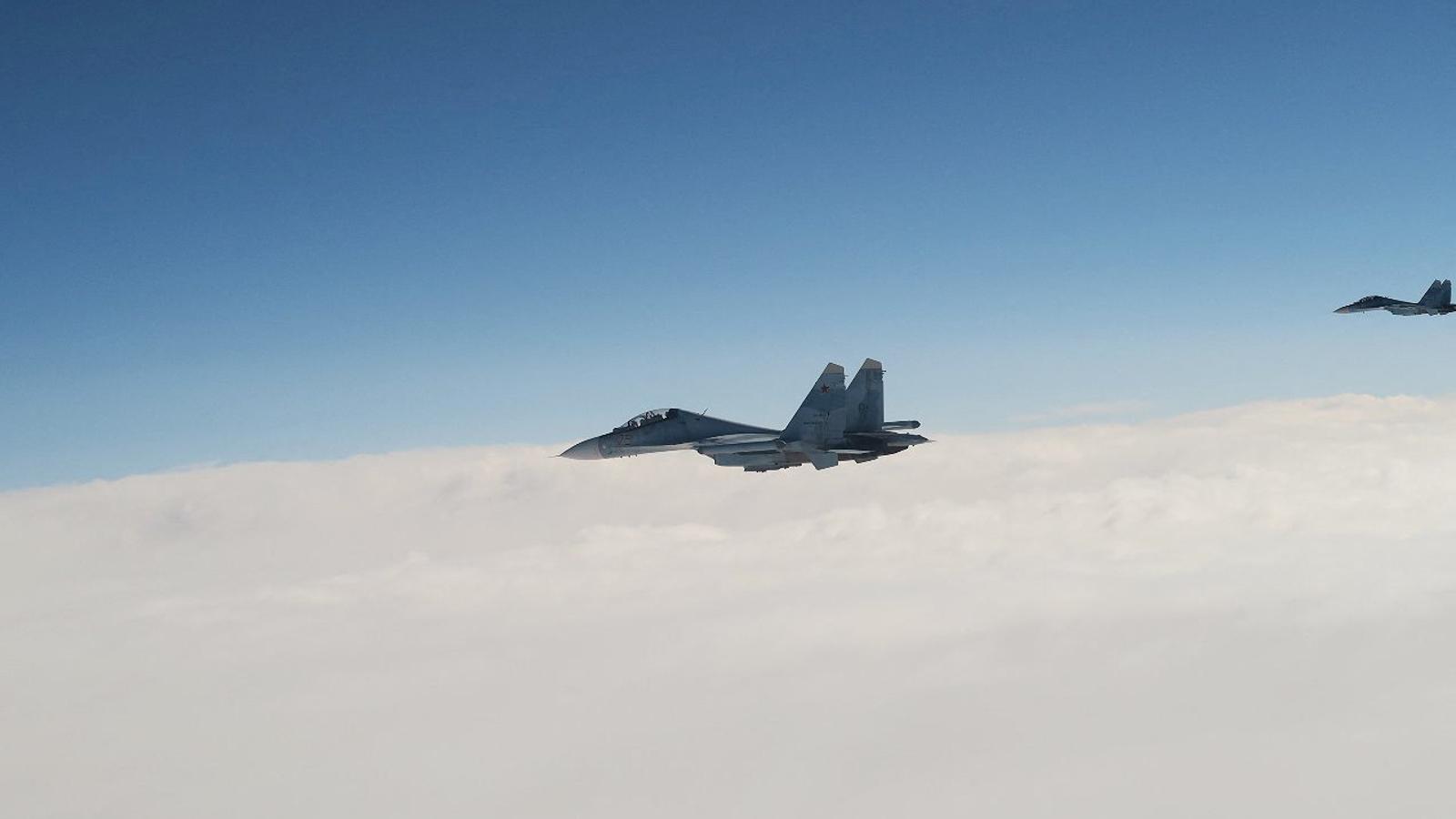
BarcelonaSeveral fighter jets from Finland and Sweden intercepted a group of Russian warplanes flying over the Baltic Sea this Thursday, according to the Finnish Air Force. This incident adds to the numerous Russian aircraft and drones that have recently violated or approached the airspace of NATO countries. In this case, the Russian squadron, consisting of a Tu-134 transport plane and several MiG-31 and Su-30 fighter jets, was flying in international airspace over the Gulf of Finland.
This identification mission, in which Finnish F/A-18 Hornet aircraft and Swedish JAS39 Gripen aircraft participated, is part of the two countries' quick reaction alert service, which aims to guarantee the surveillance and protection of their territorial integrity. The operation is significant because it is the first one carried out jointly by the two Nordic countries, which have been part of the Atlantic Alliance since 2023 and 2024, as a consequence of Russia's war against Ukraine. A month ago, Sweden and Finland agreed to strengthen their cooperation in air defense on NATO's northern and eastern flank, taking into account the increase in hybrid threats from Russia.
The Baltic Sea region is one of those on maximum alert after several incidents related to sabotage against pipelines and submarine cables, airspace violations, and drone sightings. NATO aircraft takeoffs for surveillance and reconnaissance over Eastern European airspace have already become a regular occurrence: in July, alert sorties increased by 250% compared to last year.
Swedish Prime Minister Ulf Kristersson has highlighted that the operation has served to demonstrate that cooperation with Finland is necessary and works: "It is a concrete expression of the readiness and trust we have built together, and an expression of the strength of the Nordic, Nordic-Baltic and NATO cooperation in general in our part of the world," he wrote on X. He said that the Baltic Sea "has never been as vulnerable as it is now," but remarked that "it has also never been as well prepared as it is now."
Growing alarm in Europe
Incidents related to Russian planes and drones are not new; they are part of the so-called hybrid war against Europe. But several European leaders and intelligence services have increased warning messages in recent weeks. The turning point was an incident in early August, when a drone loaded with explosives crashed into a Ukrainian cargo plane at Leipzig airport without exploding, in one of the most direct sabotage attempts recorded so far at a key NATO logistics hub and deeper into European territory. After nearly a month of investigations, on September 1st, Germany directly blamed the Russian intelligence services.
The very next day, European Commission President Ursula von der Leyen and NATO Secretary General Mark Rutte met urgently in Brussels, who promised to increase pressure on Moscow. Since then, there has been a succession of statements from European leaders calling for the threat to be taken seriously.
Just a week ago, Polish Prime Minister Donald Tusk was the first to warn that Moscow is planning missile attacks against border countries, and the next day it was French President Emmanuel Macron who asserted that the Russian threat to Europeans has intensified and announced a protection plan. This Thursday, the Danish intelligence services joined in, stating that Russia will likely intensify its hybrid war in the coming months and adding that a military attack against a NATO country cannot be ruled out.
This week, some European leaders have taken advantage of the United Nations General Assembly in New York to insist on the warning message. The President of Latvia, Edgars Rinkevics, has warned that these threats are more serious than perceived. "Sometimes we call them hybrid threats, but that sounds as innocent as hybrid cars. In reality, these threats to international peace and security are as dangerous as conventional wars." German Foreign Minister Johann Wadephul also referred to it, saying that Russia's hybrid attacks against countries that support Ukraine "have reached a new level".
Various reports published and produced by intelligence services and think tanks, coincide in noting that hybrid attacks attributed to Russia have increased in number and have also become more dangerous. In recent days, several countries have put on the table one of the potentially most serious possibilities, that of a false flag attack on a NATO member. This is raised by the report of the Danish intelligence service published this Thursday, which points out that the risk of this happening is "low but growing". Donald Tusk's warning also went along these lines. And Lithuania has referred to intelligence reports that warn of this possibility.

