Ed Sheeran and the (dis)comfort of being apolitical
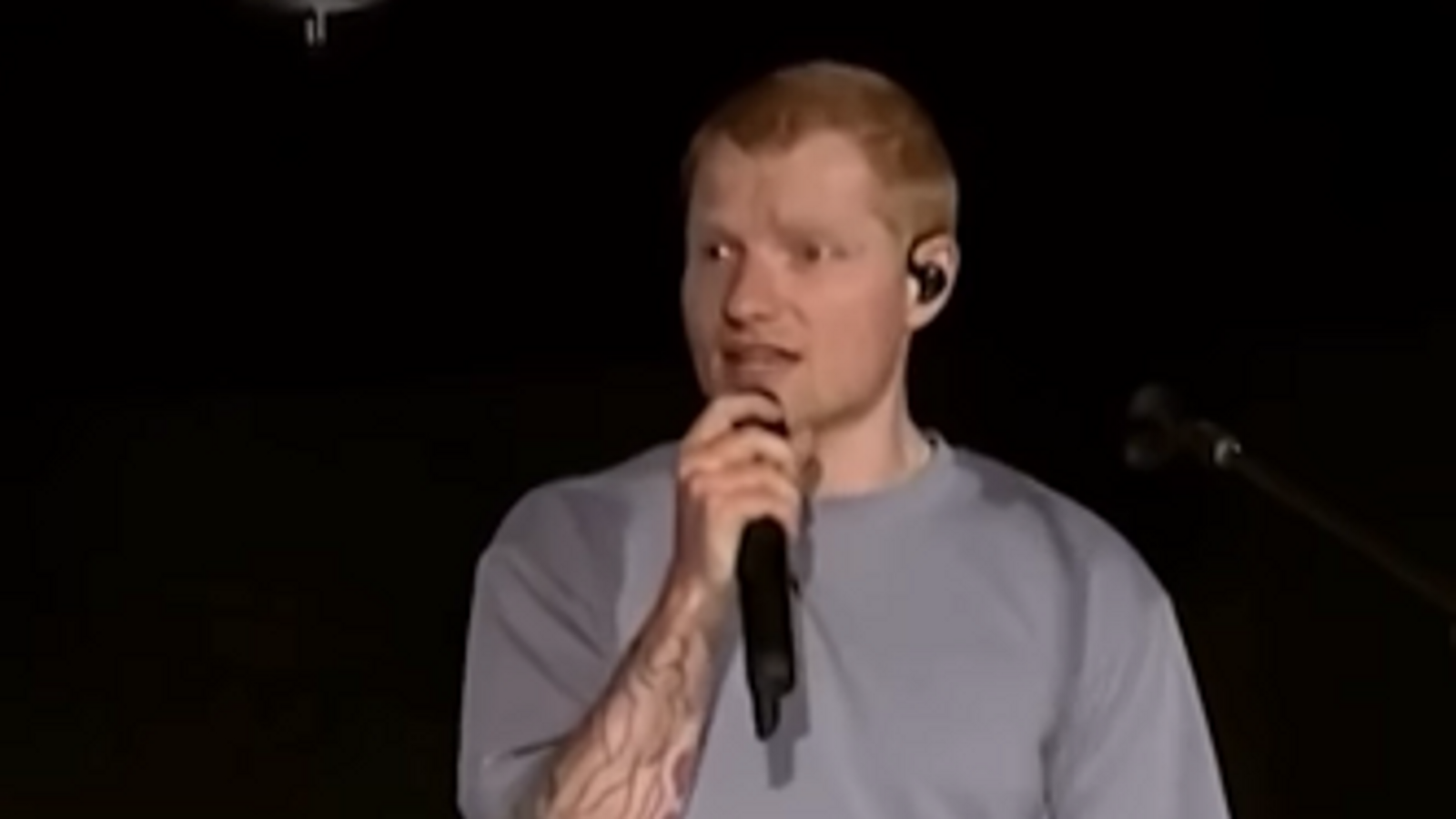

Ed Sheeran does not want to be political. Or, specifically, he does not want his concerts to be. He explained this after rapper Macklemore was expelled from Sheeran's North American tour for having said "Free Palestine"on stage. There is something fascinating in this idea that politics appears just at the moment when, or because, someone utters certain words.
Before Macklemore made proclamations for the freedom of the Palestinians, the owners of the stadiums where they were to play were already who they were (some, pro-Israeli, pressured to make the rapper's expulsion effective), the contracts were already what they were, and the economic interests and red lines regarding what could be said or done on stage were already set. The politics were already there, and the only thing Macklemore did was make them visible.
That is why perhaps we should be less interested in debating whether Ed Sheeran is a good or bad person, whether he should have done more to avoid the veto, or how much power he really had to confront the stadium owners. We should be much more interested in our ease in accepting that certain ways of acting are political and others are not.
Saying "Free Palestine"is political, but demanding that whoever says it disappears from the stage seems like a mere contractual issue. Talking about Gaza is political, but deciding that Gaza should not be mentioned is done under the pretext of professionalism. Protesting breaks unity. But asking for silence, curiously, preserves it. This distribution is never neutral.
For three years, Palestine has been exposing this with quite brutal clarity. We have seen cultural institutions canceling events, universities repressing protests, workers facing professional consequences, and artists discovering that the freedom to take a stand has quite different limits depending on what the tragedy is.
Sheeran's own case proves it. In the past, the artist had used his public platform to express solidarity with Ukraine. "I stand with you", he told the Ukrainians. No one needed then to protect the children at his concerts from an unexpected eruption of geopolitics into the world of pop.
This is where the discomfort arises. Some may want a concert to simply be a concert. Others have the right to be tired of all singers, actors, or soccer players having to speak out about every atrocity on the planet (as if they did, but that is another story). Many, like me, are wary of turning celebrities into moral compasses, even though we sometimes ask more commitment from them. But it is one thing not to demand that they take a stand and another to accept that silence constitutes a kind of zero position, clean of politics. Something very similar to what we have seen these days regarding the eviction of Maricarmen Abascal, if you will allow me.
Because silence almost always occurs in a context of power relations. Sometimes it is decided to keep quiet, and other times one learns to say things softly, so as not to lose contracts, access to certain stages, or professional opportunities. In this case, someone with a lot of power has decided where the boundary of what is acceptable lies and has imposed silence.
Finally, there are times when someone who seems to have no power... causes an earthquake. The reaction of the other artists invited to the tour is as important as, or more than, Sheeran's actions. Finneas, Lukas Graham, and Aaron Rowe (who were to be his opening acts) and Beoga (the band that accompanied him) decided to leave after Macklemore's departure. It is not about artists becoming activists, but rather that we understand that there comes a time when continuing, and doing so in silence, also means taking a stand.
To close the controversy, Sheeran spoke at one of his concerts (reading from a teleprompter). He described what is happening in Gaza as catastrophic and unjustifiable and acknowledged that he had handled the situation poorly. But he placed the events of October 7 at the center of his speech (so as not to escape from neutrality) and insisted on speaking about a complex political situation (instead of a genocide). This makes the episode quite a bit more interesting. Because, in the end, it was not Macklemore who turned this tour political. Perhaps we should start to be a little more suspicious of spaces—and people—that proclaim themselves apolitical, especially when, to keep them that way, someone has to be silent.
