Bourbons to Ceuta and Melilla
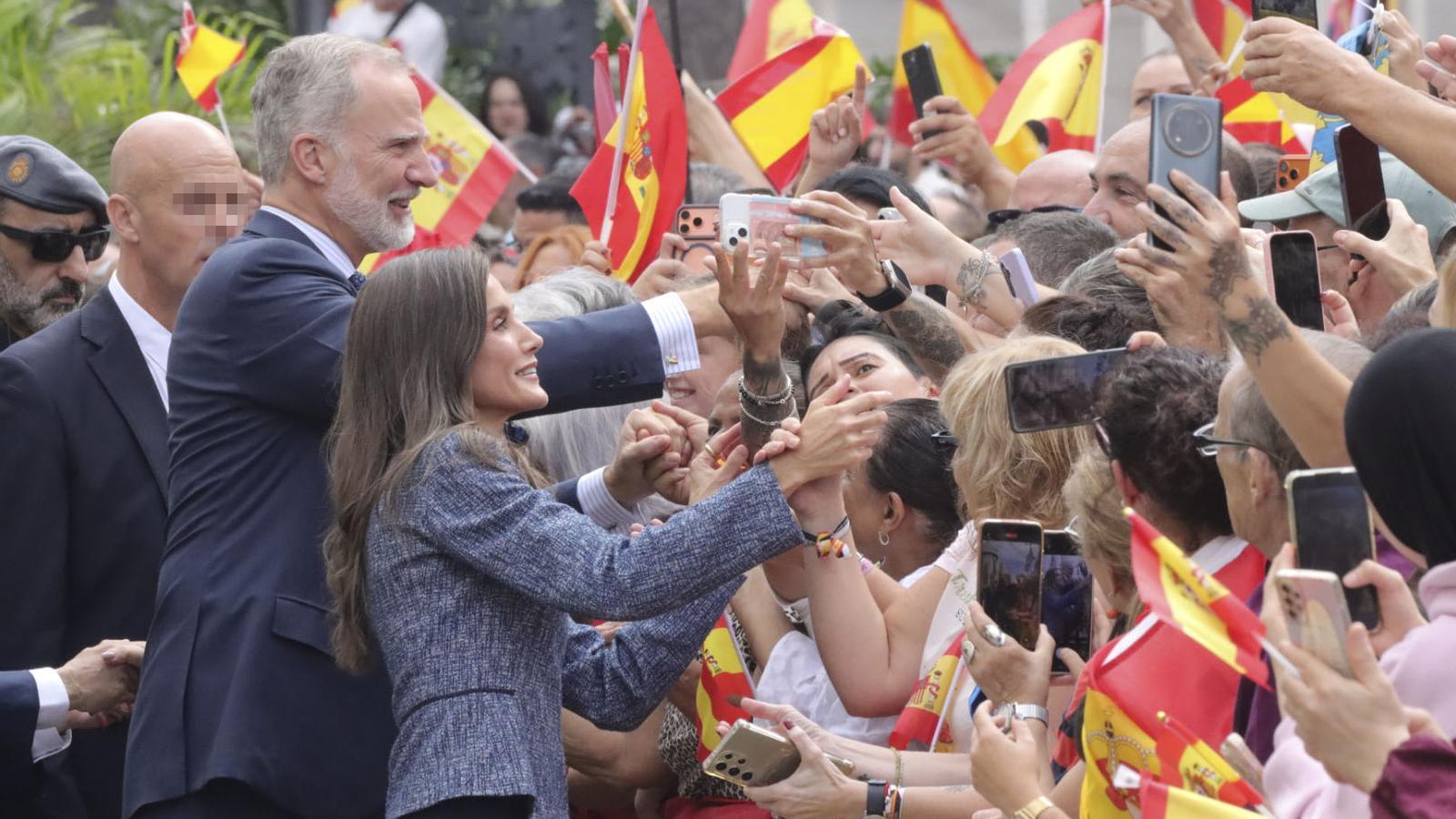

The now famous whoever can do, let them do of Aznar has reached, as it could not be otherwise, the Spanish monarchy, and that is where they stand. Announced weeks in advance, the visit of the kings of Spain, Felipe and Letizia, to the autonomous cities of Ceuta and Melilla, has no other content than the full support of the royal house for the potential future government of PP and Vox. At least that is how the Spanish right and far-right interpret it, because it is quite difficult to interpret the gesture in any other way, and even more so in days of a full electoral pre-campaign. “We are living in dark days,” the monarch stated last February, in a speech before the European Parliament, with his characteristic ambiguity: everyone could understand that the darkness he was talking about alluded to the rise of the far-right throughout Europe, or else to the evils of Sanchismo. In any case, Felipe VI and the Spanish Crown do not hide their preferences, at least since October 3, 2017.
From here on, it is always interesting to witness one of these performances that are the visits of the Spanish monarchs to catastrophic areas (whether they be due to natural phenomena or a maneuver by another king, Mohammed VI of Morocco, in collusion with the USA and Israel, to destabilize Europe through the southern border). These royal visits consist of the protocolization of the despair and helplessness of the weak, who often accept with docility the providential, almost magical arrival of a king and a queen who materialize before their eyes, smile at them more or less serenely (it depends a little on the day) and offer them a promise, never explicit, of improvement in the future. “We are with you”, is the message, also implicit. The royals never say explicit things, as politicians do, because explicit things compromise those who say them. One can ask for accounts or explanations for an unfulfilled promise; but not for a messianic apparition, because in reality everything has happened within the eyes of the one who has contemplated it. Yes, you saw the King and Queen of Spain in Ceuta (or in Paiporta, or in Sant Llorenç des Cardassar, or wherever there has been a disaster) but that does not mean that they have to do anything for you: that, if anything, is something you have interpreted yourself.
“Handsome”, “how lucky we are to have you”, the people shout as their majesties pass by. It is a vivan las caenas, a voluntary submission to a protocol of power (if you haven't done so, read La servitud dels protocols, by Ingrid Guardiola) from which the citizen extracts comfort for their affliction that in reality only they have imagined, just as the child imagines that other Kings, those from the Orient, have arrived from very far away on camels and have entered their home to leave them gifts. Magic tricks are always received with gratitude, because an instant of dazzlement, of illusion, often compensates people for their tribulations. Power (political, ecclesiastical, etc.) understood this millennia ago, and that is why it created liturgies and has done nothing but maintain and perfect them.
