Molly Bloom's election campaign
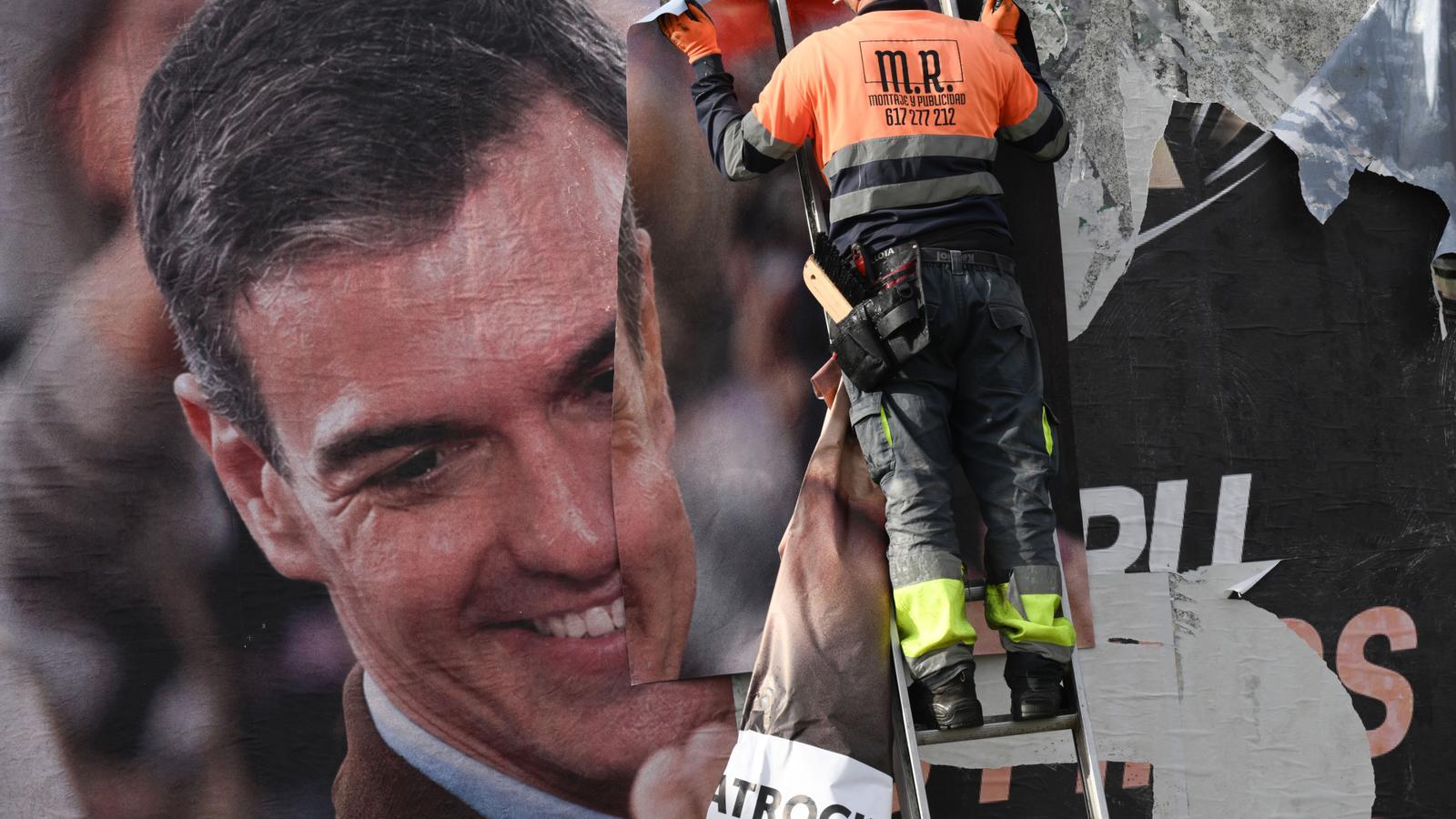

Ulysses, by James Joyce, is a difficult novel. Wonderfully difficult. It was published in 1922, but it still seems like an artifact arrived from the future. It is so profound that it even helps to understand contemporary election campaigns.
It caused a profound impact at the time. The critic from the New York Times showered it with praise, but admitted that the moderately intelligent reader would get “little or nothing” from the novel, “except for surprise and a feeling of disgust”. Carl Gustav Jung said that Ulysses consisted of “the destruction of the world” and labeled it “nihilistic”. In the United States, it was banned for “obscenity” until 1934.
Joyce wrote Ulysses on the pattern of the Homeric Odyssey. It tells the adventures of a Dubliner, one Leopold Bloom, during a single day, that of June 16, 1904. The narration is strictly naturalistic, the style exhibits a biblical breadth (not unlike that of Moby Dick) and completely dispenses with modesty: everything human, from the most sublime to the most foul, is described in detail.
But we were talking about election campaigns. And for that, it is convenient to go back to the origins of the stream of consciousness, defined in 1855 by the psychologist Alexander Bain: “The concurrence of sensations in a common stream of consciousness, in the same cerebral pathway, allows sensations of different senses to be associated as easily as sensations of the same sense”.
To understand each other: it is about that flow of seemingly disconnected thoughts that we all constantly have in our heads and where, from time to time, ideas, desires, and sensations emerge that we would never confess to anyone. And which, despite everything, constitute our real identity.
The most pointed out as “scandalous” in the novel is the famous final monologue, in which the mind of Molly Bloom, Leopold's wife, wanders freely. The monologue, of almost one hundred pages, only has two punctuation marks. That is to say, it flows torrentially and without apparent order.
The stream of consciousness is common in contemporary literature, although never with the extension and brutality of Molly's monologue.
If you spend some time with any social network you will verify that the delirious and diverse mosaic that the algorithm offers us consists exactly of that: a stream of consciousness. With the peculiarity of not corresponding to the mental flow of a single individual, but to that of many.
The networks are something like the stream of consciousness of society.
The electoral campaign, we said. Well, that. Since what is rational and what is objective surrender today to the primacy of what is emotional and what is subjective, since the collective debate (if it can be called that) takes place on social networks, the only way to deal with the avalanche of political messages (even what seems most frivolous to us is profoundly political) consists of discarding any attempt at hierarchy.
Between the shouts and the lies, the bots and the promises, Broncano’s stutters and Wilde’s questions, the smiles, the metaphors, the allegories, and the messages, between our brief sparks of lucidity and the blindness of our prejudices, between the continuous stimulus of the flow to our philias and our phobias, the poignant moment appears. That which, relevant or inconsequential, remains imprinted in our circuits.
Do not look for logic in a contemporary electoral campaign. Do not look for exchanges of reasonable ideas, intelligent proposals, or a minimum of veracity. Let us accept that we live in a universe as intense and confusing as Molly Bloom’s monologue: that torrent of images and words that would not make sense if it did not explain, as it does, the complexity of our existence.
In the monologue, Molly makes (among many other things, mostly related to sex and scatology) an inventory of her miseries and those of that gray, stupid, and unfaithful man named Leopold. And she concludes with some unexpected and definitive words: “and yes I said yes I will Yes”. More or less how we will conclude the electoral campaign.
