Who takes care of the caregivers?
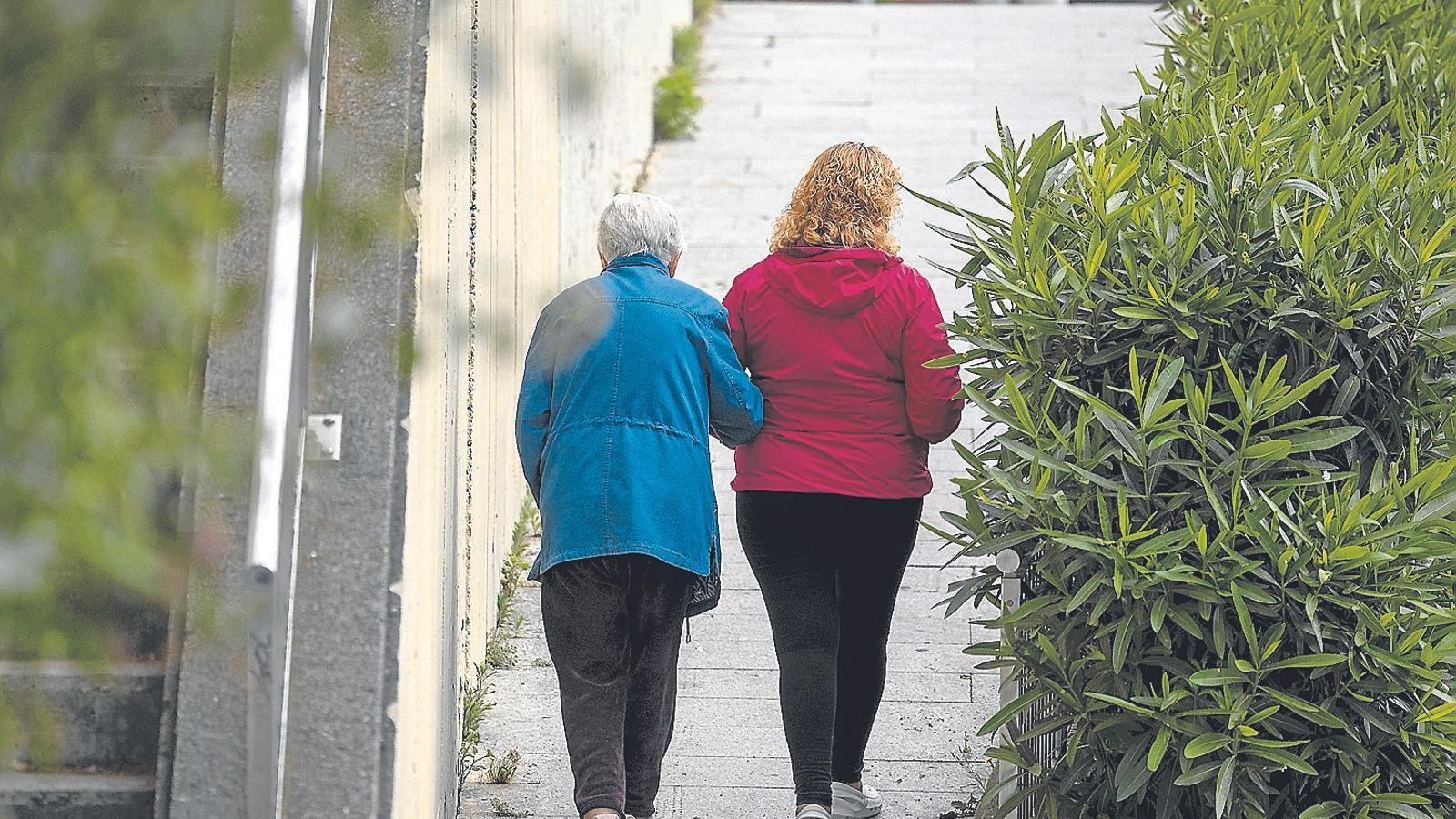
Putting caregivers at the center implies caring for them too. Good assistance depends on their well-being. The cooperativism of care consists not only in caring for people; but also in caring for the people who care, and here occupational risk policies play a primary role in the social economy.
-
CAT -
CAST
The health and well-being of workers is mandatory in companies. The occupational risk policy addresses health issues from a prevention perspective, and many organizations outsource a service that looks after the physical and mental health of their employees.
Traditionally, when occupational risk prevention was discussed, it was thought of in the construction, industry, or transport sectors. Risks were associated with the physical condition of workers, but nowadays the problems extend to emotional ones. Mental health, stress, emotional exhaustion, and psychosocial risks are on the agenda, and precisely, the care sector is one of the most affected.
Care cooperativism, by definition, looks after the health of caregivers from an organizational point of view to guarantee a dignified lifestyle and offer better care to users. The big challenge is also to take care of the physical and emotional health of the professionals who care.
Cooperativism not only serves to produce or sell services; it can also serve to protect the health of people who work from a knowledge cooperative perspective. These cooperatives are formed by specialized professionals (doctors, nurses, psychologists, prevention technicians, ergonomists, etc.) who have chosen to organize themselves following differentiating values.
Sepra, a unique example
Occupational risk prevention is not a common area within cooperativism. Although many social economy entities dedicate efforts to improving the well-being of their staff — with emotional health protocols, work-life balance, prevention of burnout and worker participation—, very few have this activity as their main corporate purpose. In this scenario, Sepra becomes a rare bird: an accredited cooperative that has made occupational risk prevention its reason for being.
Sepra is the only accredited external prevention service in Catalonia constituted as a worker cooperative. This uniqueness is also reflected by the Federation of Worker Cooperatives of Catalonia and other social economy directories, in contrast to Suara, for example, which has an emotional support platform, Benestarum, which offers a short consultation service online with professionals who accompany workers' issues through video calls (also in live group sessions, online or in-person).
“To put it simply, at Sepra we do the same work as the Quirón group, although obviously we are smaller in size and our approach is different,” explains Guillem Llorens, head of this cooperative formed by 50 workers – half of whom are partners – and which manages more than 1,500 companies.
“60% of our clients are cooperatives and companies from the social economy, but the other 40% are bakeries, metalworking companies, shipyards, etc. Our positioning as a company is based on business, efficiency and demanding criteria. We offer professional services with a social vision, at prices that are not cheap, but in line with market prices, because a job well done has a cost,” he adds,
Body health and emotional well-being
Sepra works on collective health at all levels to ensure conscious and healthy organizations physically, mentally, and socially; also corporal health and emotional well-being inside and outside of work, and ensures the quality of workplaces. One of the major transformations in occupational prevention in the last twenty years has been precisely the recognition that occupational health must include both physical and mental health.
“This is particularly happening since after the pandemic. We, however, have been working along these lines for many years and continue to innovate, also incorporating the gender perspective into occupational risk prevention. We are innovative in this regard. We also develop easy-to-read mechanisms for special employment centers with our own methodology,” explains Guillem Llorens.
However, “for many years we have focused our attention on risks affecting psychosocial issues and the wear and tear involved in caring for people who look after the elderly, dependent, or homeless individuals. This makes us more attentive because, precisely, we are talking about people and not fire extinguishers,” summarizes Llorens.
And indeed, the future in the care sector depends not only on having more professionals, but also on ensuring that these professionals work in conditions that preserve their physical and emotional health, and “we provide a broad response that goes beyond what the law requires,” he concludes.
