A boat one hundred percent cement that floats as if nothing
At the farmhouse Cal Sinén, the story of the Ivars and Vila-sana pond is told, which disappeared during Francoism

Tired of his boat being stolen and left abandoned on the other side of the lake, its owner put an anti-theft system into practice: he made a hole in it, which he plugged with a stopper when he sailed, and took the stopper home with him. And he left the boat full of water near the lake. In the Ivars pond, the cement boats were the same as the wooden ones. The explanation is quite simple: they were built with a plaster mold made from a wooden boat. Eduard Ribes, guide of the Ivars and Vila-sana pond, tells me this next to one of these boats. It is the jewel of Cal Sinén, an old farmhouse from 1910 located on the edge of the pond, which has been redone – with its exterior walls of rammed earth – and now houses an information center that explains, with texts and images, a lot of stories about the pond, from before and now. In the past, it housed hunters."Cement boats were preferred by hunters. Because they are heavier than wooden ones, when they fired the shotgun they moved less; and luckily it was so, because the waterline is high", Eduard explains to me, who spends time removing Florida turtles from the lake, "pets" that many, tired of having to take care of them, have "thrown" at him. They are invasive species, which gobble up toads, frogs, snakes... He also removes American river crabs, which eliminate European crabs (yes, European crabs – and so many other things– feel harassed by Americans).

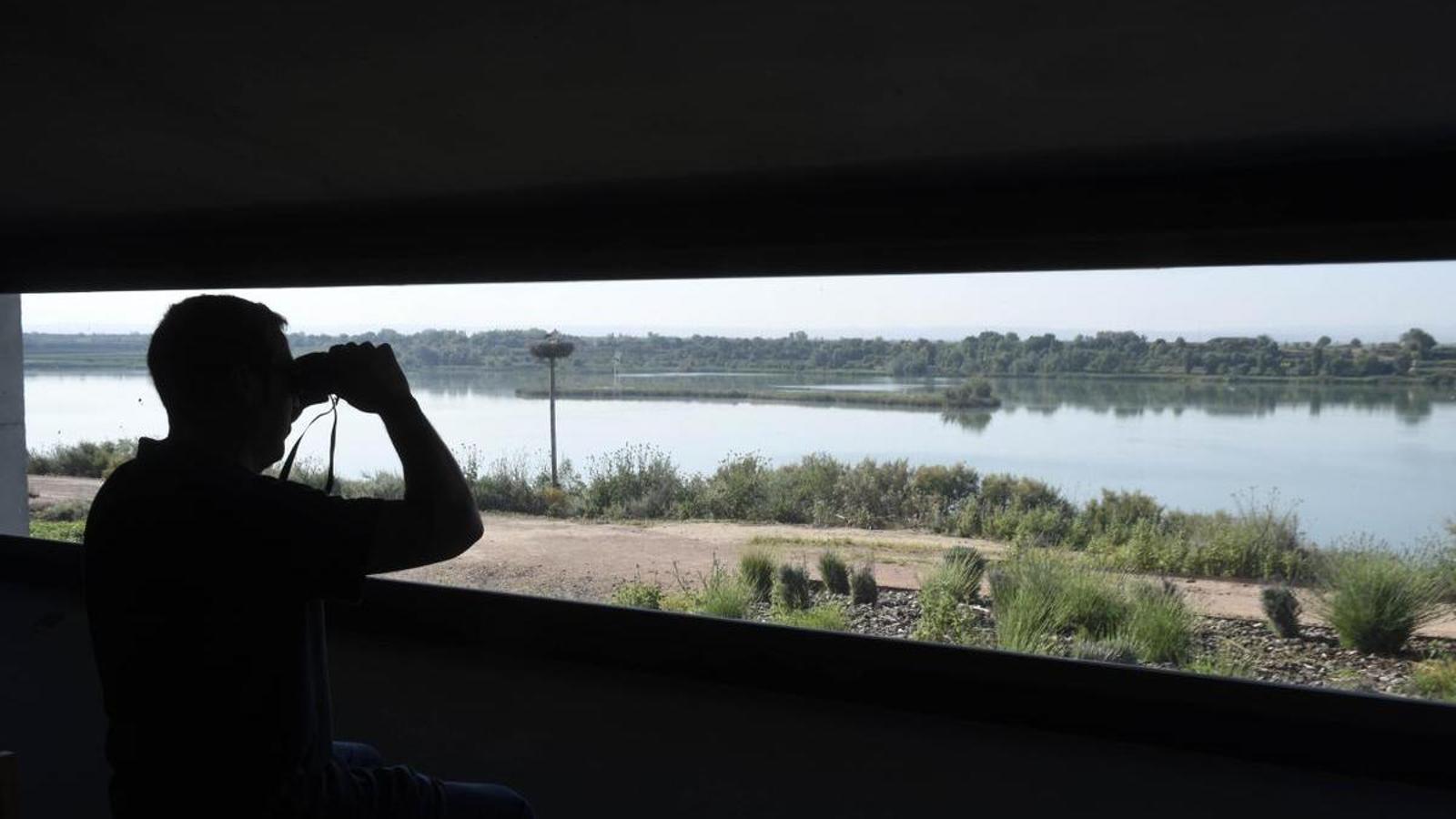
Next to the boat there is a long stake that was used to fish for eels. The eel was the most abundant fish in the old pond (I say "old" because it didn't exist for a good few years; I'll explain later). The rice with chicken and eels was very famous and exquisite. Eels were sold in the surrounding villages and even sent by train to the Basque Country.The lake hosted many activities for the inhabitants of the surrounding villages and beyond. In the 19th century and the first half of the 20th century, hunters, aristocrats, and politicians traveled by train to Bellpuig or Mollerussa, from where they were driven by carriage to the lake; boatmen took them across the lake to hunt ducks and coots. On sunny days, the lake was a very busy meeting place. There was a small beach with huts that served as changing rooms. It was the inland beach of Catalonia. It was also a traditionto take a boat trip on the lake on the wedding day. Yes, it was a place for romantic encounters, for kissing or for sports (rowing). It was a highly prized hunting and fishing area. Now it is forbidden to hunt and fish. Eduard explains it to me as we start a walk along the shore of the lake. The image of the reeds bent by the breeze – all at once, like the bows of the violins of a symphony orchestra – accompanied by the soundtrack of a flock of birds, invites us to stop for a while.Shortly after the Civil War, the procedures to drain the lake began. The works were carried out between 1948 and 1951 by a company favorable to the regime, of course. A large part of the population was against it. But at that time, almost no one had a vote or a voice. The real reason for the desiccation of the lake was speculation – although the publicly stated reason was that the lake was a hotbed of malaria–. Once dried, people were brought from Valencia and the Ebro Delta to grow rice there. But it didn't quite work out.In 1976, the first proposal for the recovery of the lake emerged in Nature, use or abuse? White paper on nature management in the Catalan Countries. "We had the support of Jordi Sargatal, the driving force behind the protection of the Aiguamolls de l'Empordà. There was a popular will to restore the lake. From almost everyone, but not everyone. Some farmers feared that the birds would eat the harvest," explains Eduard. In 2005, it began to flood with water from a mill and then from the Urgell canal. The return of water to the lands of the lake caused an explosion of life. In the blink of an eye, aquatic birds appeared, taking advantage of the large shallow pools. Other animals quickly joined them: fish, amphibians, reptiles, and mammals."The Ivars pond receives between 70,000 and 100,000 visitors per year," assures Eduard. "And how do you know?". "We have counters." They also count birds: 276 different species of birds have been seen there. One of the most prized aquatic birds is the bearded reedling, a small bird with a relatively long tail. All in all, this is a first-class ornithological tourism destination, an oasis for resident and migratory aquatic birds. We climb to a viewpoint. Eduard lends me the binoculars. What a multitude of varied birds I have in sight! "Many passing birds end up staying because they find their ideal habitat here," Eduard tells me. BIRDS PAINTED ON THE FACADES OF IVARS D’URGELLBefore Vila-sana was called Utxafava. But it gained a bad reputation because some of its inhabitants suffered from malaria. Therefore, the idea of renaming the town arose and it came to be called Vila-sana. This expression still circulates in the area: "You look like you come from Utxafava", which means "You look sick".By the way, what sane mind came up with putting a hyphen in Vila-sana? It's totally superfluous.A heritage element of great interest near the lake is found in Ivars and Vallverd. On various facades of these places, there is a multitude of painted birds, with great detail, much larger than real birds. This is an initiative by the German artist Swen Schmitz.

