La Guardiola: "We want to reconnect the community with the values and tools of current cooperativism"
Montse Lamata, president, and Montserrat Noè and Joan Bonamusa, former presidents of La Guardiola
-
CAT -
CAST
Currently La Guardiola has 139 members. The oldest is a 94-year-old woman; the youngest, a 20-year-old man.
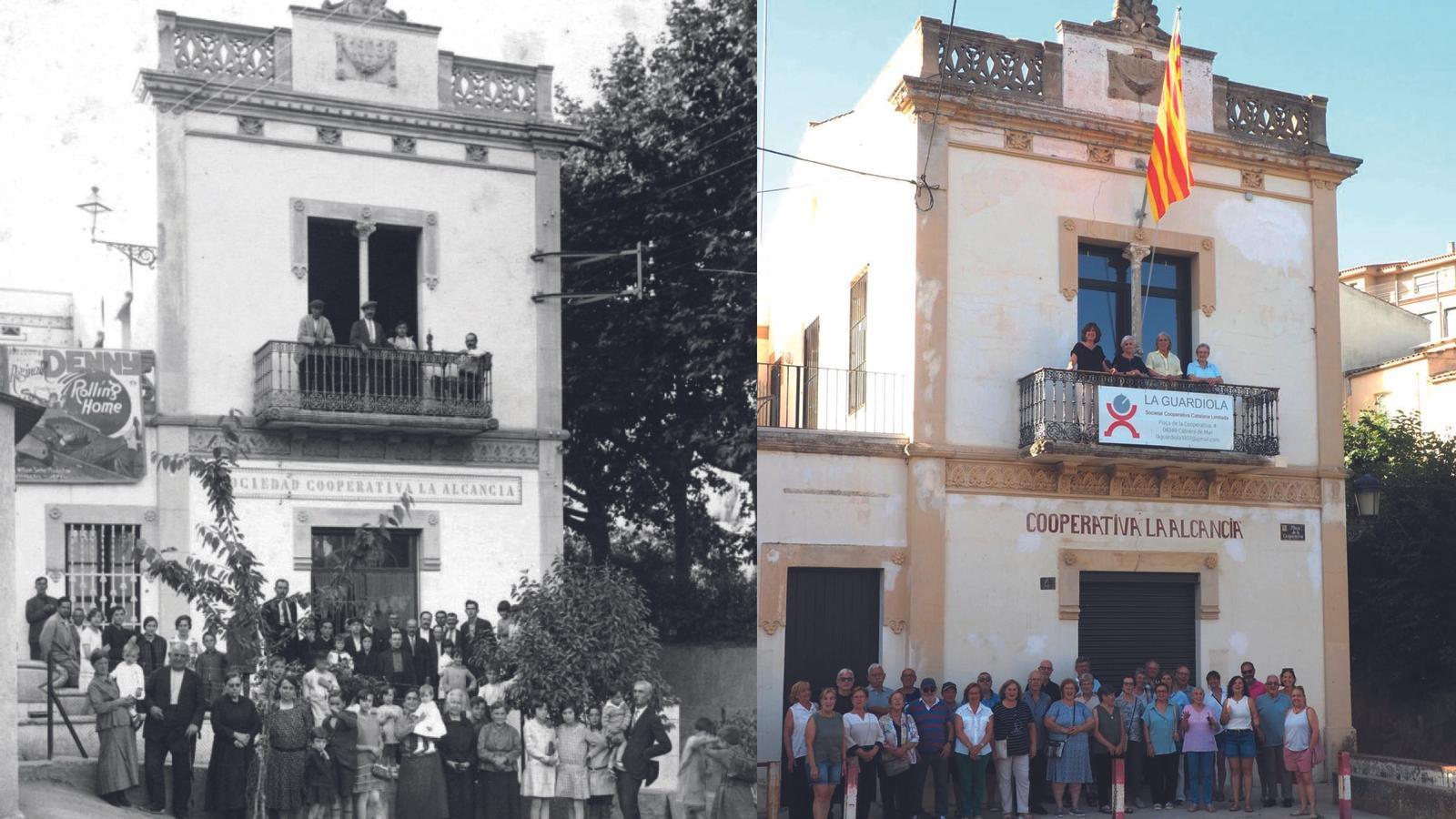
Founded in 1907, La Guardiola is part of the history of the cooperative movement in Catalonia. In Cabrera de Mar, where it is located, the cooperative made a cooperative store possible, built a theater hall and a popular library, and was a promoter of housing for its members. Now, almost 120 years after its establishment, the cooperative is in full reflection on how to continue its activity.
What were the beginnings of La Guardiola?
— La Guardiola was born in 1907, at a time when Catalan cooperativism was experiencing great expansion, and in a context where Cabrera de Mar was essentially a village of farmers. At that time, 10 farmers decided to join together to create an agricultural society in the form of a consumer cooperative, because what they wanted was to share the need to buy products and supplies on better terms for their agricultural holdings.
What activities did the cooperative promote in its early days?
— The cooperative's purpose was to provide food, tools, products for farm work, etc., but very soon it also became a space for mutual support and community life. That is why when we talk about the origins of this project, we are not just talking about a shop. Over the years, the cooperative responded to the needs that the town had at that time.
What needs are we talking about?
— The cooperative store guaranteed access to basic products, but La Guardiola also promoted cultural, educational, and social services. It built a theater, created a popular library, facilitated access to medical care, and supported families in vulnerable situations. In short, it covered collective needs at a time when the administration could not yet do so.

In the sixties, La Guardiola also promoted the construction of housing for its members.
— Yes. In the sixties, many families lived under the same roof because their children could not access housing. La Guardiola responded to this need by promoting 38 homes for its members. It's curious, because more than sixty years later, access to housing continues to be one of the biggest challenges in our society.
The cooperative also went through complex moments, such as the occupation of its buildings by the Franco regime and the irruption of large commercial surfaces, isn't that right?
— Yes, and the blow comes in the eighties, when the shop's commercial activity ceases to be viable and La Guardiola begins to be sustained by its heritage. That moment marks a profound change in the way we consume and relate to the territory. Today we continue to face similar challenges: preserving local commerce and strengthening community life.
And when and how does this rehabilitation process you are involved in begin?
— The will to rehabilitate La Guardiola was born in the nineties, when different governing councils began to look for ways to preserve the heritage and guarantee the future of the cooperative. After many years of work, the turning point arrived in 2022 with the agreement to sell the old theater hall to the Cabrera de Mar City Council. This agreement exemplifies how collaboration between a century-old entity and local administration can generate shared benefits: we have been able to rehabilitate the cooperative and the City Council will recover the theater hall, and we jointly contribute to revitalizing an emblematic part of the town's historic center.
And what uses will the headquarters have from now on?
— Now that the heritage building has been rehabilitated, the challenge is to bring it back to life. The ground floor has two commercial spaces for rent, one of which already houses the restaurant La Taverna del Teatre, and the upper floor will be the headquarters of the cooperative and a meeting space to promote social, cultural, and cooperative activities open to the public. One of the first initiatives will be to recover the oral memory of La Guardiola, collecting testimonies from member individuals who still have vivid memories of the cooperative, and to create a documentary archive. We want to preserve the memory of the cooperative and of the people who have kept it alive for over a century.
Are there any other challenges you plan to achieve in the short term?
— Yes. Our main challenge is to understand what the collective needs and opportunities are for Cabrera today and to see what role La Guardiola can play in responding to them. More than a hundred years ago, the cooperative was born because a group of neighbors decided to organize themselves to face shared challenges; today it is up to us to ask ourselves what these challenges are. We want to reconnect the community with the values and tools of modern cooperativism, which offers solutions in areas such as consumption, housing, energy, mobility, and care.
