The total eclipse of the Sun in Catalonia of 1905
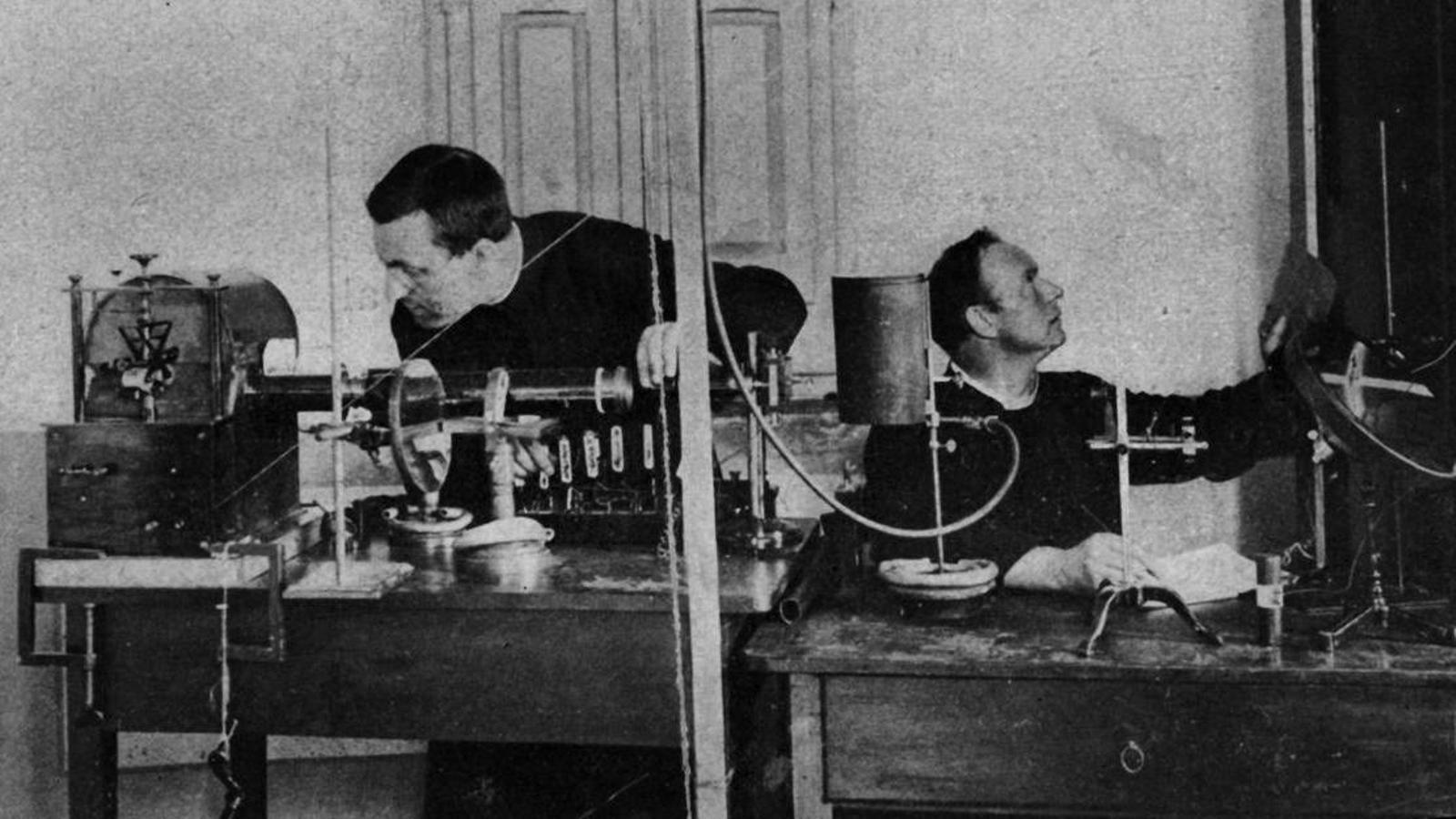
The Ebro Observatory, an initiative of the Jesuits, was inaugurated on the occasion of the 1905 eclipse

-
CAT -
CAST
They chartered a train for the occasion. That August 30, 1905, the railway left Barcelona's França station at six in the morning and returned to the city very late, at night. The reason for the trip was to be able to see the total solar eclipse from the new Observatory of the Ebro, in Roquetes.
“From the first moments, great excitement and bustle reigned inside the compartments, with good-natured jokes among the expeditionaries. The train, which consisted of more than twenty units, was greeted as it passed through the stations with hearty applause from the people gathered on the platforms. The travelers responded to these demonstrations of affection by waving handkerchiefs and hats,” explained a newspaper of the time. The gem of the article, for me, is this comment: “A large representation of the female gender was present in the passenger list, which was the most charming note of the trip.” More than a century ago, women participating in an astronomical journey was something stratospheric.
Another piece of information that catches my attention is that the calculations were less precise: “Twenty seconds before the calculated time, the moon bit the solar disk.” The eclipse occurred in broad daylight. It was the second of the three total solar eclipses of the 20th century, internationally known as “the Spanish eclipses.” The first took place in 1900, the second in 1905, and the third in 1912. The newspapers that collected this information from the moment the Sun, the Moon, and the Earth were aligned in 1905 are preserved in the Library of the Ebre Observatory. The library has about 50,000 volumes. It specializes in earth and space sciences. There are quite a few books by Narcís Monturiol, such as the first treatise on underwater navigation in history: Essay on the art of navigating underwater.Things did not go well for Monturiol economically. He had to dismantle the submarine and sell most of his books. Fortunately, his heirs kept the most important books, which had been used to build the submarine, and donated them to the library. Institutions did not pay much attention to Monturiol. "At most they patted him on the back. As happens now with many initiatives," comments Juan José Curto, doctor in Physical Sciences, researcher, and head of scientific culture at the Ebre Observatory, sarcastically. "Have you taken the photo of the Sun, Miguel Ángel?", asks Juan José to the professional from the State Meteorological Agency (AEMET) with whom we cross paths. "Yes, I just took it", he replies. We accompany him to his table to continue talking. "We photograph the Sun every day, if the weather permits. Since the beginning of the Observatory", comments Juan José. I look at the wall calendar. They haven't turned the page in three months! They must not have had time. "We observe the spots and track how they are born, live, and die," Miguel Ángel explains to me. Sunspots are regions of the Sun that have a lower temperature than their surroundings, and intense magnetic activity.intense. A single spot can measure up to 12,000 km, almost as much as the diameter of the Earth. "How long do the spots 'live'?" I ask Miguel Ángel. "From a few days to several weeks." "Oh, only?" I say. That's nothing considering the timescales of many elements in the universe, I think. "The Sun has an activity cycle of 11 years. It's like a beating heart." I find this timescale more normal."Here meteorological data is collected from before the Observatory existed", Juan José tells me. "The Jesuits, founders of the Observatory, started collecting it in 1880, twenty-four years before founding it", he adds when we are in front of the meteorological station. It is the most complete I have ever seen it: it measures rain, wind, temperature, pressure, humidity, solar radiation, cloudiness, types of clouds...I hear from afar the vroom vroom of a truck and the whooosh! of a football match. And this, even though the Observatory, about twenty scattered buildings situated on top of a hill, is quite isolated. This explains why some instruments have had to be moved to quieter locations. This is the case for seismic and magnetic sensors.

"The Ebre Observatory's is one of the oldest seismic stations in Catalonia; it's from the same era as the Fabra Observatory", explains Juan José, and shows me the model of a seismograph that was made for the 1929 Barcelona International Exposition. Then he stops his explanation. He remembers that, as a child, he came here with school. And he wrote an essay about this seismograph. Schools have been – and continue to be – one of the main audiences for this magnificent Observatory.
main for this magnificent Observatory.Created by the Society of Jesus to study Sun-Earth "relations""In Tortosa we were able to convince ourselves that science and faith are two twin sisters. Both were carried forward by the Fathers of the Company as they were able to accredit it to the world yesterday.", said a chronicle of the Solar eclipse of 1905. The Ebro Observatory was founded in 1904 – it was inaugurated coinciding with the eclipse of the following year – by the Society of Jesus, precisely to study the Sun-Earth "relations". The Jesuits have always had their feet firmly on the ground.

