Dignity and respect in the care of people with intellectual disabilities
Knock on the door before entering a room, explain what we are going to do before helping someone get dressed or look for a private place to talk about a health issue. These gestures are an example of what it means to treat a person who needs support in their day-to-day life well. On the occasion of December 3rd, Catalonia Foundation Creactiva focuses on these situations and how to organize them
-
CAT -
CAST
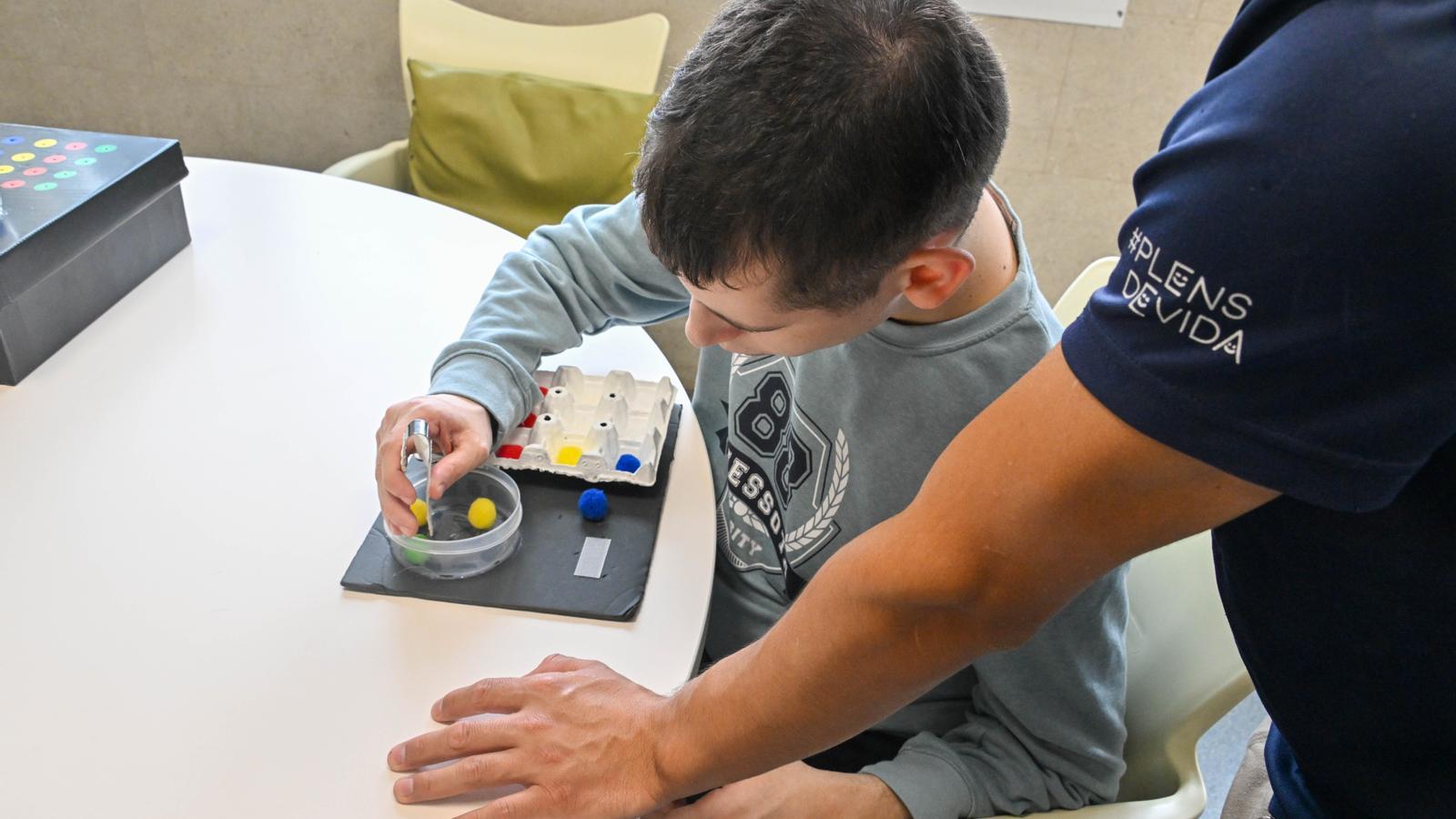
Two people may need help to perform the same task and experience it in very different ways. In personal hygiene, for example, someone might need their materials prepared and to be given time, while someone else might require physical support and feel more comfortable if what will happen next is anticipated for them. Knowing these details allows for the adjustment of support, the preservation of privacy, and facilitates the user's ability to do what they can for themselves.
At Catalònia Fundació Creactiva, they are aware that preferences and needs are what guide support and that, when a person needs support, it is important to listen to them, understand how they feel, and find a way to offer them the help that best fits their needs and preferences. This is knowledge that can help improve the user's life project and, therefore, sharing it with the rest of the professionals who accompany them during shift changes or when someone new joins the team also allows for continuity in this support.
The environment also influences the user's well-being, as a noisy space or a last-minute change in routine can cause a certain degree of bewilderment. In this regard, Catalònia has outlined a roadmap in which it is committed to creating more understandable, predictable, and emotionally secure environments, a challenge that requires, among other things, speaking to users in an understandable way, respecting their private lives, and listening to what causes them anxiety in order to provide an appropriate response, a strategy present at Catalònia since 2006, when the foundation implemented a model of care born to give more weight to activities, well-being, and inclusion in the daily lives of the people it supports.
Planning tailored to each case
During these two decades, the foundation has incorporated proposals for communication, creativity, music, physical activity, nature, cognitive and multisensory stimulation, and the development of its own products. It also has spaces such as greenhouses, art and music rooms, swimming pools and multisensory stimulation rooms, a sports center, a cinema, etc. The offer allows for working on physical, emotional, social, and cognitive aspects, among others, and provides space for the enjoyment of the relationships that are created when doing things together.

The teams at the forefront of caring for the users of Catalònia plan the proposals and incorporate them into the individual care plans. To do this, they take into account what interests each person, what support they need, and what the activity can contribute to them. Over time, they have also created everything from a catalogue of activities to technical sheets, including individual assessments, sensory profiles, and personalized activity maps, tools that allow moving from a general offer to a planning tailored to each case.
On the other hand, through the assessments and feedback provided by the users, the teams can also adjust the groups, modify a route, or change the materials or the space of a workshop, a tailor-made fit and a responsibility towards the people who live at the foundation that highlights not onlythe spirit of continuous improvement of the group, but also the work of the professionals who form it. Therefore, on the occasion of the International Day of Persons with Disabilities, Catalònia also wants to demand better salaries, ratios adjusted to support needs, and sufficient resources to train the teams for the new care profiles. And the fact is, as they underline from the foundation, “one cannot live on vocation: to live, a decent salary is needed, and to do the job well, resources are needed”.
In 2020, Catalònia launched the Unit for Attention to Victims with Intellectual Disabilities (UAVDI) in collaboration with the Mossos d’Esquadra, with the aim of providing a specialized response to situations of abuse and facilitating access to justice on equal terms. The unit advises people with intellectual disabilities, families, and professionals in the event of suspected abuse or mistreatment, conducts specialized assessments, and facilitates the participation of individuals in police and judicial proceedings.
Approaching the International Day of Persons with Disabilities, the foundation wanted to take stock of these first six years of activity, during which the unit has handled 688 cases, a figure that includes the 109 recorded in the provisional report for 2026. In 2025, it handled 145. Of all the cases attended that year, 67% were classified as sexual abuse and 16% as “no abuse.” Regarding the profile of the people served, 74% were women and 46% were under 18 years of age.
