Beyond emotion: the science that explains why a castle works
A documentary driven by URV, TAC12 and La Xarxa offers a new scientific look at the casteller world
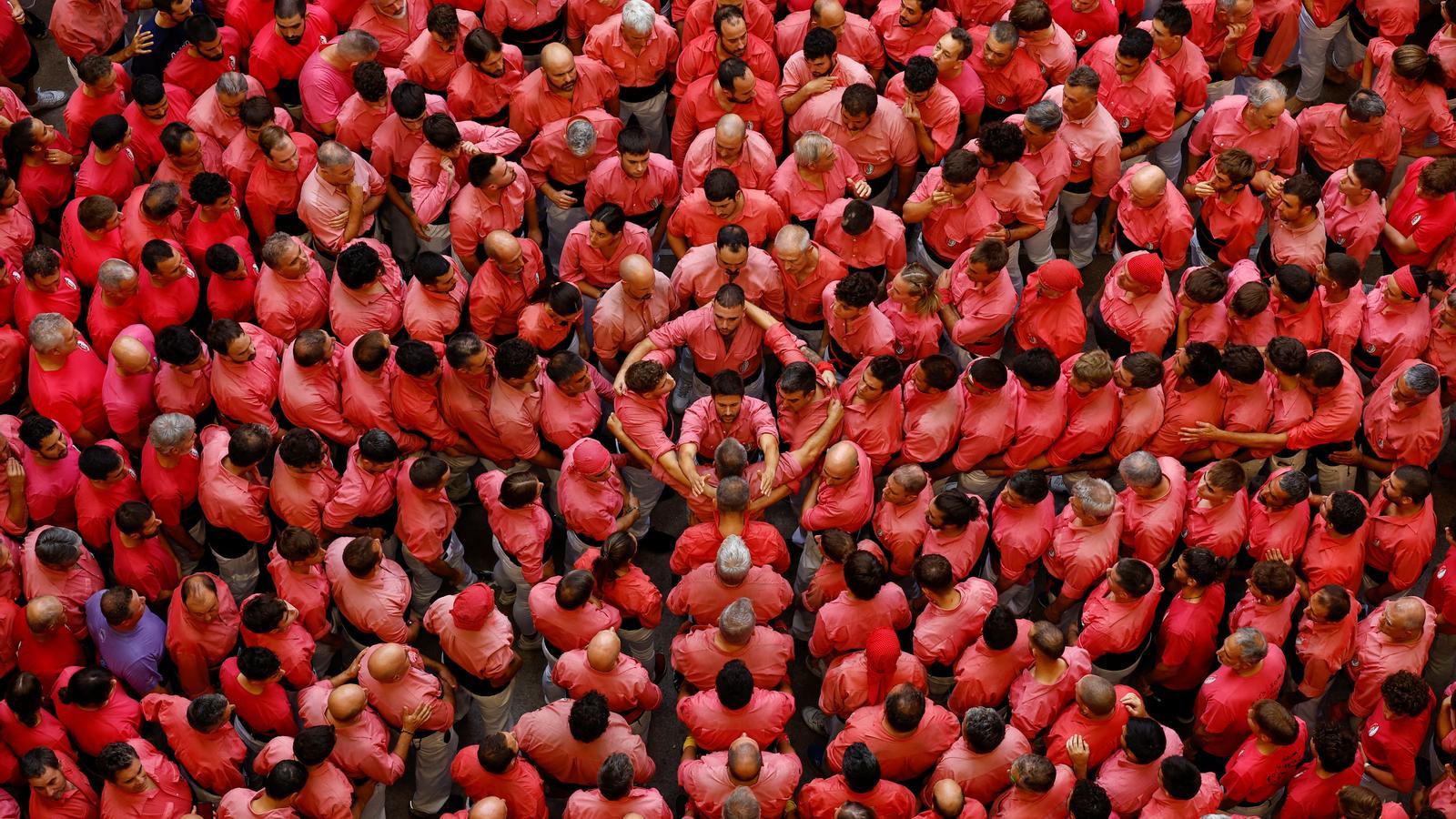
Camp de TarragonaThe world of castells has traditionally been explained through emotion, tradition, and major festivals. But in recent years, a new way of understanding this universe has been gaining strength: the scientific perspective. Physics, mathematics, psychology, and architecture are some of the disciplines that help explain why castells work and what happens within a group beyond what is seen in the square.
From this idea is born Castells de ciència, the new documentary co-produced by the Universitat Rovira i Virgili, TAC12, and La Xarxa de Comunicació Local. The production, directed by journalist Carles Cortés and presented by actress Agnès Busquets, offers a different approach to castells, moving away from the usual narrative focused on performances and the castell calendar.
The documentary follows Busquets' personal journey, as she rediscovers the world of castells from a new perspective after having been interested in it as a child. Based on her experience, the production connects castells with scientific concepts and everyday situations to make them more understandable also to the public who are not familiar with this universe. "We are used to talking about festivals and the day-to-day of castells, but we wanted to look at it from another perspective," explains Cortés. The director argues that the piece is especially designed "for those people who see the world of castells from the outside, but are curious about it."

Throughout the 55 minutes of footage, Castells de ciència shows how diverse disciplines can help interpret what happens inside a human tower. Neurobiochemistry, for example, is used to understand the emotions and adrenaline generated by building or dismantling a tower, while mathematics allows for the study of teams' performance or making predictions. Physical concepts related to balance and force distribution are also explained. One of the most notable comparisons is the one that relates human towers to Gothic architecture. During the documentary, architect Albert Samper draws parallels between tower structures and architectural elements such as arches or cathedrals, where weight distribution is key for the structure to remain stable.
Beyond the human tower squares
The documentary takes the viewer to very diverse places, from Tarragona, Valls or Vilafranca del Penedès to Girona, a city with less castellera tradition, but with elements that also help to understand this universe. Among the most surprising settings is PortAventura World, used to compare the extreme sensations of a ride with the emotional impact that crowning a castle can generate. This play on parallels is precisely one of the documentary's common threads and what gives it a more informative and accessible tone.
Culmination of five years of work
The television premiere will arrive this May 17 at 11 p.m. via TAC12 and the Xarxa+ platform. The documentary culminates five years of outreach work promoted by URV and the URV Chair for the Study of the Castells, which since 2021 have been working to bring science closer to citizens using castells as a tool for dissemination. For the director of TAC12, Xavier Abelló, this is precisely the great value of the project: "When things are too standard, they lose interest." In this sense, he argues that Castells de ciència offers "a different product", capable of attracting both castell fans and those viewers who had previously observed this world from a distance.
