Three minutes against the lunar mission deniers

NASA's lunar mission with the launch of Artemis II has led some news outlets to bring back, in one way or another, that conspiracy theory which claims that the arrival of humans on the Moon in 1969 was a deception.
This Thursday, on Antena3 Noticias, they spoke of that great step for humanity that Neil Armstrong symbolized and added: "It caused the mistrust of many skeptics who still doubt today if it really happened". Afterwards, they interviewed people on the street to see if they remembered the broadcast, and a man who claimed to have followed it on television said "I have my doubts", referring to the veracity of the events.
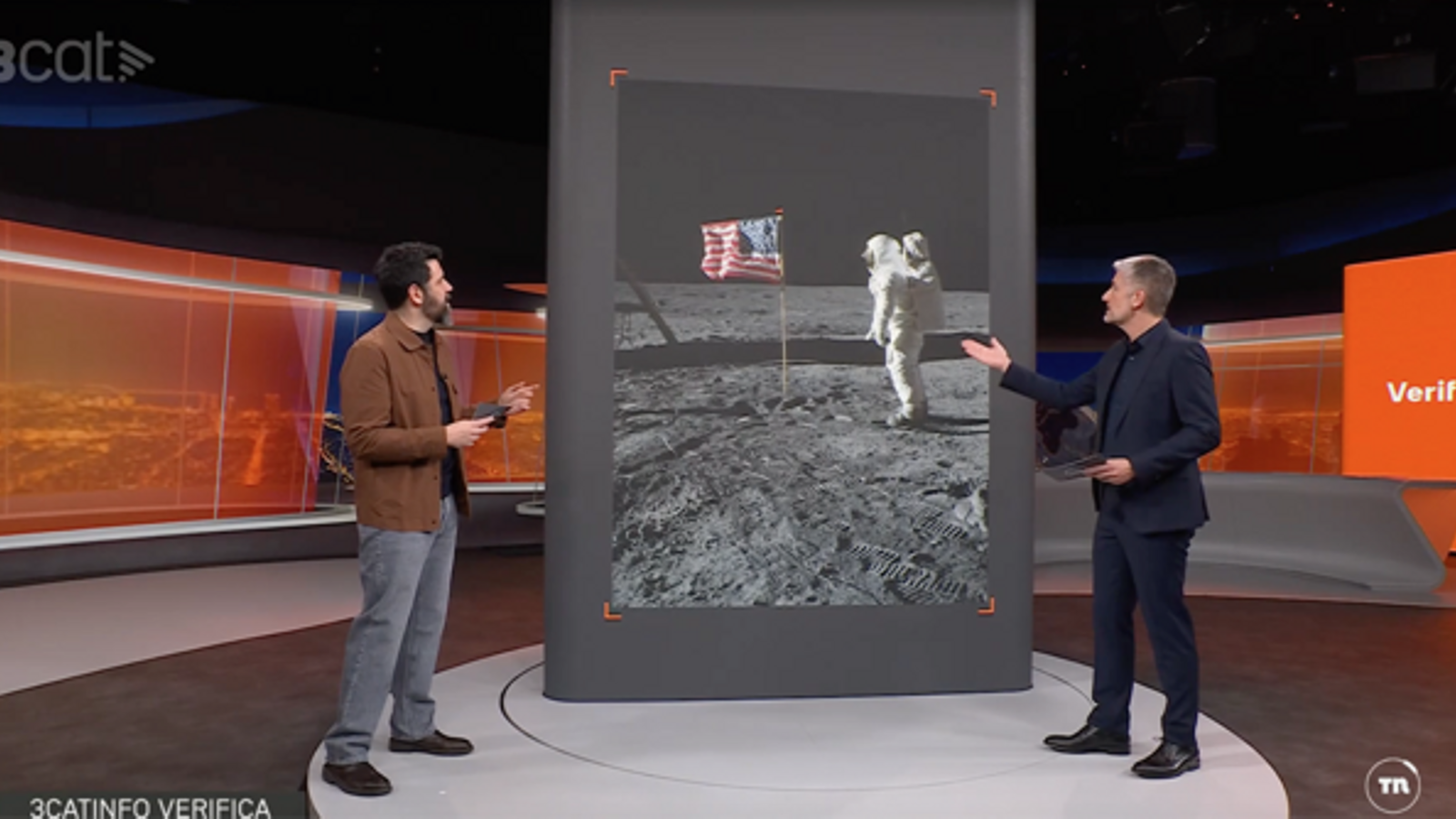
This Wednesday, on Telenotícies vespre, after a video about the race to conquer space, Toni Cruanyes and Carlos Baraibar, head of verification for 3CatInfo, debunked the denialist theses that claim the Apollo 11 landing was filmed in a film studio: "Why aren't the stars visible if the photo is on the moon?", "How did Armstrong film himself?", "How is it possible that the flag was waving?". They proceeded to break down the denialists' suspicions and dismantle them with the official account.
It is very good that Telenotícies wants to enhance its prestige by offering an extra level of verification to viewers. However, perhaps it is unnecessary to do so with denialist theories from ages ago. In cases like this, the need to stage the verification does nothing but amplify the farce. A narrative duel is constructed that benefits the conspiracy, because it is given a counterproductive informational centrality. This journalistic symmetry of first presenting the conspiratorial assertion and then giving the institutional response is unfair to the truth and reiterates one of today's informational problems: that denialism sets the agenda. Furthermore, this method contributes to fixing the myth: the audience tends to retain the most surprising information rather than the most technically correct, which is usually less exciting. And even more so if we consider that denialists are people who believe their knowledge is sufficient to oppose the consensus of experts. Conspiracy theories work not only due to a lack of information but also due to a supposed excess of sense, and this is not stopped by the most obvious journalistic theatricality.
There is also a question of journalistic naivety at play. If the quintessential conspiracy theory, one of the most comical, which has triggered investigations of little substance, sensationalist documentaries and fiction films, were as easy to debunk as dedicating three minutes to it on TV3, we would surely not be talking about the most persistent and popular conspiracy in history. And it would not continue to circulate with the surprising vitality that it does almost sixty years later, even in news programs that, theoretically, are supposed to inform us and not misinform us.
