A good verdict for 'The Trial'
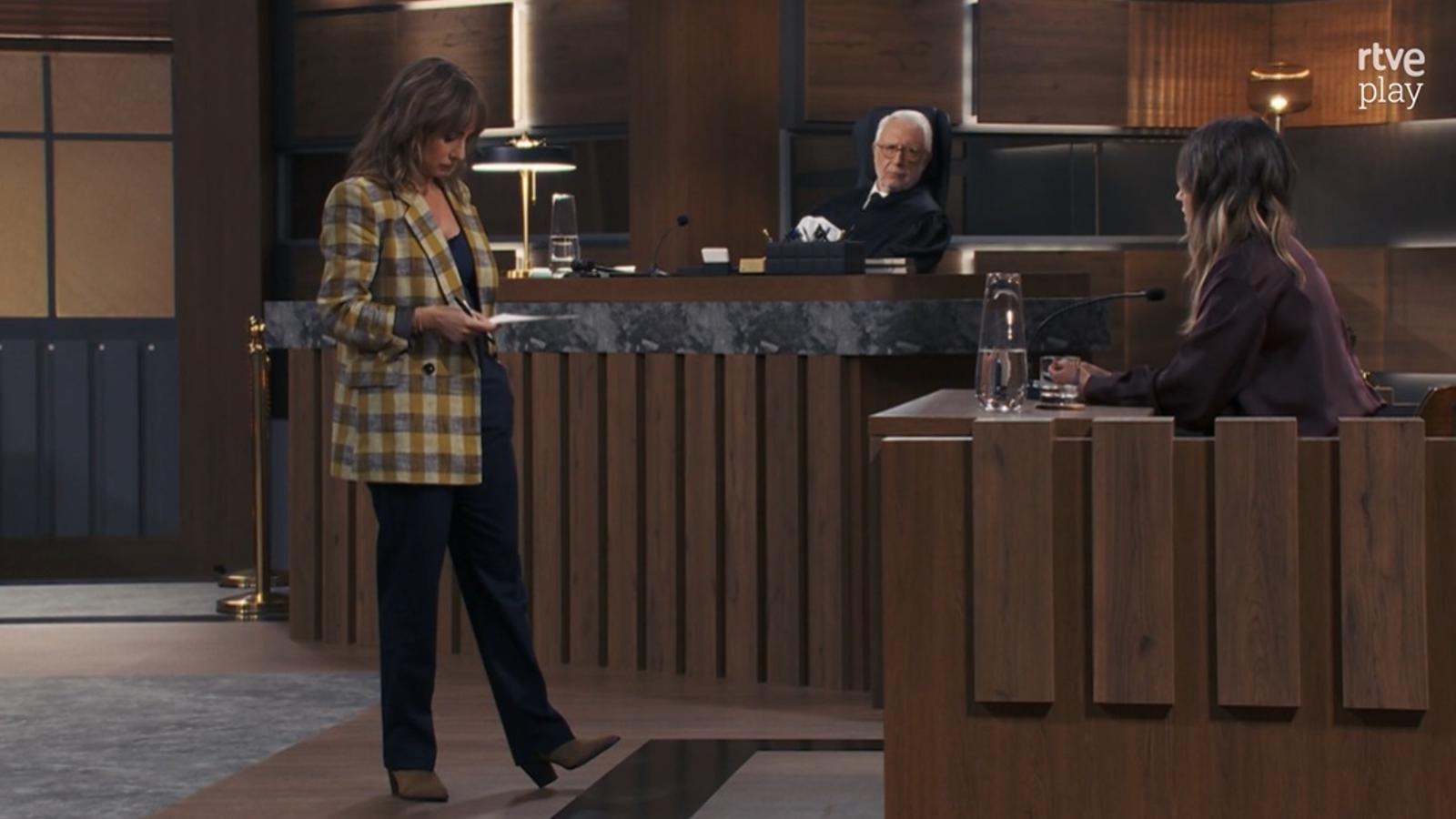

Trials are one of the most effective dramatic structures that exist. That's why many real trials have become major media spectacles. There is conflict between two parties, reinforced by the narrative of witnesses and evidence. There is tension, suspense, and a final verdict that resolves the drama. Therefore, historically, courtroom dramas have become successful television formats very useful for turning social conflicts into entertainment and spectacle. Two historical examples are Puyal's "Vostè jutja" on TV3, and "Tribunal popular" on La 1, with Javier Nart and Ricard Fernández Deu. Now La 2 has incorporated into the tradition "El juicio", a judicial recreation in which current issues are debated: should more be invested in public healthcare?, are today's young people living worse lives?, is it legal to profit from housing? Questions with a moral orientation and an ideological charge that, from the outset, pose a binary dilemma in much more complex areas. What is surprising about this new format is a theatricality with very realistic pretensions. The set is imposing and shows influences from American trial programs. It has very good lighting and direction. The program is structured into two narrative areas: the trial and the report. The trial, almost as a tribute to the genre, brings back the figure of Fernández Deu, who has been promoted to judge, complete with a robe. Facing each other in the two conflicting parties are lawyer Montserrat Nebrera and journalist Ana Pardo de Vera, who is also referred to as a lawyer as if she were one in reality. Between them, they interact with classic jargon in the style of "con la venia de su señoría". A comedy that grinds a bit due to the excess in the falsification of roles. Even the most servile inertia of the most backward justice is reproduced. "Call Mr. Antó, please!", exclaims the judge. And the supposed civil servant, in an outdated uniform, opens the door. A very good selection of anonymous citizens become a popular jury and make a final deliberation before "judge" Fernández Deu pronounces the verdict. It is an ambitious and well-crafted program, unlike few others on the current grid. The witnesses who take the stand, requested by both parties, are excellent. They are experts in the subject matter who respond clearly because the format requires brief interviews that must get to the heart of the matter.
To broaden the trial, more insightful fragments are incorporated, led by journalist José Luis Sastre. Witnesses and those affected by the issues to be debated are interviewed, and they are incorporated as arguments in the trial. In the case of the housing program, the chosen profiles were optimal and the way of conversing with them, exemplary. The visual presentation and journalistic approach are impeccable. One senses, in Sastre, a promising future as a television reporter of analysis and investigation.
In a television landscape that has settled for treating current affairs with superficiality and talk shows, El juicio is the renewed version of television from before: more demanding and ambitious. Perhaps that is why it has been incomprehensibly relegated to La 2.
