The Seventh presents itself aspiring to a modest 2% and denies being Telesánchez
The channel begins to walk with an initial investment of 30 million euros

-
CAT -
CAST
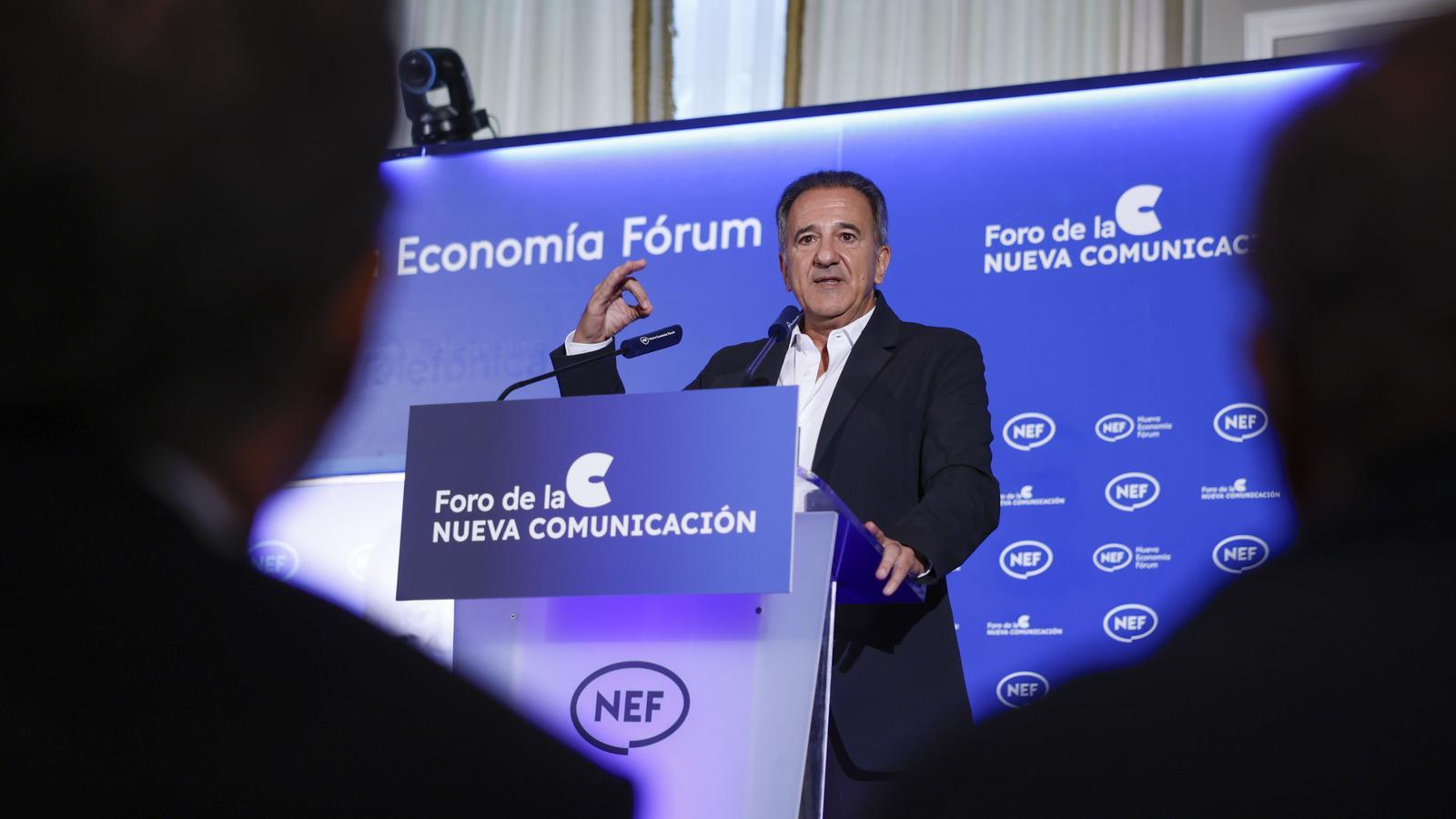
BarcelonaAlthough it will not begin broadcasting until November 5th, the new free-to-air DTT channel already carries the stigma of being born as a communicative lever in favor of a PSOE in flagrant media and, above all, television minority. The company's CEO, José Miguel Contreras, has tried to shake off this notion by labeling it as "stupidity." He did so during an informative breakfast in which he outlined some of the issues that have accompanied the project since the Spanish government awarded them the television channel, ahead of the bid presented by Mediaset.
Asked if elections can be won thanks to a television channel, Contreras replied: “With one television channel, no. Having all the television channels, I think it helps.” Implied in the answer was the admission that the impact that can be generated on the rating meters will be modest. The executive, who is considered the great shadow advisor to Pedro Sánchez on media matters, has admitted that with the 30 million annual budget with which the channel is being launched, they can aspire to a 2% audience share. “I very much doubt that when the elections arrive now in the summer, this 2% of television audience will decisively change the vote in one direction,” he concluded.
As a reference, Antena 3 exceeds 12% and La Sexta—promoted among others by Contreras himself, before being absorbed by Planeta—hovers around 6%. This last channel, by the way, was born with an initial impulse of 300 million, which gives a measure, on the one hand, of how the television landscape has changed and, above all, indicates the type of programming that La Séptima aspires to do: current affairs talk shows, which are among the formats with the lowest cost per minute, compared to large entertainment programs.
“We would be radically wrong if we make a partisan television channel, a television channel linked to a political figure or a specific party, because that goes against what television is,” insisted Contreras, although the pool of faces that has been made known so far are all identified with unequivocally progressive positions close to the PSOE. Thus, the first star signing that was revealed was that of Javier Ruiz, who had been hosting Mañaneros 360 on La1. Now he will be the editorial director of the network, in addition to presenting its morning program from Monday to Friday.
Other names that have been made public are those of Rocío Delgado (coming from Galician television), Alba Carrillo and Marta Márquez (for the weekend magazine show), the comedian Héctor de Miguel (known as Quequé and a frequent target of the far-right for his satires), Luján Argüelles or the talk show guest Sarah Santaolalla, Javier Ruiz's partner, who will now have her own program after a period in RTVE spaces defending progressive positions. The latest confirmed signing, this very September, is that of Verónica Sanz, who leaves La Sexta after a period of seven years.
Contreras wanted to lower expectations: “If this were a bargain, hundreds of companies would have shown up for the public tender”. Even so, he assured that he had never encountered “a project in which there are so many people working so hard to prevent it from coming out”. The idea for La Séptima, in fact, began to take shape among a group of executives who were working at the Prisa group at the time, but the skepticism of the group's president, Joseph Oughourlian, not only caused the file to be dropped but also resulted in a major internal purge within the media conglomerate.
