Tesla Roadster: the first flying car
Despite the years of delay, Tesla's new Roadster will see the light with a disruptive element: it will be able to take off thanks to a propulsion system developed by SpaceX
-
CAT -
CAST
Elon Musk has reason to celebrate. Nine years after its announcement, Tesla has finally shown the first images and technical capabilities of the Roadster, the American brand's electric two-seater sports car. In fact, the first Tesla Roadster was presented in 2006, taking advantage of the Lotus Elise base in force at that time, but transforming it into an electric car. Tesla sold about 2,000 units of the first Roadster between 2008 and 2012, before ceasing production and turning it into a car highly coveted by collectors, especially after SpaceX (a company also under Musk's control) placed one into solar orbit in 2018 as part of the Falcon Heavy rocket's maiden voyage.

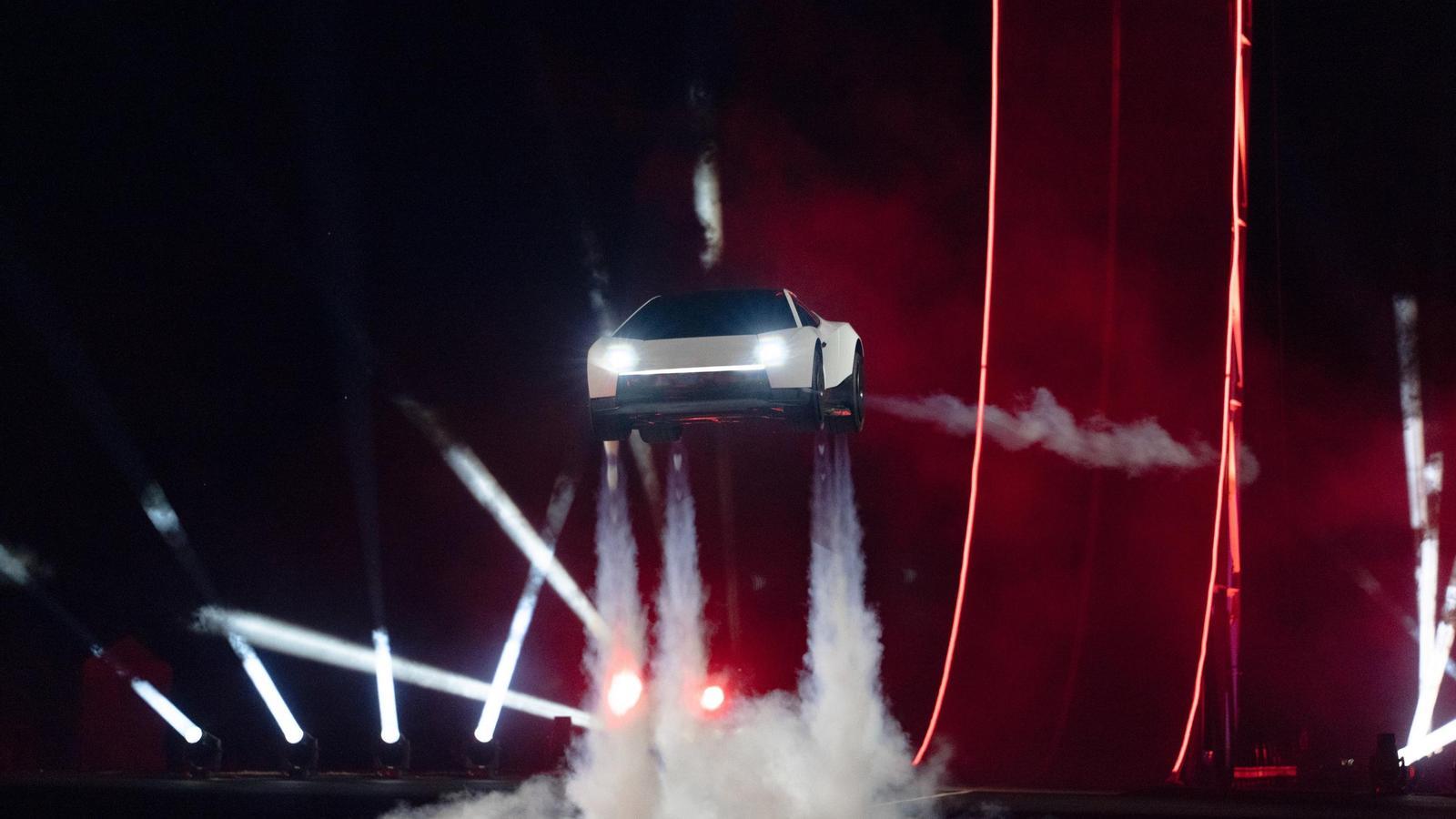
Since then, Tesla had repeatedly announced the launch of the new Roadster, although it never quite specified the date or technical specifications. Once again in collaboration with Space X, the Roadster has finally shown its capabilities and level of innovation by becoming (attention!) the first flying car in history manufactured on a commercial scale.

The most surprising detail of the new Roadster is the set of thrusters that allow it to lift the bodywork, defying gravity. It does this through a system that combines fans that extract air from under the car with aerodynamic elements that allow it to generate a force in the form of suction, which enables it, among other things, to keep the vehicle stationary while attached to a ceiling. However, Tesla is not looking to create a flying car capable of clinging to a ceiling as if it were Spiderman's car, as its ultimate goal is, according to the brand in a statement, to “improve the car's traction and stability in corners, increasing downforce without having to travel at a very high speed”.
The car that can fly
Although it remains to be seen what Tesla ends up including in its definitive Roadster, the collaboration with SpaceX has gone further and has also allowed for the incorporation of electronically actuated cold gas thrusters to push and stabilize the vehicle, and even moving forward by making small jumps or take-offs. Tesla, in fact, is playing with the possibility of creating a Roadster capable of flying in a conventional way thanks to several of these cold gas thrusters distributed throughout the vehicle. At this point, Elon Musk is once again playing cat and mouse and does not announce either how long or what distance the new Tesla Roadster could travel in take-off or flying mode.
Finally, it is worth remembering that international legislation included in the various traffic codes across the five continents does not authorize or allow a driver to travel through the air, since in that case, one would need to obtain a pilot's license to be able to take off the car. Nevertheless, and once again, Elon Musk has managed to generate a true coup de théâtre capable of making people forget the nine years of delays accumulated on the Roadster through the presentation of a groundbreaking and disruptive element.
