Puigdemont, Basté and the last postcard from exile
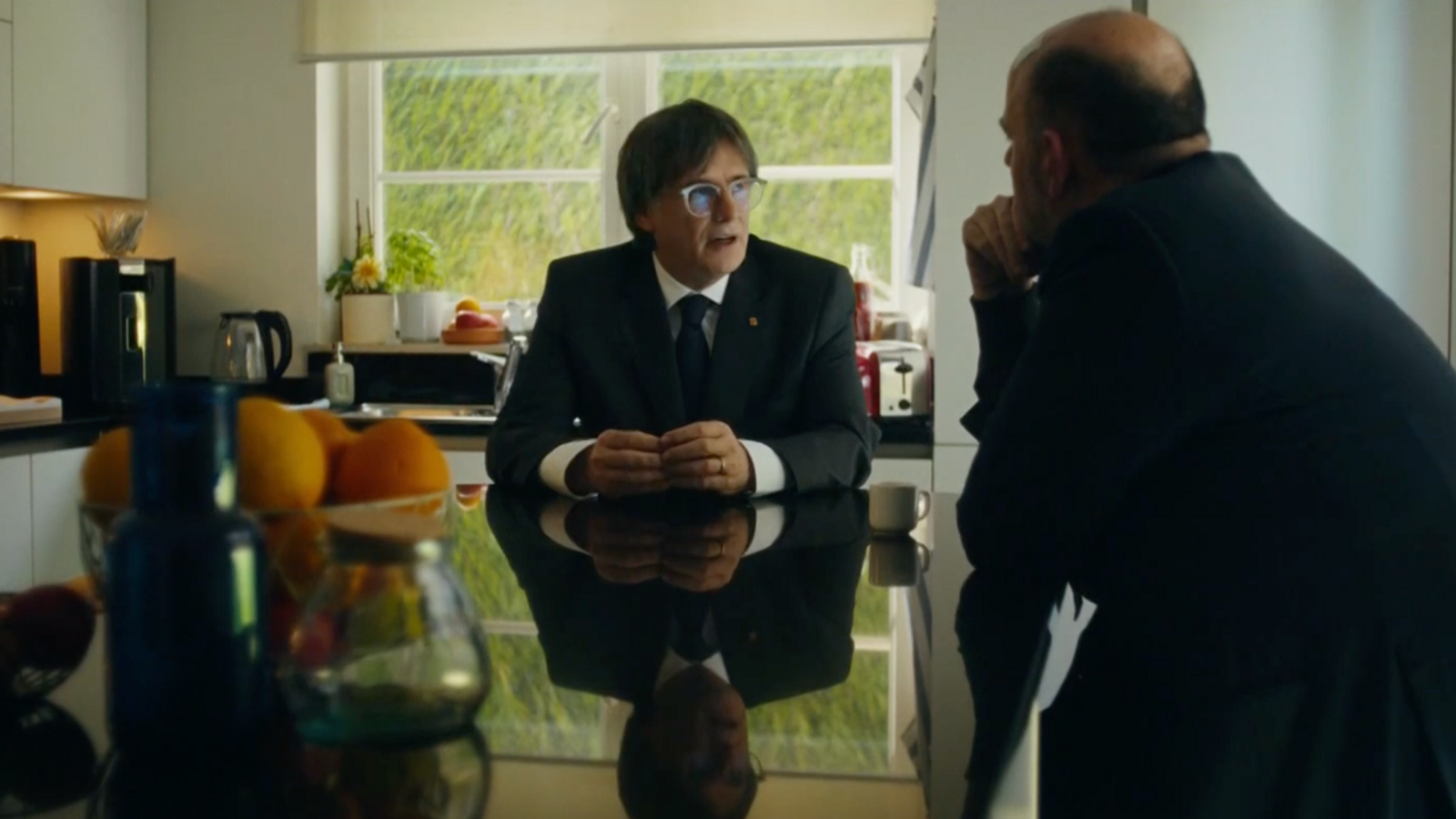

Last season, in the Sequence diagram of La 2 Cat, Jordi Basté interviewed Salvador Illa just after he returned from his sick leave. This time, the journalist opened the season by visiting Carles Puigdemont in Waterloo just before returning to Catalonia. Without a doubt, he has the gift of timing. “Should I address you as ‘tu’ or ‘vostè’?”, the presenter asked him as soon as he opened the door. He had no choice but to answer “tu”. Answering “vostè” would seem like a symptom of haughtiness. But in journalistic contexts, both with presidents and official positions, the you should be an unquestionable formula. No matter how personal you want the interview to be, what brings the journalist there is the institutional figure. Puigdemont opened the door wearing a tailored suit, tie, stiff-collared shirt, and the lapel pin. And he made it very clear that that attire had become an important symbolic element for him, to maintain the solemnity of the institution he represented, despite being in exile. Even anticipating a possible arrest, that clothing preserved the dignity of his office. No matter how personal or informal the interview was, and even if they were talking in the kitchen, losing the you is one more symptom of how values are distorted: decorum is also a way of recognizing the importance of what is being done. Using the informal 'tú' does not in any case imply a loss of respect, but the formal 'usted' respects that institutional awareness that Puigdemont seemed not to want to lose even on that occasion. Although Basté always prioritizes showing the audience the level of trust with the guest, the use of you should not affect the closeness in the relationship.
Basté pointed out to Puigdemont that it was not a political interview but rather a more personal one, revolving around the nine years of exile. He was saying it to the guest, but in reality, he was justifying himself to the audience. Beyond the fact that in this case it is difficult to establish the line between what is political and what is personal, Basté was announcing a renunciation before even starting. It is a preventive strategy regarding the viewers' expectations, but it limits what might emerge during the conversation. Basté, at the beginning, asked the question that had to be asked: “Who pays for all this?” The proof that the interview cannot avoid being political.
All in all, this has undoubtedly been the most interesting broadcast of all those made so far. He traveled to the Waterloo residence and the tracking shot justified and satisfied that voyeuristic effect that the public may feel for the House of the Republic. Furthermore, it has been one of those times that the camera has prioritized the guest, understanding that the journalist is not the protagonist. The conversation was interesting and only faltered in the final stretch at the station, when Puigdemont took a bit of control over the discourse. On the other hand, the choreography of the route was very apt for the final poetics. Basté returned to Catalonia and Puigdemont remained on the platform saying goodbye. The last television postcard of the exile.
