Betevé reinforces the bet for fiction with the series 'Episòdic'
The proposal adapts Catalan theatrical and literary works
-
CAT -
CAST
BarcelonaA step forward for Betevé in series production. Barcelona's public television premieres this Sunday Episòdic, an anthology that will adapt different Catalan theatrical and literary works. Although Betevé had already made forays into self-produced fiction, the new proposal is presented as a major project that aims to support new generations of the audiovisual industry. In fact, one of the distinctive elements of Episòdic is that it has been created, directed, and filmed by 38 undergraduate and master's students from various universities and film schools in Barcelona.
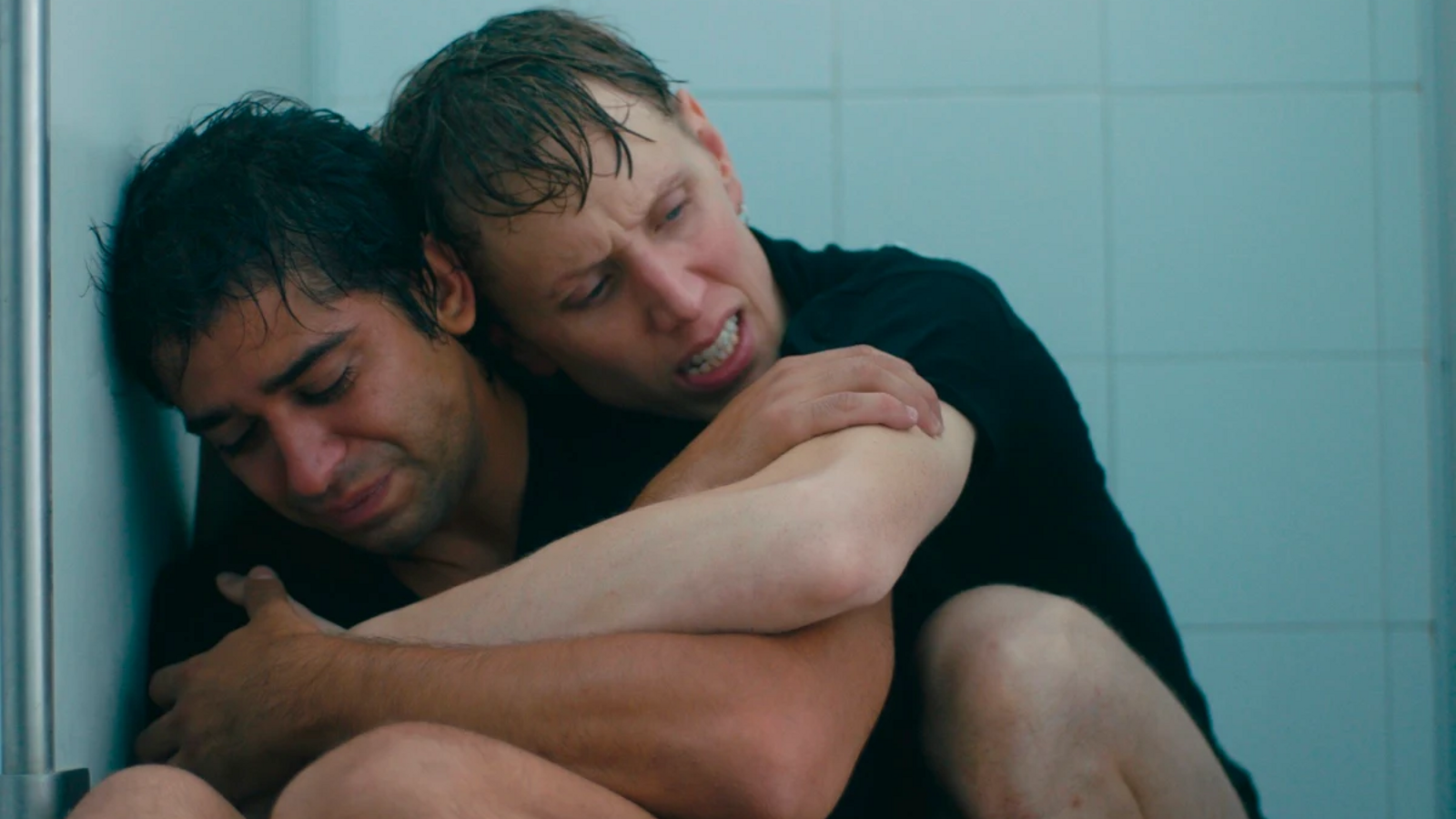
For its first season, Episòdic has chosen the play The Archimedes Principle, by Josep Maria Miró. The story, one of the great successes of contemporary Catalan theater, focuses on issues such as prejudice, fear, and distrust. The series, which is structured into six episodes of 10 minutes each, is set in a swimming club. In this environment, some parents complain about how one of the instructors handled a child's refusal to jump into the water: they do not look favorably upon the fact that he hugged him and kissed him. This gesture, theoretically to calm the child down, has set off alarm bells for the parents, who are demanding answers from the center's director.
While behind the cameras there is a young team with a long way to go, in front there are already established talents. Albert Salazar, who has appeared in series such as Jo mai mai and has been the lead in the musical Blood Brothers, plays Jordi, the instructor being questioned. Actress Anna Ycobalzeta, seen in Merlí, brings the swimming club director to life, and Iván Morales is the father who presents the complaint. Joan Esteve plays another instructor at the center, a colleague of Jordi. The project, which was filmed at the Sanfeliu Municipal Sports Center, in l'Hospitalet de Llobregat, is directed by Ainhoa Lastra, Andrea Morales, and Carlos R. Haro, with a script by Daniel Duran, Marta Lorenzo, and Ariadna Puértolas.
The students who participated in the initiative promoted by Betevé, the ICUB, and the Serielizados Fest come from undergraduate and master's degrees from various universities and schools in Barcelona, such as La Salle-URL, the Master's Degree in Screenwriting at the University of Barcelona and the University of Lleida, Pompeu Fabra University, Blanquerna-URL, ESCAC, SAE Barcelona, ECIB, ESMUC, Tecnocampus, the Autonomous University of Barcelona, and Bande à Part Film School. The series was the chosen proposal for the closing of this year's Serielizados Fest and the first two episodes were shown in a screening at the Phenomena theater on October 28th.
Historical memory on local television stations
Beyond fiction, local television stations have also become a window for documentary proposals, very often focused on issues of historical memory. This is the case of the docuseries Revolució, premiered on the Xarxa Audiovisual Local (XAL). The project, produced by TAC12 –the public television of the Camp de Tarragona– and the XAL, gathers the perspective of various historians who have studied the revolutionary period that Catalonia experienced in the summer of 1936. The series starts from the observation that the collective memory regarding those months has often been conditioned by the narrative built over decades by Francoist propaganda.
During the presentation of the docuseries, the director of TAC12, Xavier Abelló, highlighted that the project “revisits a very specific moment experienced at the beginning of the Civil War, an episode that may be uncomfortable”. For their part, the directors of the docuseries, Toni Orensanz and Joana Zapata, highlighted the research and documentation work. In this sense, one of the pillars of the proposal is the recovery of testimonies from the Audiovisual Bank of Testimonies of the Memorial Democràtic, which allow approaching the experience of the people who lived through the events firsthand.

