Vinyl, cassettes, and film cameras: why are 80s gadgets making a comeback?
Digital saturation, the need for physical contact, and also series like 'Stranger Things', drive young people to return to cultural consumption in traditional formats
-
CAT -
CAST
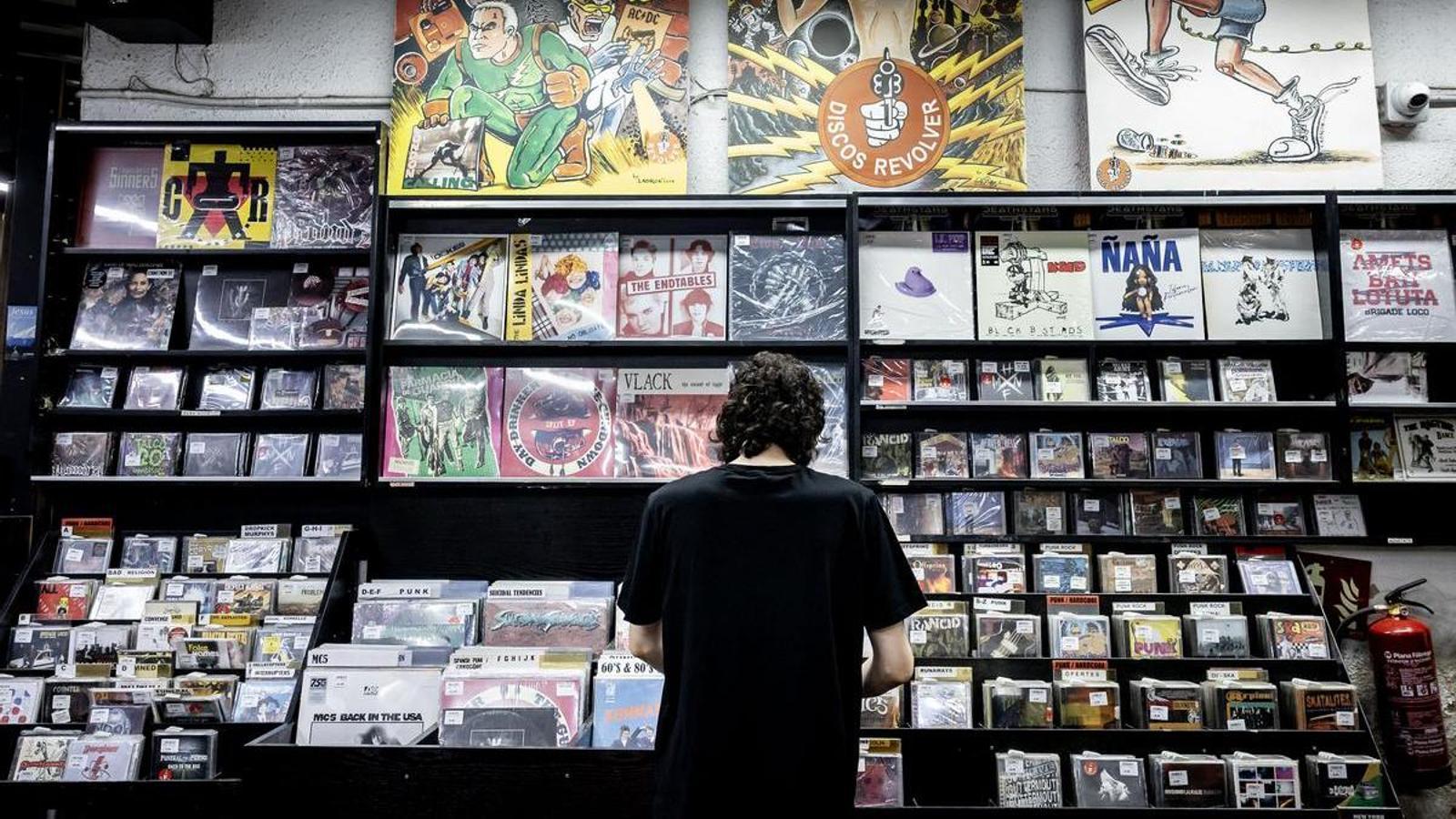
BarcelonaIn the midst of the streaming era and omnipresent screens, a growing segment of youth is looking back. Vinyl records, cassettes, film cameras, or VHS tapes, formats that just a few years ago seemed doomed to disappear, are circulating again among young people as objects of cultural consumption and symbols of identity. Far from being a fleeting trend, the phenomenon reflects an increasingly complex relationship between the digital generation and the technology that dominates their daily lives.
This return to physical media is part of the physical media trend: the recovery of tangible cultural formats in a context where most content is consumed online.
The data shows that the phenomenon is not anecdotal. According to the latest report from the Spanish music industry association, Promusicae, with data from 2025, vinyl sales grew by 30% compared to the previous year, and the CD has halted its freefall with a growth of 9.1%.

Even the cassette, a format once thought extinct, is experiencing growth, partly driven by highly popular artists like Taylor Swift and indie or alternative scene bands like Inhaler, who release limited editions for their fans.
The phenomenon is not limited to music. In the field of photography, various trend reports for 2025, such as that from CIPA, the Japanese association of camera manufacturers, and the official website for Nikon digital camera users, indicate that second-hand analog cameras and new compact film cameras are regaining demand.
This renaissance of analog tools responds to a combination of cultural, psychological, and generational factors. The new fascination with physical formats speaks, above all, to the need to regain a more tangible relationship with culture.
Digital saturation
One of the main explanations for the phenomenon is the fatigue with an increasingly digitized environment. Digital overstimulation, caused by the constant use of screens that keep the brain on permanent alert and can generate fatigue, anxiety, or attention problems.
Data in Catalonia reflect this situation. According to the latest survey on health and well-being from the Department of Health of the Generalitat with data from 2025, 2 out of 9 Catalan adolescents admit to problematic or compulsive use of screens. At the same time, a study by the Catalan Data Protection Authority indicates that 2 out of 3 Catalans would like to reduce the time they spend on the internet, but claim they cannot do so for work or social reasons.
In this context, the return to analog formats can function as a form of rebalancing. Psychologist Àlex Letosa, director of the Camina Center and member of the Clinical Psychology Section of the Official College of Psychology of Catalonia, explains that the phenomenon has a deep emotional dimension, but also points to a need for contact with objects. “The human brain needs to touch, collect, give value to objects, and streaming doesn't provide that”explains the psychologist.

The return to these formats is also a way of responding to technological excess. “It is a psychological reaction to the saturation of the digital world, this world is very powerful and has many advantages, but it has invaded us,” says Latosa.
The techno-anthropologist Jordi Colobrans agrees with this diagnosis. For him, there is an authentic “digital fatigue” caused by the constant pressure of screens and networks. Faced with this environment, some young people opt to recover more leisurely forms of cultural consumption. Colobrans particularly highlights the ritual dimension of old formats. As he explains, many prefer this type of consumption because it gives meaning to the moment and turns each piece into a unique experience. This process, he says, “helps to reduce the constant consumption anxiety generated by digital platforms”.

Furthermore, there is a control factor. In a world dominated by algorithms, physical formats allow for the recovery of a certain autonomy: “Having the object in hand and deciding when to enjoy it has value,” explains Colobrans. The return to analog is also a way of claiming freedom from a digital ecosystem that tends to create dependence.
The thread between generations
Beyond digital saturation, the phenomenon also has a family dimension. Many young people discover analog formats through parents, grandparents, or older siblings who still keep these objects at home.
This is the case of Pablo Muñoz, a 21-year-old photographer who is fond of analog cameras. Curiosity about old family photographs led him to analog formats and, over time, he has started buying film cameras. The process, he says, is radically different from digital: "With analog photography, you truly begin to understand how photography works." But cameras are not the only tools of this kind that he consumes: "I'm also a fan of cassettes, we have a player at home and my mother taught me how to use it," explains Muñoz. That first experience led him to discover a different way of listening to music.

A similar situation is explained by Blanca Martínez, 21 years old, who has been collecting analog products since she was little. At her home, music and cinema have always been consumed in physical formats and family routine has ended up marking her way of consuming culture. For her, CD formats "are a way to get closer to the artists and the music itself". She also fondly remembers the collection of films she had on VHS. "I really liked the reproduction process and, if I could, I would go back to it," says Martínez.
These experiences show how analog formats also function as a bridge between generations. What for parents was everyday technology has become a cultural object full of meaning for their children.
Vicarious nostalgia
Another of the keys to the return of analog tools is the influence of popular culture, the phenomenon known as vicarious nostalgia. Series and films set in past decades generate an emotional connection in young people with eras they have not lived and only know through fiction.
Very popular audiovisual productions from recent years have played a decisive role in this process. The series Stranger Things (2016-2026) is often considered the "patient zero" of this new fever. Set in the eighties, the series uses objects like walkmans or cassette tapes as central parts of the plot.

The commercial cinema has also contributed to this recovery. The trilogy of Guardians of the Galaxy turned the cassette into a central element of the narrative through the protagonist's Walkman and the compilation album Awesome Mix Vol. 1. Before the release of the first film in 2014, the cassette had practically disappeared; after its release, soundtrack sales forced record labels to resume manufacturing this format.
Television has also influenced the return of analog photography. The series Euphoria opted for a visual aesthetic typical of photographic film. To achieve this effect, its production team convinced Kodak to restart manufacturing Ektachrome film, a type of roll that had ceased to be produced in 2012.
These productions have turned analog objects into cultural and aesthetic symbols for a new generation. Clara Ruz, 21 years old, has experienced this firsthand. She started listening to music on vinyl thanks to her grandmother and, over time, has seen how this hobby has spread. “Since series like Stranger Things have become fashionable, many of my friends buy vinyl,” she explains. For her, this growing interest has a positive effect: it makes these formats more accessible.

The return of analog tools among young people is not just an exercise in nostalgia. It is a way of rediscovering culture at a time when everything seems immediately accessible. Between the algorithm and the turntable, more and more young people seem to be opting for a slower, more tangible, and personal cultural experience.
