"The physical body and the emotional body cannot be separated"
The surgeon Gabriel Weston proposes a particular journey through the interior of the human body that places the person at the center
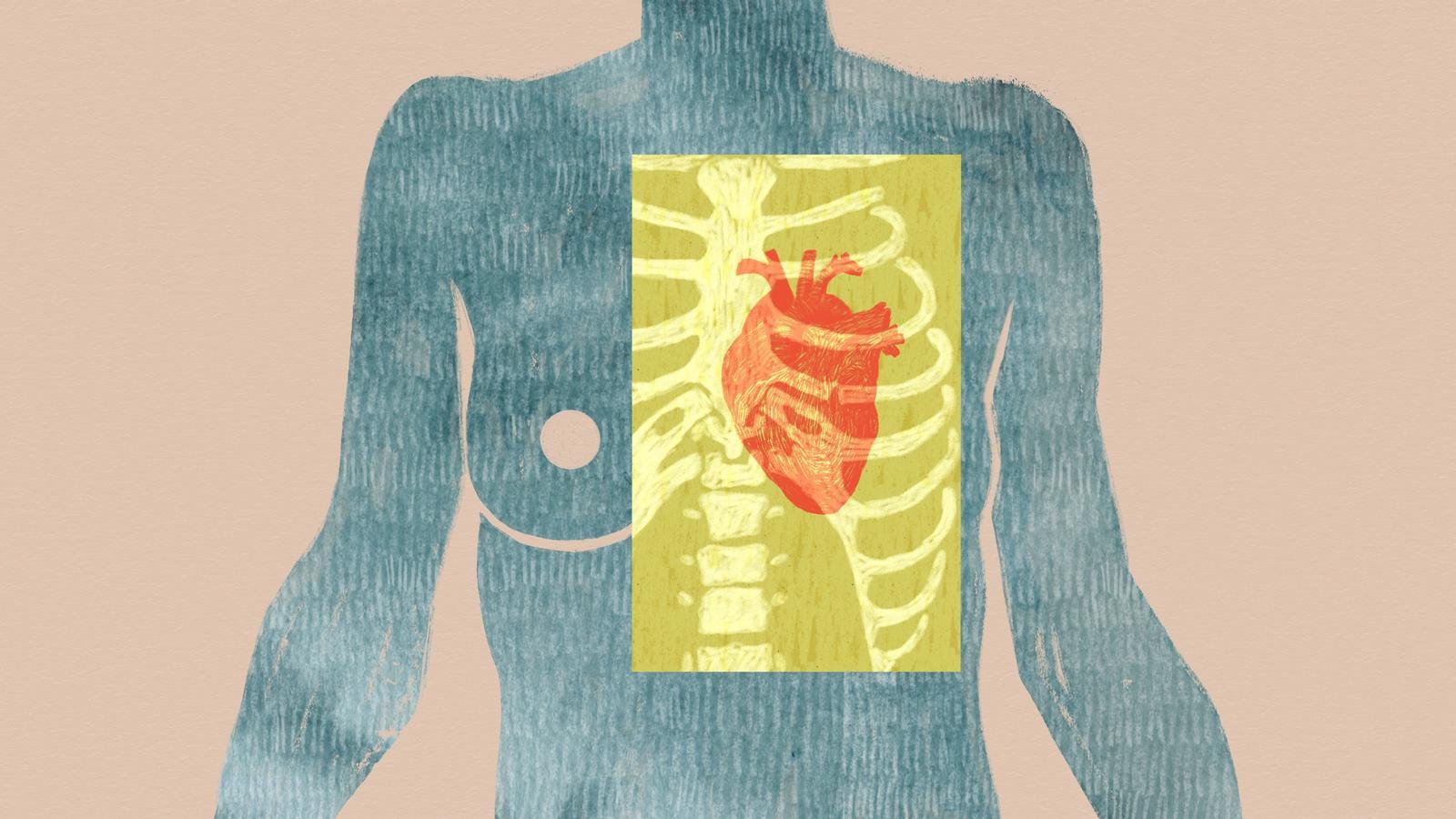

BarcelonaIt seems difficult to imagine that a book about human anatomy can be entertaining, passionate, exciting, and educational, but Gabriel Weston, a British surgeon, writer, and communicator, has achieved it with Con vida, published by Salamandra. The book begins with a detailed narration of an autopsy that immediately alerts us to everything we can discover during the reading, and the author's statement of intent arrives very soon: she explains that science only makes sense if it can be linked to something personal. In this regard, she states that the body cannot be viewed as a purely mechanical entity, but must be looked at from a more human perspective. Weston is a woman of letters who came to the world of medicine almost by chance and explains that she decided to write the book about 10 years ago. "Initially, I wanted to write it as a surgeon who had realized that much of the anatomy we used and that was still taught in medical school was outdated," she says. And she adds: "As a person with an artistic background, I also wanted to write a book that would bridge the gap between the arts and sciences. I wanted to look at the body through this dual lens."
From this premise, Gabriel Weston proposes to look at anatomy with new eyes, aware that knowing the exact location of each part of the body can make the difference between saving a life or losing it. From there, in each chapter, she explains all sorts of scientific aspects related to the organs she talks about, combining them with professional and personal experiences that make this book a completely different proposal. "Becoming the mother of a patient, and being a patient myself, changed my relationship with this book and the material I was researching and writing. It no longer felt right to write with the presumed authority granted to doctors. I also wanted to write from a position of vulnerability," she reflects.
Looking inside the body
In the different chapters, the surgeon explains each organ to understand how it works, emphasizing that individual stories matter. "We are seeing that the physical and emotional bodies cannot be separated, which is powerfully demonstrated by our recent understanding of the gut-brain axis. Individuals are different and we can no longer accept the paradigm of facts based on white, male bodies, as these facts do not serve everyone. Not forgetting that we are human, and any doctor-patient interaction that does not have this principle at its core is inadequate in every possible sense," assures Weston.
The author of Con vida describes herself as a woman of letters who became a surgeon, and acknowledges that this inclination towards literature influences her approach to medicine. "I think it is at the center of all my interactions with patients. For me, stories are as important as surgery. My job is to listen to patients and help them articulate their story, not to control it with my own agenda, as most doctors do. Literature teaches us empathy and imagination, tools that I believe are as important for a surgeon as steady and accurate hands," she states.
Navigating the pages of the book is also opening a door to our bodies, to discover hundreds of things we may not have known and that will surprise us. Some examples: did you know that the skeleton is made up of two hundred and six different pieces? And that the smallest bone in the human body is the stirrup, one of the three small bones in the middle ear that allow us to hear? Or that if we were to spread out our skin on the floor, it would cover more than 2 m², which is the surface area needed to facilitate the passage of the heat and sunlight we need? And that the breasts are a wonderful organ capable of transforming blood into milk? Or that 200 liters of blood enter the kidneys every 24 hours and that the liver has more than 500 vital functions? And one more: did you know that the heart is the center of an extensive network of 96,000 km of arteries and veins?
But it's not all scientific data or curiosities. The reading of Con vida also invites reflection on relevant aspects, such as in the case of genitals. Gabriel Weston maintains that the anatomy of genitals should be completely rewritten, as everything he was taught about this part of the body was based on a false opposition, and it's not enough to simply contrast penis with vagina. In this sense, he recalls that there is a lot of ignorance about female genitalia, and this affects women's pleasure and health. In the case of the uterus, for example, he vindicates it as one of the most important organs beyond the heart-brain dichotomy, and recalls that with no other organ do we maintain such a living relationship that demands adaptation at every stage of life. Women are always aware that it is there, whether through menstruation, pregnancy and childbirth, or menopause.
In a previous response, Weston referred to the importance of the gut-brain axis, and that is why he dedicates a whole chapter to talking about the intestine, this nine-meter-long organ that goes from the mouth to the anus and is the largest sensory organ we have. He explains that the gut-brain axis is formed by up to 600 million neurons and that the intestine has more immune cells than the rest of the body combined. However, the lack of knowledge is still very great, as nine out of ten studies on the intestine have been published in the last twenty years. In the same vein, we could place the brain, an organ that still holds many secrets. As the surgeon explains, it is the most changing organ that exists, with information in constant motion thanks to blood. She emphasizes that we have barely known basic aspects of brain physiology for a hundred years and that a disease like epilepsy has greatly helped to understand how it works. Not to mention that it has taken centuries to obtain a decent image of the brain.
In short, a reading that exudes the author's fascination with the human body. A fascination that Weston acknowledges "has not faded over all these years and begins with a sense of wonder." "I feel this more strongly when I am in the operating room and observe the beauty of our anatomy laid bare under the bright lights: the colors, the intricate organization of our tissues, the ineffable quality of the body simply being alive," says Weston. "I never tire of trying to understand it and marvel at it."
