Desigual: a monkey at the wheel?

-
CAT -
CAST
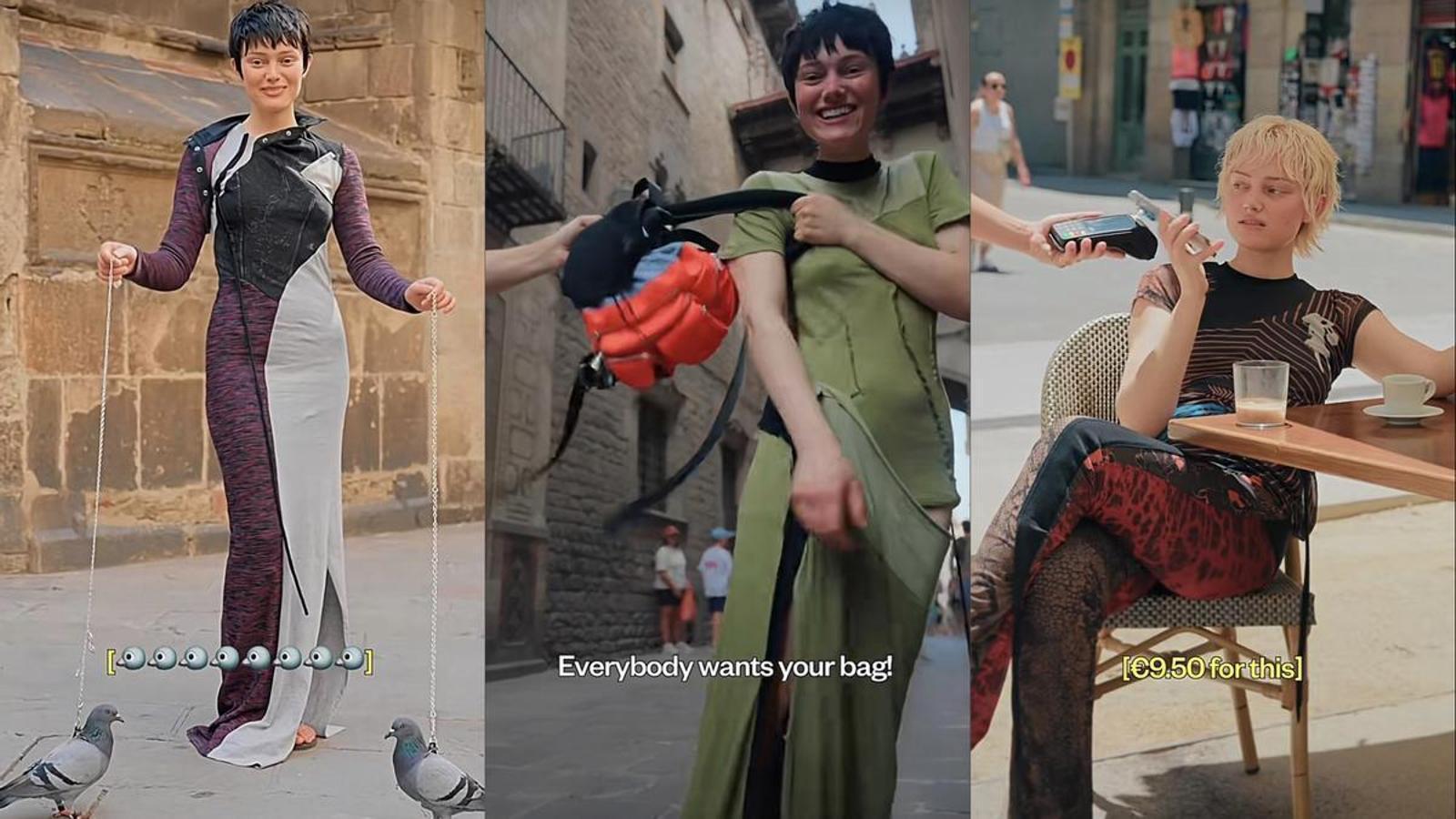
BarcelonaThe Catalan clothing brand Desigual has once again pulled a Juan Carlos in Botswana with its now iconic "I am very sorry... it will not happen again." The reason? The latest campaign, in which, with a clearly sarcastic and mocking treatment, it makes gentrification, touristification, overcrowding, rising prices, and insecurity in Barcelona the central theme to promote its latest collaboration with the Berlin brand Ottolinger. A campaign that has ignited social media and received a mostly negative reception. Firstly, because many have perceived it as a trivialization of the problems that currently stifle the Catalan capital. Furthermore, this treatment, beyond the fact that a brand based in Barcelona is shooting itself in the foot by ridiculing the city's image, does not aim upwards as a form of denunciation. What we must be clear about is that not all irony is a critique. And if, in addition, all of this is done to sell a few t-shirts, it is even harder to find any real desire to question anything.And I say that they have pulled a Joan Carles again because it is not the first time, in recent times, that Desigual has had to rectify its advertising campaigns. The most recent one, in 2025, starred actress Ester Expósito wearing the slogan Not a doll(I am not a doll), with an apparently feminist intention of women's empowerment. The problem is that, in parallel, the t-shirt campaign Protect the dolls was taking place, to support the trans community following the attacks and harassment by Donald Trump's American government. A campaign that, in no case, was minor, but rather had a great reach, with the adherence of renowned figures such as actor Pedro Pascal, singer Troye Sivan, or designer Haider Ackermann. The campaign itself could have been good, provided it had been carried out in a parallel world. The problem is that contexts are fundamental and seeing Expósito proudly wearing a t-shirt with the phrase "Not a doll", at that moment made the reading go from feminist to transphobic.In December 2012, it launched the campaign Tengo un plan, composed of three advertisements in which three conventionally beautiful women dressed up, in a sexy and uninhibited attitude, in front of the mirror while they explained their future plans. The first, to travel to Thailand to have sexual adventures and leave her life behind, including her boyfriend. The second, to tell her family that she had a female partner. And the third, that she had decided to sleep with her boss. A campaign that, despite wanting to empower women, fell into a false representation of equality by the adoption, on the part of these three women, of behaviors traditionally associated with men.The most serious one, however, was released following Mother's Day 2014, titled Tú decides. A normatively sexy girl, after putting a pillow under her dress to see what she would look like pregnant, took a strip of condoms and poked holes in them. An advertisement that clearly treats women's freedom of choice in the clumsiest way, since, apart from ignoring the other person's reproductive consent, it disregards the risk of contracting sexually transmitted diseases.Seeing, therefore, the promotional trajectory of Desigual, we could think that at the head of the marketing department they have a monkey at the wheel, with a total disconnection from the world and what is cooking. But, seeing the repeated blunders, perhaps what they have is a clever person who, in the face of a company that is struggling with sales, has opted for the old formula that says "let them talk about us, even if it is badly". A dangerous tactic that must be executed very well so that it does not end up being bread for today and hunger for tomorrow.In any case, perhaps the latest campaign regarding the touristification of Barcelona is better thought out than we locals have been able to see. With a brand owned by the Swiss Thomas Meyer and sales directed mostly to the international market, perhaps the campaign was not intended to amuse the people of Barcelona. Perhaps, precisely, its audience was those who experience the city from the other side: as a backdrop to visit, consume, and, now also, wear.

