Two summers in front of the same sea
In Gaza and Tel Aviv, families seek to regain what most resembles a normal life

-
CAT -
CAST
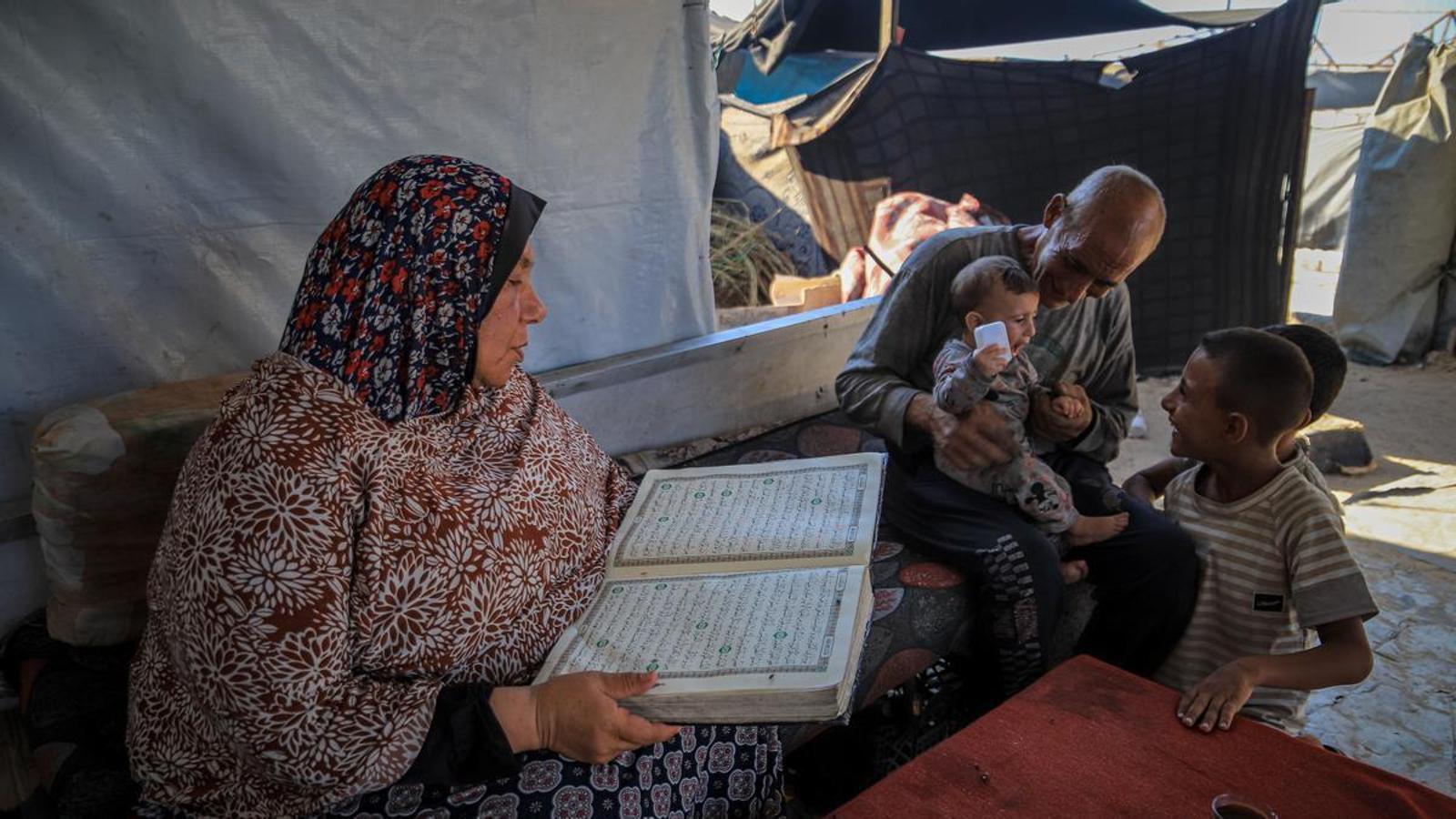
JerusalemThe same Mediterranean that for some families is synonymous with holidays, beach, and long afternoons is today, for others, the memory of a life that no longer exists. A few kilometers away, two realities coexist before the same blue horizon. In Gaza, the Jneid family looks at the sea from a tent set up on the coast. In Tel Aviv, families go down to the beach when the workday ends and try to hold onto an idea of summer that, since October 7, 2023, is no longer exactly the same.The voice of Naeem Mohammed Jneid, known as Abu Obaida, comes from a reality that is difficult to imagine from the other side of the Mediterranean. Throughout his life, he has worked with a clear idea: to build a stable future for his children. Before the war, he had managed to turn the family business into the center of daily life. He owned a supermarket where his children worked and a farm with about 1,500 chickens.But the memory that Abu Obaida holds most strongly is that of summer. Before the war changed the streets, the houses, and the routines, the arrival of the heat meant one simple thing: being together. "We used to go to the sea as a complete family. It was our time to rest and enjoy," he recalls. Summer was also the time for weddings and celebrations. Among all the memories, there is one he holds especially dear: his son's wedding. "It was like a festival. All the family and friends came. There were singers, a stage, and everyone he loved was there."Today that life no longer exists. The family home, 240 square meters in Jabalia, in the north of the Strip, was destroyed, according to the family, during the war. One of their sons, Amr, died in July 2024 while looking for products to maintain the small business they had set up during their displacement to Deir al-Balah, in the center of Gaza. Now, Abu Obaida lives with part of his family in a tent in Gaza City, on the same coast where they used to spend summer afternoons. "Our house was large, it was equipped and had air conditioning. It was a place where we could be calm," he explains. Now, the feeling is of living "practically on the street". "We have no security or stability. Anyone can enter the tent. There are rodents, stray dogs, mosquitoes... My grandchildren are sometimes even afraid to go out to go to the bathroom," he adds.Their days begin before the sun rises. Around six in the morning, the family goes out to queue for water and then waits at the food distribution points. In the afternoon, the children collect firewood to be able to cook and, when they can, they try to continue learning in improvised educational activities. Despite everything, Abu Obaida still imagines a normal summer afternoon: a table full of fruit and drinks and, most importantly, with the whole family gathered.

On the other side of the territory, summer continues to be the most anticipated time of year for many families in Tel Aviv. Schools have closed until September and, although most parents continue to work, the streets fill with children in swimsuits, snorkel goggles, floats, balls, and ice cream. The beaches are full from early morning and, when the heat subsides, the parks and boardwalks once again become the center of family life.In various neighborhoods of the city, fathers and mothers explain that summer is, above all, an exercise in organization. Families share schedules or ask grandparents for help so they can look after the children. "It's a puzzle every year," explains a mother of two while watching them play in the sand at Frishman Beach. "We like them to go to the sea at least three afternoons a week. We work in a technology company and, when we can't take them, they go with their grandparents or a family friend." Many agree that you don't have to go far to feel like you're on vacation. Afternoons at the beach are already part of the routine. "The children only ask for two things: water and ice cream," he adds. “This year I don't think we'll travel away, but just by being here we're already having a good time. We take advantage of any moment to be together.”
But beneath this image of a Mediterranean summer, the recent memory of war still exists. Since the Hamas attacks on October 7, 2023, many families have learned to live with a sense of vulnerability that has not disappeared in 2026, with the new regional escalation with Iran. “We try to ensure they have a normal childhood and summer. We want them to remember bicycles, outdoor cinema, and family dinners,” adds the father. Several families admit that their children still ask what to do if a siren sounds or where the nearest shelter is. As the afternoon falls over the coast shared by Gaza and Tel Aviv, the same sea continues before the eyes of both realities. About 70 kilometers apart, families live summers that seem to belong to different worlds, but when the day ends, the desire left on both sides is the same: to be able to live a summer that is just summer again.
