Augustine Sedgewick: "In a child you can see at the same time past and future"
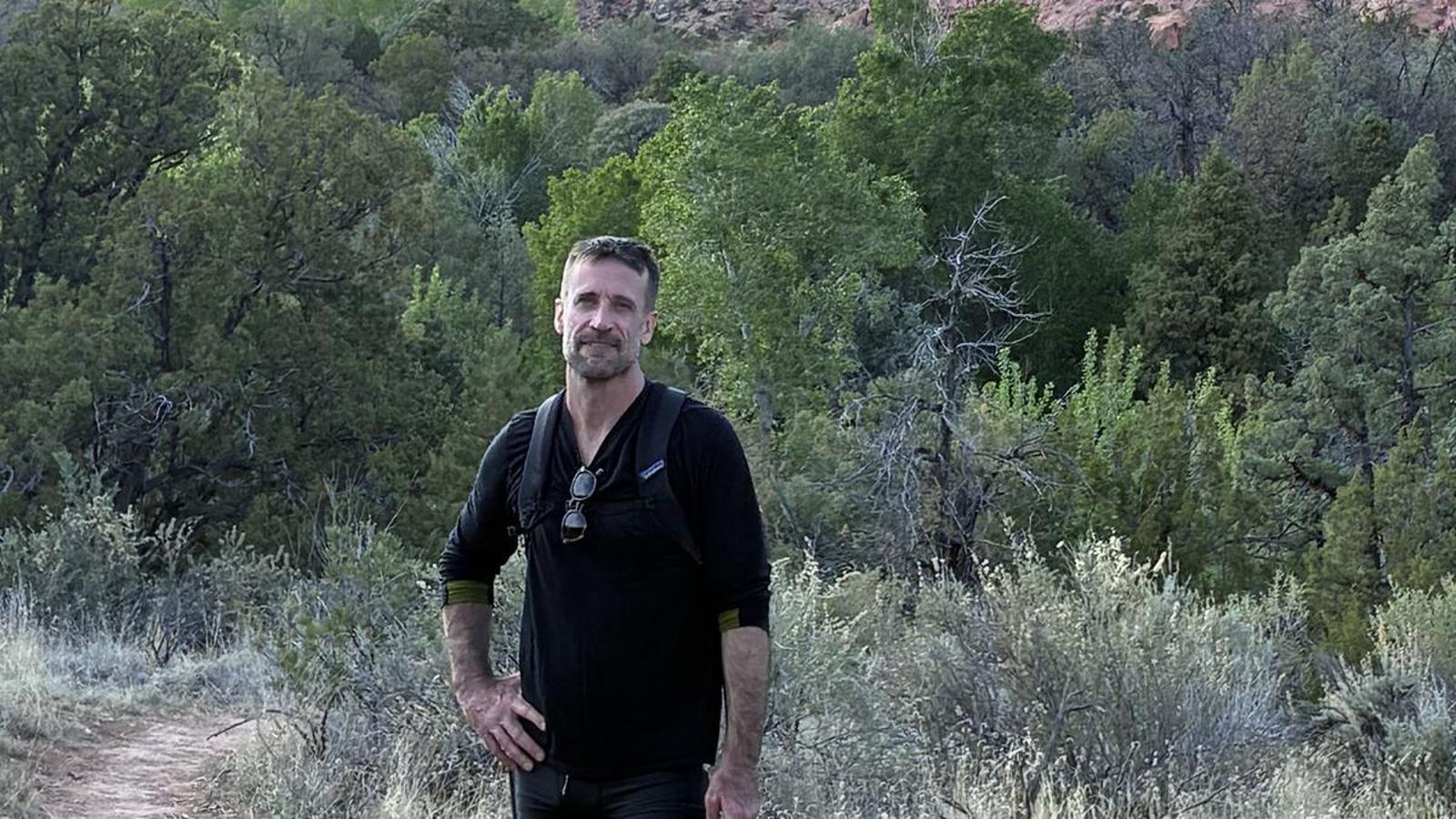
Professor at the City University of New York and father of a 9-year-old boy. Specialist in global history of food, work, and capitalism. He publishes 'Paternity. A history of love and power' (Comanegra), a very interesting narrative essay that reviews how throughout history characters like Aristotle, Saint Augustine, Henry VIII, Charles Darwin, Ralph Waldo Emerson, Sigmund Freud, and Bob Dylan have been fathers.

-
CAT -
CAST
When I was writing the book, the stories that impacted me the most were those in which parents lost their children not because of death, but due to circumstances caused by the parents themselves.
Henry VIII, for example.
— He repudiated his illegitimate son, Henry Fitzroy, considering him an inadequate successor. But so did President Thomas Jefferson, who repudiated the children he had had with the enslaved woman Sally Hemings, children who, therefore, were also slaves on his Monticello plantation. Both men prioritized public policy and public image over the care of their children, and everything indicates that this made them live tormented by doubt and remorse.
Others live the experience of seeing their children die.
— Augustine of Hippo, Ralph Waldo Emerson, and Charles Darwin all suffered the death of a child. For most of human history, infant mortality was high, reaching over 50%. Nevertheless, the death of a child was a devastating blow, and these men made extraordinary efforts to find meaning in their loss. Augustine lost his beloved son Adeodatus when he was an adolescent, an experience that shaped his conception of original sin and, consequently, the history of modern Christianity.
In your book, you explain that parents are not, really, that important.
— My thesis is that, to counteract the evident power of women and mothers in creating and sustaining life, men created a narrative about their own role and their own power as fathers within the family and society.
What is this story based on?
— We men have claimed an almost divine power based on protection and provision. "Follow my rules, do as I say and you will be protected and provided for". It is a claim of omniscience and omnipotence typical of a god, but men are not gods. No mortal can protect and provide for others at all times. Paternal promises always turn out to be insufficient, especially in times of historical change or crisis.
What kind of father are you?
— While writing the book I have reflected a lot on my father and I have realized that I do not remember during my childhood a single occasion when my father was not where he was supposed to be or that he did not do what he had said he would do. For me this sets a very high bar. When my son was born, in the summer of 2017, I wondered if I could be for him as reliable, solid and constant as my father had been for me.
And what was the answer?
— That I could not do the same and that my son, upon growing up, would surely remember my mistakes, shortcomings and failures, whatever they may be. And I also concluded that this was fine by me. Parents, when the time comes, let themselves be killed symbolically; this means renouncing status and power.
My children are already twenty years old and the fact that they don't listen to me much has taken a weight off my shoulders.
— Being defeated by one's own children is the best possible scenario for a parent, it means they have done their job well, because the children are prepared to move forward on their own. However, not all parents are willing to accept this loss without a fight.
Right now, what surprises you about your child?
— May he be both small and big at the same time. He still wants us to hold hands when we cross the street and for me to read to him in bed at night, but, at the same time, he is becoming an independent person, with a life of his own in which he does not always include me. It is wonderful to see him inhabit both worlds at once. In a child, you can see both the past and the future.
And what does it cost you?
— I find it difficult to know what to explain to my son about the dizzying changes that the world is undergoing and that affect our society, the political system, culture, and values. I want him to know that not everything boils down to Trump, artificial intelligence, corruption, lies, and screens. It is hard to talk about what is happening and not sound like a grumpy old man. I try to spend time with him outdoors. I want him to discover the adventure of roaming freely. I want him to know how to read a map. At the end of the summer, we took a car trip and decided to buy atlases to use instead of Google Maps.
