From 'girlboss' and minimalism to 'girl dinner' and 'whimsy-maxxing': chronicle of an infantilization?
Experts analyze the shift towards infantilized aesthetics among young women and adolescents and warn of the social, economic, and environmental cost of a trend based on hyperconsumption
-
CAT -
CAST
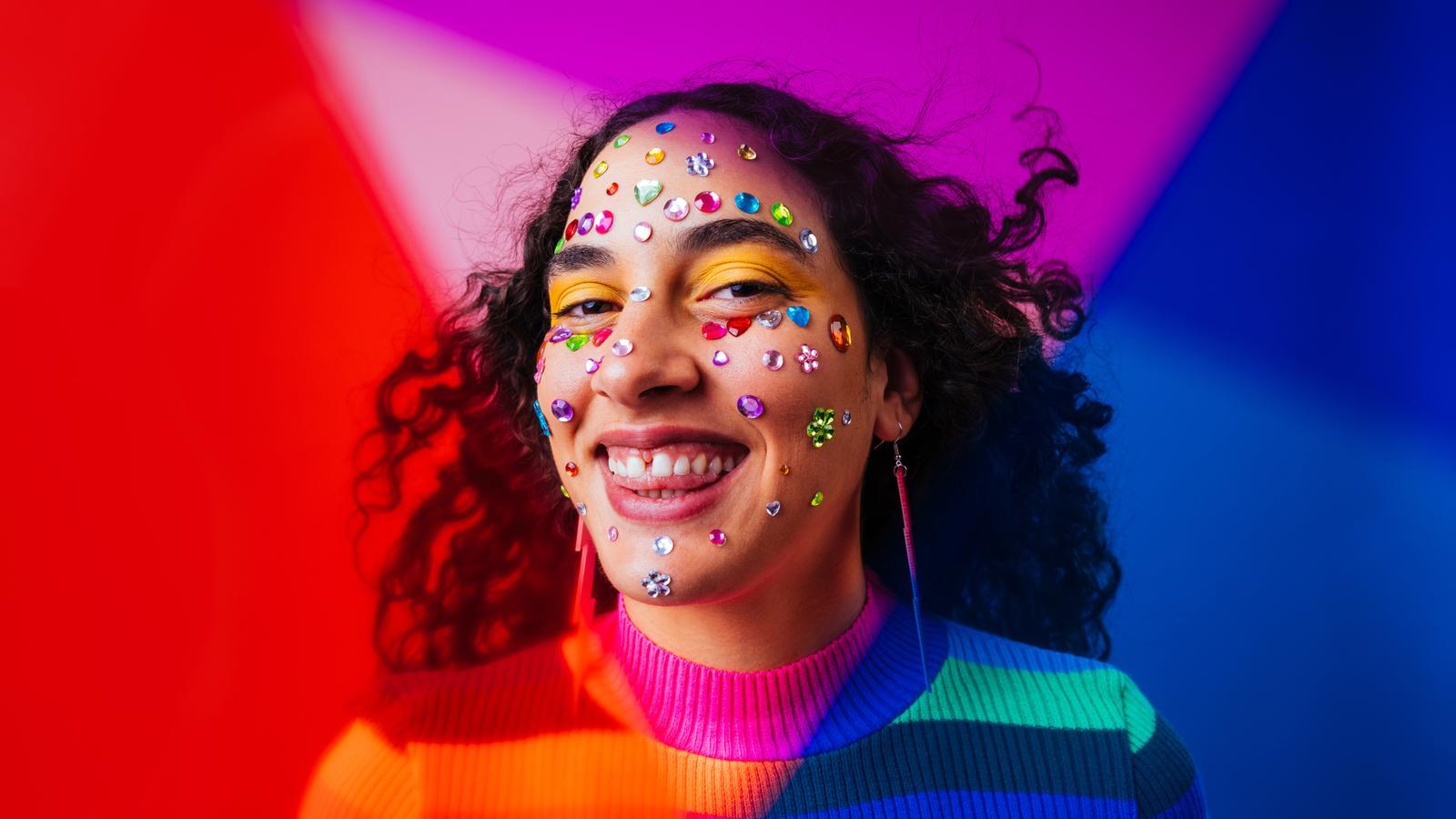
BarcelonaFor a decade, the ideal young woman wore neutral tones, emptied her closets, and turned order, self-control, and productivity into an aesthetic. It was 2014 and Sophia Amoruso was unaware that a hashtag, #girlboss, would change everything. A hand extended to thehustle-culture, the culture of busyness, accompanied by a minimalist trend in dressing and decorating everything, drew an apparently self-sufficient femininity: a young woman who worked, was entrepreneurial, took care of her body, maintained an impeccable appearance and home and routines to the minute, always hand in hand with a specialty coffee (or a matcha latte, nowadays). Now, the pendulum seems to have swung back, after years of hustle-culture have caused an almost predictable burnout. Ribbons, pastel colors, and extravagant prints are arriving, a whole ode to kitsch, accompanied by a feeling of nostalgia and a need to recover play, to be little girls again. From the girlbossto the girl dinner (the least elaborate girl's dinner) or girl math (the mental gymnastics to justify an expense); from minimalism to maximalism; from the young woman who could do it all to the young woman who wants to play again. The whimsy-maxxing is one of the most recent expressions to define this phenomenon.
Pilar Medina-Bravo, doctor of psychology at the UB and researcher at the UPF, asserts that all these trends have a common thread. She explains that these are phenomena that go viral through social networks and that, according to her interpretation, have in common "emptying the feminist cause of political content." What at first glance seems like a claim, she ensures, ends up becoming an individual matter: a way of dressing, eating, decorating the house, or presenting oneself to others.

The researcher asserts that the transformation is important because it modifies what it means to "change things." Instead of demanding a change in material living conditions, the claim shifts to lifestyle. The problem then, according to Medina-Bravo, is the concept of the "politics of representation": showing who you are, what you consume, and what lifestyle you adopt comes to occupy the space that political advocacy used to hold. The problem, according to the expert, is that the individual option "does not have the same capacity for transformation as a collective cause."
This criticism, she remarks, is not directed against the girls who adopt these aesthetics. Medina-Bravo insists that she does not want to "ridicule, trivialize, or blame" young women. The focus, she says, must be placed on the system that constructs, amplifies, and commercializes these options. The paradox is that a person may feel that they are questioning established norms and, at the same time, end up reproducing the same dynamics of power and consumption that they wanted to leave behind.
Being little girls again
The question then is: what is behind this fascination with childhood? Laura Francolí, a psychologist and member of the Section of Psychology of Women, Genders and Diversities of the Official College of Psychology of Catalonia, points to a possible explanation that is much less political and more emotional: uncertainty. The housing crisis, studies, job precariousness and the difficulty of imagining the future can make childhood appear as a safe space. Not necessarily because young women want to stop being adults, but because they associate that period with a time when there were not the same anxieties.
"Uncertainties can generate rejection and can generate fear," explains Francolí. Childhood, therefore, can appear as a known territory, a lived stage, in the face of a future that is expected to be difficult. But the same idea has a less friendly side: being a child also implies dependency. From this perspective, the recovery of a childlike aesthetic can end up associating femininity with a less autonomous and less powerful position.
That is why Francolí asks to distinguish between infantilization and the recovery of play. "A young woman can play, imagine and feel nostalgia without this implying returning to a childish role," she asserts. The word infantilization acquires meaning, according to her, when it implies "taking power away from the young woman," reducing her autonomy or placing her in a more dependent position. The need for belonging also plays a role. During youth, the psychologist explains, identity is still being formed and trends offer a way to find a group and feel part of it. Social networks and advertising have, at this moment, a particularly great capacity to pressure and guide these identifications.
This allows us to understand why the same aesthetic can have very different meanings. For one young woman, it may be nostalgia; for another, a way of belonging to a group; for a third, simply a trend. Francolí insists that each case should be looked at individually. The problem arises when this collective trend ends up becoming a norm for how a young woman should be. And here the body appears again. The images that circulate on social media do not only propose colors, clothes, or objects, but also a specific idea of the body. Francolí points out that the representation of an infantilized woman can be associated with a "smaller, thinner, more stylized" body. Social media thus functions as one more space for socialization, capable of both offering role models and fueling insecurities.
A trend that is also bought
The problem is that the new aesthetic is not limited to looking. It also asks you to buy. If minimalism proposed getting rid of everything that was left over, whimsy-maxxing turns accumulation itself into part of the game: more colors, more objects, more decoration, more personalization. Maximalism also has a class reading, according to Medina-Bravo. Being able to fill a space with objects or constantly buy new things presupposes a certain economic capacity.
The researcher places this dynamic in a logic of hyperconsumption. The "I deserve it," "I'm worth it," or "I've earned it" turns consumption into a form of self-reward. The question she proposes is simple: who makes money from this display? And how much money does it cost to maintain it? For Medina-Bravo, this is one of the questions that should accompany any reading of new trends on social media. Even minimalism, apparently the opposite of maximalism, has a class reading. Being able to throw away objects because "you don't need them anymore" presupposes having the capacity to buy them again if they are needed someday. On the other hand, the researcher explains, the working classes may live in an unchosen minimalism. What in one case is an aesthetic, in the other can simply be a lack of resources. Thus, the succession of aesthetics can seem much more revolutionary than it is. The colors, words, and objects change, but the mechanism remains similar: a new identity that can be consumed, photographed, and shared.
From aesthetics to plastic
And in the case of whimsy-maxxing, this mechanism has a consequence that goes beyond the screen. Julio Barea, spokesperson and head of plastics at Greenpeace Spain, warns of the volume of materials used to manufacture many of these decorations. As he explains, plastics such as PVC, acrylics, and other materials can be found that, due to their small size, are especially difficult to recover and recycle. The problem is precisely the size. When these small pieces come off, they can end up in the air, in drains, and, subsequently, in rivers and the sea. They are not waste that can be easily separated or recovered through conventional recycling circuits, according to Barea.
Glitter is a known precedent for this same logic: small fragments of plastic intended for decoration that end up scattered throughout the environment. Barea also warns that some plastics can incorporate chemical additives and that the materials used in decorative products may be subject to different regulatory frameworks than those for food packaging. Therefore, Greenpeace's message is not to put an end to creativity or the need to personalize objects. On the contrary: Barea argues that this creativity can be maintained, but by replacing single-use materials with reused or natural objects and prioritizing repairing before covering or transforming. "A creativity without plastics," he summarizes.
A reaction to the political moment?
There is, finally, a more difficult question: is this new femininity also a reaction to the advancement of feminism? Francolí does not rule out that the change is part of the political, social, and economic dynamics of the moment, but is cautious about establishing a direct relationship. He considers that it cannot be ruled out that, after a stage marked by the figure of the more empowered woman, a trend in the opposite direction might appear, but he also warns that it cannot be considered a single political response. Medina-Bravo goes further in her interpretation, but places the phenomenon above all in the transformation of the capitalist and patriarchal system. Her thesis is not that young women are aware of reproducing it, but precisely that they may think they are questioning it while participating in its logic. "It is not a conspiracy," she warns, but a way of analyzing how neoliberalism can absorb and turn certain expressions of social change into commodities.
And perhaps here lies the paradox of this new femininity. Returning to play can be a legitimate need. Seeking comfort too. Decorating a room, wearing a bow, or "eating a pizza in front of a camera" are not, in themselves, political acts, nor do they cease to be so because someone interprets them in a certain way. The problem arises when social networks turn these practices into prefabricated identities and these identities into products. Between the girlboss and the whimsy-maxxing there is, apparently, a world of difference. A young woman in a blazer in front of a computer and another surrounded by prints, bows, and glitter seem to represent two completely opposite forms of femininity. But, looked at closely, both can share the same question: what happens when becoming oneself also becomes something that can be bought?
