Dressing the same siblings: practical, beautiful or limiting?
If it is done punctually it can be anecdotal or fun, the problem appears when dressing them equally becomes the only possible option

-
CAT -
CAST
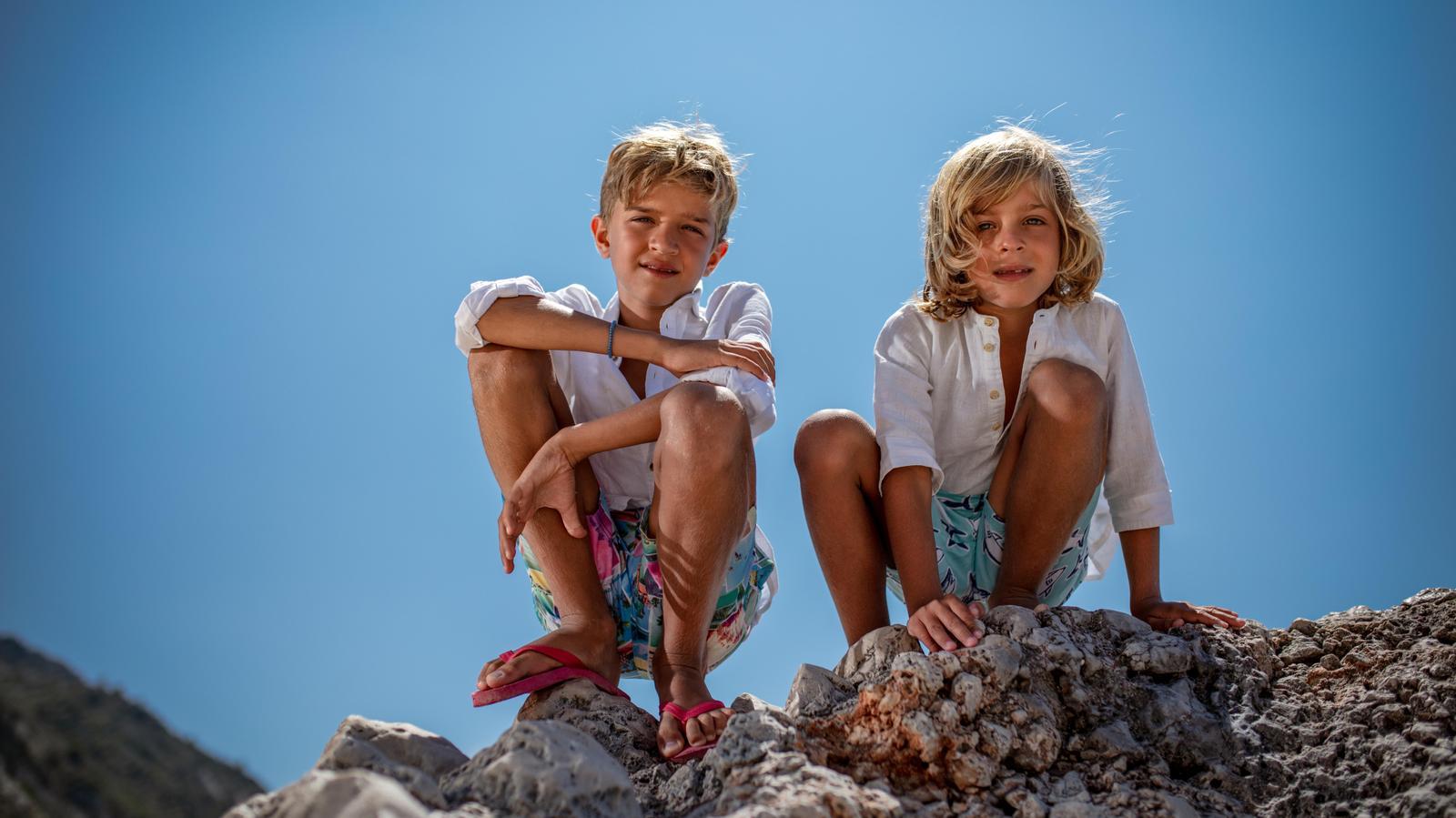
BarcelonaSiblings dressed the same: the same t-shirt, the same trousers and matching shoes. Sisters with the same dress and the same hairstyle. In many families, dressing siblings the same has a practical, almost logistical, sense, although it often also responds to an aesthetic issue.
It doesn't just happen on the street. On social media, many mother influencers opt to coordinate their children as a kind of visual rule, a practice known in English as matching outfits or twinning, which gained a lot of presence a few years ago. Images of children dressed the same tend to work well because they combine symmetry, tenderness, and a very recognizable idea of family.
Currently, large chains – from Zara Kids or Mango to niche brands – not only make identical collections for siblings of different ages, but have also expanded the market with proposals for mothers, fathers, and children to dress alike. The so-called Mini-Me collections have turned this practice into a commercial appeal.
But what happens when we dress two brothers or two sisters exactly the same?
“When we do it every day and, above all, when they don't perceive that they have the possibility to choose, there is a risk of transmitting, even if completely unintentionally, the idea that they are more of a unit than two distinct individuals,” warns Sílvia Àlava, a clinical and health psychologist.
According to the expert, if done occasionally, it can be anecdotal, fun, and even become a family bonding element: for example, everyone wearing the same pajamas on a special occasion. However, when it becomes a systematic practice, it can generate some friction.
To what extent does clothing help children build their identity?
“Clothes are much more than an aesthetic issue. As they grow, it becomes a tool for personal expression and also serves to build identity,” explains Àlava.
Around two or three years old, children begin to develop their own preferences, and this is positive. “They choose clothes for a certain color, for a character's drawing, or for a specific piece because they like it. And, through this, they also express who they are and what interests them,” exemplifies the psychologist.
In the case of twins, should we be more careful?
According to Coks Feenstra, a Dutch psychologist, expert in twins and author of The Great Book of Twins, it is important to avoid dressing them the same way habitually. In the same vein, Àlava warns: “Special care must be taken when they are twins. It is very important that each one can develop, differentiate, and build their own identity, and sometimes this is more difficult when they are dressed exactly the same”.
When two siblings – and especially in the case of twins – are always dressed the same, they can receive a lot of social attention as a “block” or as a “duo”. This can make them feel more secure, valued, or special when they act and dress as a pack, and less so when they stand out on their own.
And what if it's just for convenience?
“It favors healthier development that each boy or girl can choose their own clothes, always within what is appropriate for the climate and the activity they are going to do,” explains Àlava. The expert recalls that families must set clear limits when a child wants to put on an item of clothing that does not fit the weather or the day's plan. It is not about them always deciding without any criteria, but about offering them small choices adapted to their age.
“Dressing two brothers or two sisters the same will not generate any psychological problem or trauma, nor will it harm their development. The question is how often it is done, if it is a one-time need or a shared choice, and if they want it or not,” she clarifies. Sometimes it is done for perfectly understandable reasons: to save time, to locate them more easily in the park, or to avoid conflicts of the type “I want the same as my brother.” The problem arises when dressing them the same becomes the only possible option.
“If the boys or girls do not want to, if they say they want to dress in a certain way and their individual preferences are constantly being ignored, then we could have a problem. To develop autonomy, they must be allowed to make age-appropriate decisions,” explains Àlava. Small decisions, such as choosing between three t-shirts, picking a color, or deciding which shoes they want to wear, can be enough.
How does the gaze of others influence?
“When they always dress identically, it is more common for their environment to compare them more or, even when they are of similar ages, to confuse them or address them jointly, like the girls, the boys, the little ones or the twins. Then it seems that these creatures have more prominence as a group than by their own name,” comments Àlava.
For this reason, the expert insists on the importance of giving each child their own identity: calling them by their name, not always talking about siblings as a block, being interested in their tastes, recognizing their characteristics, and doing so regardless of whether they are dressed the same that day or not.
