Can you have a quality education if those who educate are doing poorly?
We are a country that talks a lot about educational quality, but little about the emotional state of the adults who educate, such as families and also teachers

-
CAT -
CAST
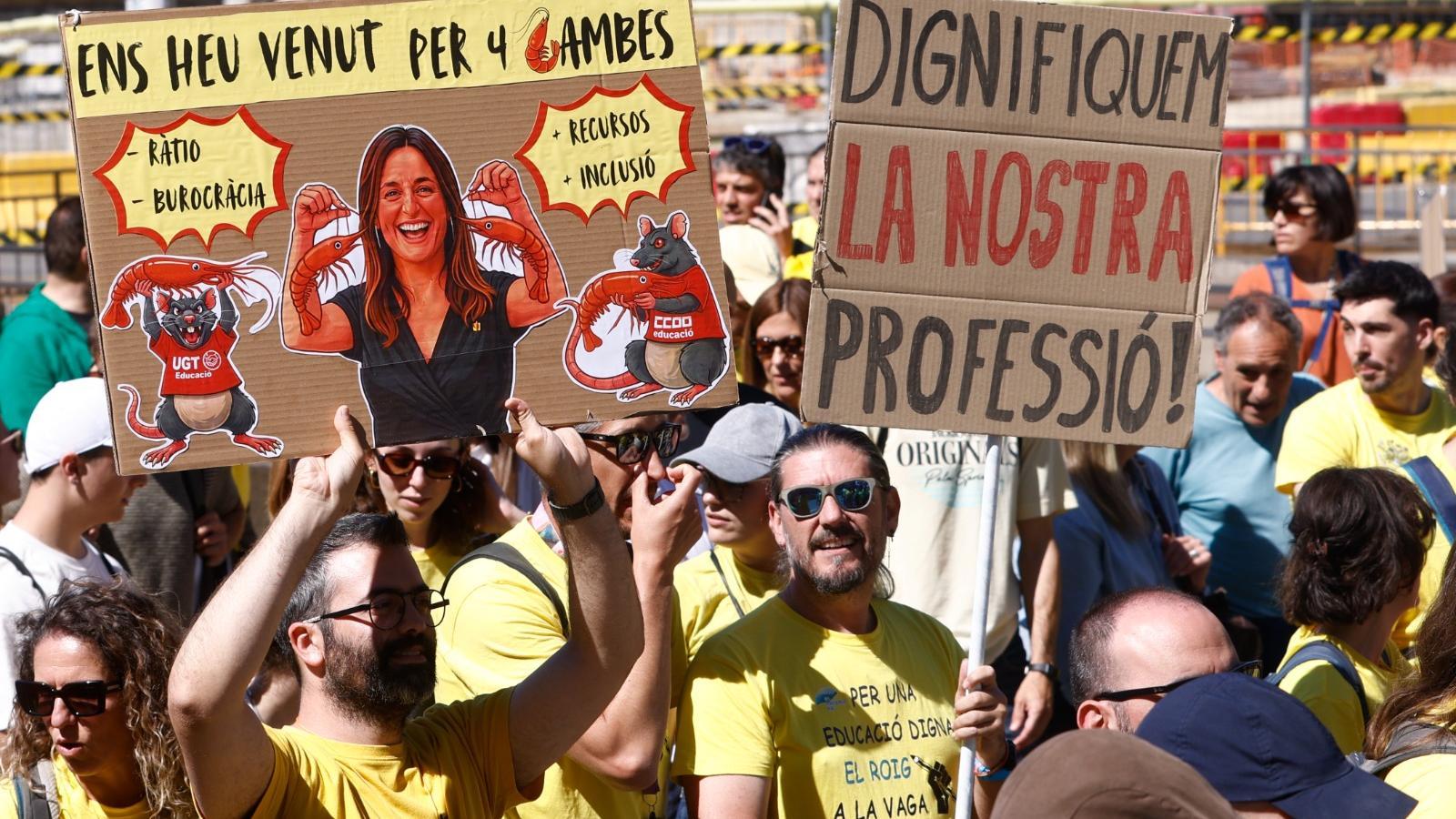
BarcelonaHow to start a school year like this one, different due to the circumstances experienced last year? I am talking about the pending issue from June, the unease that the strikes, boycotts, and disagreements left behind: disappointed families and PTAs, students who have felt violated by missing out on educational experiences they were looking forward to with excitement, tired teachers, and divided teams...
We are a country that talks a lot about educational quality, but little about the emotional state of the adults who educate, such as families and also teachers. And if we do talk about it, we do little that is useful. I believe the first challenge of this start of the school year will be to be honest and not pretend that nothing has happened. To accept how we all are and face it with maturity, empathy, and example in our attitudes and decisions, since there are thousands of children watching us and listening to us. By now, adults should have learned that unease does not disappear by hiding it, covering it up, or staying silent, and that anger that is not resolved reaches the children even if we do not want it to, because it filters into the way we speak, the way we look, the way we listen, and the way we react.
An overwhelmed family cannot provide the same support, and a burnt-out teacher cannot either. Adult well-being is not a luxury: it is educational infrastructure. It is the invisible foundation that allows us to set limits without hurting, to listen in order to understand, and to accompany without turning every difficulty into a national emergency.
I always say that a child's education is like a bridge with two pillars: family and school. If one of the pillars moves, the bridge is unstable. A boy or a girl needs to see that the adults accompanying them are teaming up with a common goal: to help them move forward in life with a firm step, and taking advantage of all pedagogical resources available when family and school cannot reach everything.
The right questions
For this reason, this school year we are changing the typical superficial questions like "Is your backpack ready?" or "How were your holidays?" for braver ones like "What is weighing on you?", "What label or role do you want to leave behind?", "What do you need us to look at in you in a new way this school year?" or "What would help you feel safe in the first few days?"
And we adults should also ask ourselves: "From where am I starting this school year?", "From the indignation, rage, fear, and discouragement of what I feel is unjust, or from the responsibility to repair?", "Am I capable of not letting my discomfort fester and educate for me?"
Small rituals also help for a good start to the school year: having dinner and asking each other what the best moment of the day was, walking to school without turning it into a marathon, or preparing the backpack while talking about what excites us.
A quality education does not mean that we adults cannot feel discomfort, but rather that we are capable of transforming it. This start of the school year, the best lesson will not be telling them that everything will be fine, but proving it by once again becoming the great tribe that educates with meaning.
