Six centuries without changes in the DNA of the Iberians
A study by the UAB genetically studies the remains of infants from three sites in Catalonia
-
CAT -
CAST
BarcelonaThe Romans left a profound mark on the Iberian Peninsula, visible in Latin, Roman law, aqueducts, bridges, amphitheaters, and triumphal arches. Thanks to genetics, we now know that their arrival also changed the population's DNA. A study led by researchers from the Autonomous University of Barcelona (UAB) and published in the journal iScience has obtained the most complete and precise picture to date of the history and genetic evolution of the Iberian peoples who inhabited the northeast of the Iberian Peninsula from the beginnings of the Iron Age until the Roman conquest, between 2,700 and 2,100 years ago.
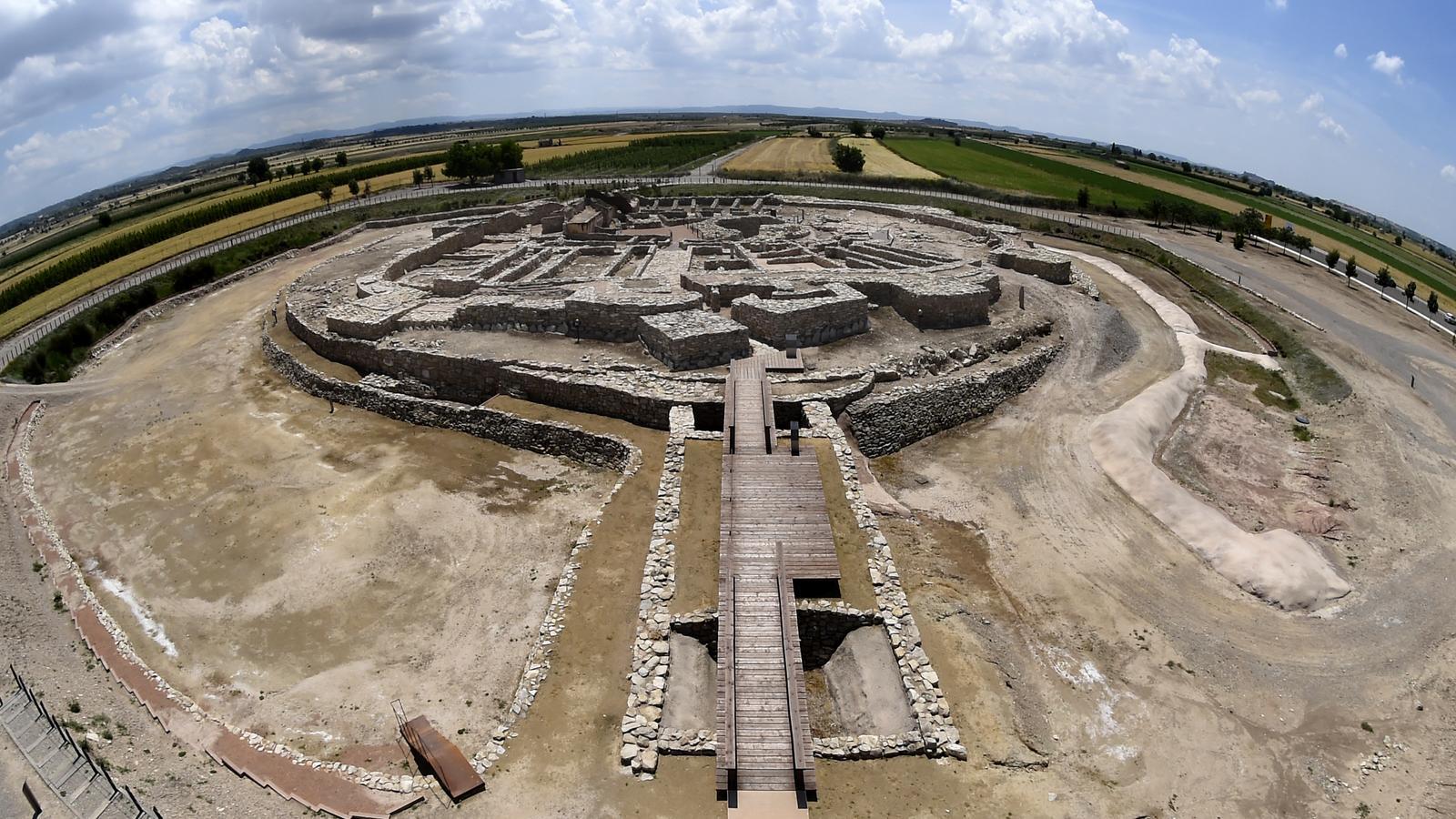
Genetic information allows us to know many things, from the origin of the Iberians to mobility dynamics or the openness of the society of the time to other peoples. It is not easy to trace this culture because its language has not been deciphered to date, nor are there many human remains because they cremated their dead. All the information from the study has been obtained from the analysis of the genome of 54 infants buried in domestic structures and productive areas of three sites: els Vilars, in Arbeca (Lleida), belonging to the Ilergetes people; Sant Miquel d’Olèrdola, in Olèrdola (Penedès), of the Cossetani people, and El Camp de les Lloses, in Tona (Barcelona), of the Ausetani group.
The steppe dwellers were the ones who caused the most radical change. In a few centuries, Cristina Santos, a researcher in biological anthropology at the UAB who led the study, explains that there is great genetic continuity in the Bronze and Iron Ages. “We see that there is great genetic continuity, that the population changes much less than we had imagined based on the archaeological evidence of Mediterranean cultures found in these peoples, such as those of the Phoenicians, Greeks, and Carthaginians. These influences occurred, but very gradually,” she says.
All the analyzed individuals had the genetic profile established by the migratory waves that arrived on the Iberian Peninsula before and during the Bronze Age: the hunter-gatherers of Western Europe, the farmers from the region of Anatolia (modern-day Turkey) – who led the Neolithic Revolution in Europe, through which they spread rapidly – and the steppe people or Yamnaya, who arrived about 4,500 or 5,000 years ago originating from the Pontic Steppe, north of the Black Sea and the Caspian Sea, between present-day Ukraine and Russia.
No changes after the steppe people
The steppe people were the ones who caused the most radical change. In a few centuries, practically 100% of the autochthonous male lineages (the Y chromosome) were replaced by the steppe lineage (R1b)very precise information about the remains of the childrenThis isolation of Iberian society was not exactly the same everywhere. Settlements near the sea were slightly more permeable, as they had more contact with Greeks, Phoenicians, and Carthaginians who stopped there on their trade routes. Vilars shows a reduced degree of miscegenation, while the coastal site of Sant Miquel d'Olèrdola, connected to the sea by streams and close to the ports of Sitges and Darró, shows more external genetic contributions. For example, a newborn with the M1 mitochondrial haplogroup, of North African origin, has been found there. Researchers suggest that they could have Carthaginian or Punic ancestry.
The real upheaval arrived with the Romans and the Second Punic War,, which brought about many social changes. The clearest example is found at the Camp de les Lloses site, where the inhabitants worked on the construction of the road of the proconsul Mani Sergi (c. 110 BC), which connected the Catalan coast with the interior, crossing Osona. In this settlement, components connected with Mediterranean and North African populations are detected much more often. There is continuity in maternal lineages, and everything suggests that the changes occurred due to the union of local women with foreign men.
Our DNA holds it all
"Neither the genetic information of the Neolithic people, nor that of the steppe people, nor that of the Iberians is erased. It continues to be part of our DNA, to which contributions from other peoples who arrived later in the Iberian Peninsula have also been added", concludes Santos, who is cautious about the results of this study because only three settlements in the northeast of the peninsula could be studied. "If we analyzed the DNA of the sites in the south of the Peninsula, perhaps the information would be different", he assures.
A couple of years ago, the same university already obtained very precise information about the remains of children, which have been the great source of knowledge for this research. In that study, it was possible to accurately identify the moment of birth and death of these infants. For 22 of the 54 infants studied, the team was able to recover more than 20,000 genetic variants (SNPs) from the entire genome, in addition to the almost complete mitochondrial genome, while for 9 more the mitochondrial genome was recovered.
The analyses were carried out in the ancient DNA laboratory of the Faculty of Biosciences of the UAB. Researchers from the universities of Granada, Lleida, Coimbra (Portugal), Copenhagen (Denmark), and Brown (United States), from Adelaide (Australia), as well as from the Museum of Archaeology of Catalonia, and the El Camp de les Lloses Museum also participated in the research.

