What lies behind Trump's clash with Leo XIV
The confrontation with the Vatican is another symptom of the radicalization and internal struggle of Christians in the US.
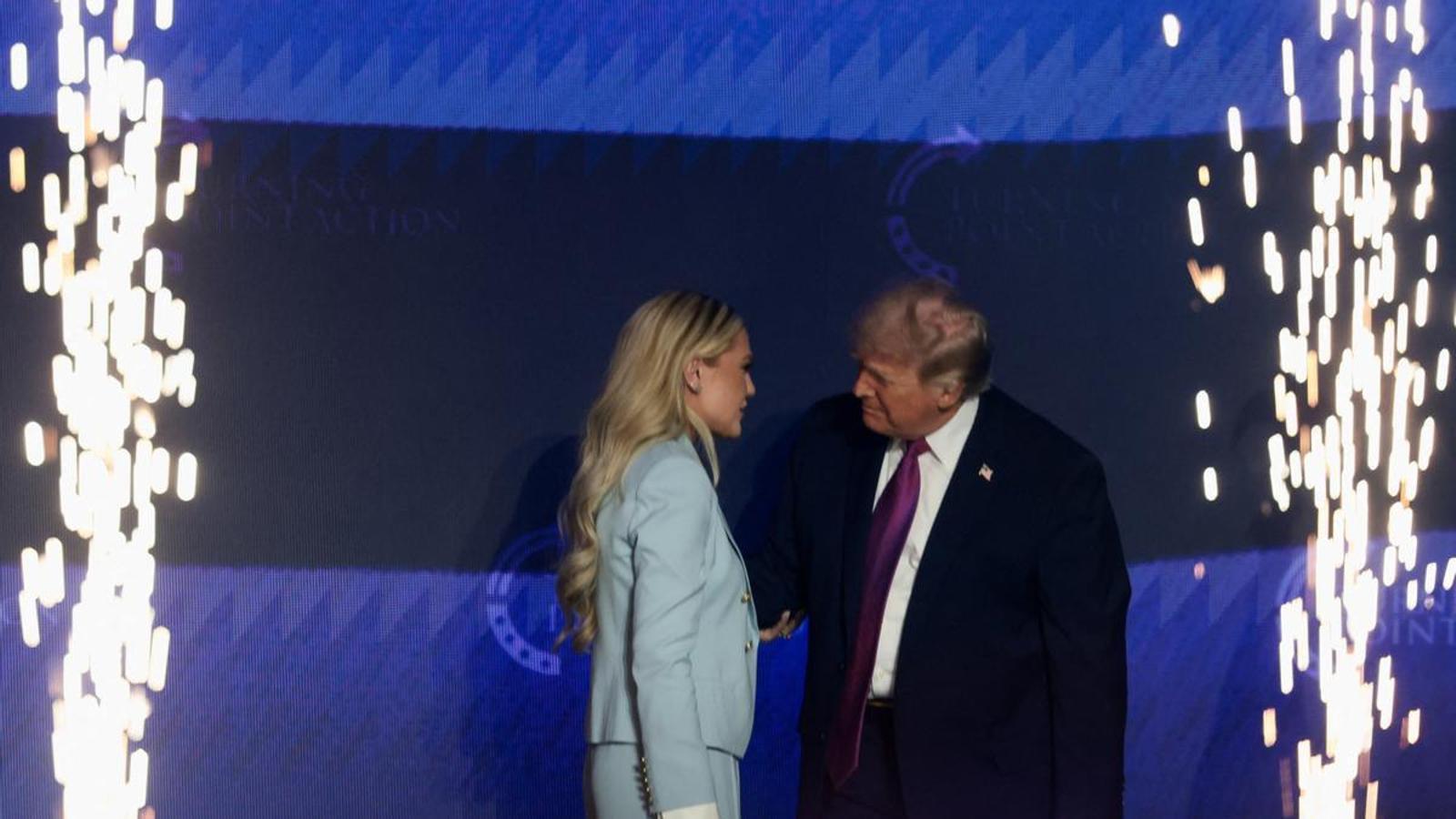

WashingtonAs if Donald Trump didn't have enough open fronts with the rising cost of living and the Iran war, this week it seems he has decided to open a theological one. The US president has left a good portion of his Christian voters petrified by the clash with Pope Leo XIV and the meme of him as Jesus. From the outside, the bewilderment is immense because he seems to have put Vice President J.D. Vance, a convert Catholic, in a thorny situation. The Vatican soap opera can only be explained from the perspective of the internal struggles that currently exist between the different religious currents that make up the MAGA coalition. Especially in the tensions between Catholics and evangelicals and antisemitic Christians and Zionist Christians.
In this amalgam of spiritual sensibilities and ideologies, the Catholics –like Vance– who surround Trump are of a very specific kind. It is the most radicalized section, which connects with a traditionalist current that rejects the reforms of the 1960s which, among other aspects, sought to abandon the antisemitism of previous centuries. "They want to return to those older models of Catholicism and, in the process, they are also embracing part of the old antisemitism that existed in a large part of Catholicism and reconnecting with it," explains Matthew D. Taylor, a researcher at Georgetown University specializing in white Christian nationalism, to el ARA. Hence, the confrontation with Leo XIV does appeal to these more radicalized factions and those contrary to a Catholic leadership that in recent years has moved closer to more progressive positions.
For Taylor, it is a Catholicism that embraces the tenets of the far-right and falls under the umbrella of white Christian nationalism. The latter is an ideological and political movement, and not a religious current as such. Within this group, one can find both members of the government, such as Vance or Secretary of Defense Pete Hegseth –who has an obsession with the crusades–, as well as influencers from the MAGA world, such as Nick Fuentes.
The White House has no problem confronting the Vatican, precisely because it connects with an increasingly radicalized base of American Christians. The weight that Christianity has gained within the second Trump administration is, in part, a reflection of this trend towards more extremist positions rather than an increase in Christianity at a social level. Different studies from the Pew Research Center show how Christianity in the US had been declining in recent years, although a recent survey conducted between 2023 and 2024 indicated a "stabilization" of the trend with 62% of Americans identifying as Christians.
"I wouldn't say it's a religious resurgence, but rather a radicalization; what's happening is that more and more people are starting to sympathize with the perspective of a Nick Fuentes or similar. People are radicalizing: people who were already Christians are being drawn towards these theologies, towards these messages, and are clinging to them in quite damaging ways. And this is happening on both sides of this spectrum between philo-Semitism and anti-Semitism: they are moving in both directions towards more radical versions, and I think this is why so much religious rhetoric is being heard lately," explains Taylor.
This philo-Semitism, or also Christian Zionism, is found especially among evangelicals. They are the largest sector and have made their influence within the government very visible. The image from March with Trump in the Oval Office, surrounded by evangelical leaders placing their hands on him while praying, was an exhibition of political muscle outside the halls of the White House.

Taylor explains how Christian Zionism "is pro-Israel, but not pro-Jew." Beyond the fact that Israeli and Jewish are not interchangeable synonyms, in the case of Christian Zionism the nuance is important to understand the instrumentalization of a group of real people for religious purposes. "They are very aligned with the State of Israel, but Jews are, in a way, accessories in all of this, because it is about fulfilling certain Christian theological purposes, not about the well-being of the Jewish people in general," emphasizes Taylor.
Precisely, it is these two opposing impulses that have defined one of the main religious trenches within the Trump administration. The war between the two sides has been latent for a long time and had already shown friction with the Gaza war, but the Iran war has acted as a trigger for these tensions. On the surface, the initial reading of the criticisms of the military campaign coming from the MAGA universe was the breach of the America First promise. But there is a second layer that cuts through the cracks caused by the campaign in the Middle East, and it is this tension between the two religious currents that prevail in the Trump court. Tucker Carlson, the former speaker and one of the president's great allies, certified his divorce from the Republican by sidestepping this premise. If viewed through a theological lens, Carlson is also a figure who is increasingly aligned with this traditionalist and far-right Catholicism, and also close to antisemitism, in which Erika Kirk, the widow of Charlie Kirk, the murdered ultra-conservative, also shares.
In this light, there are also other movements that adopt a clearer form, such as the resignation of the head of counter-terrorism for the USA, Joe Kent, due to his opposition to the war. On March 18, Kent resigned from his post with a public letter in which, among other things, he accused Israel of having "deceived" Trump into getting involved in the conflict. The former US government official is precisely known for his affiliation with white supremacy and sympathizes with antisemitism.
For Taylor, what is happening right now within MAGA circles of influence responds to a single question: "When Trump is no longer around... who will govern the spirituality and religion of the movement? This is the struggle that is happening right now." The question connects with a reflection made by one of the most prominent voices of Trumpism, the far-right influencer Laura Loomer. From a more general perspective and in reference to the republican's weight as a central driver, Loomer warned that Trumpism would not survive Trump. Precisely because many of the cracks seen on the surface of the MAGA world are the result of internal struggles within Trump's noble court, and it cannot be automatically extrapolated as the opinion of the movement's popular base.
Despite the criticisms seen regarding the war from some figures like Carlson, an Ipsos poll conducted in mid-March highlighted that 76% of the republican's voters in 2024 supported the war. But, even so, the reactions of the Trumpist loudspeakers remain relevant because they are the ones seeking to set the pace and orientation of these same masses.
