The main international maritime transport organizations—especially the International Maritime Organization (IMO); the UNCTAD, of the United Nations; the International Transport Workers' Federation (ITF); and ISWAN—do not have a census of the approximately 20,000 sailors estimated to be trapped in the Strait of Hormuz. However, they do agree on a very clear pattern of labor and national composition.According to aggregated sector data collected by organizations such as UNCTAD and the ITF, the global profile of the maritime workforce is very Asian. India accounts for around 15% of the world's total sailors, and the Philippines is the main country of origin globally, with a similar or slightly higher proportion. In this context, estimates used for sector reports on the Hormuz crisis point to an approximate distribution whereby 35% would be Filipino, 20-25% Indian, 10-15% Indonesian, and 5-10% Bangladeshi and from Myanmar. The rest would be distributed among more than 40 nationalities, including Ukrainians, Russians, Turks, and some Eastern Europeans.This pattern aligns with the structural maritime hiring data collected by the ITF and other organizations: the majority of the global crew comes from countries with large pools of maritime labor and precarious wages, while officers tend to be more from Eastern Europe and Russia. Furthermore, some seafarer welfare reports indicate that this model has been consolidated with the use of flags of convenience and globalized hiring, mixing crews from dozens of countries on the same ship. This structure explains the difficulty in obtaining an accurate count by nationality in a crisis like the one in Hormuz.
20,000 sailors trapped in Hormuz: Trump's forgotten victims in the war against Iran
Professional organizations denounce the impact of the strait's blockade on crews' mental health
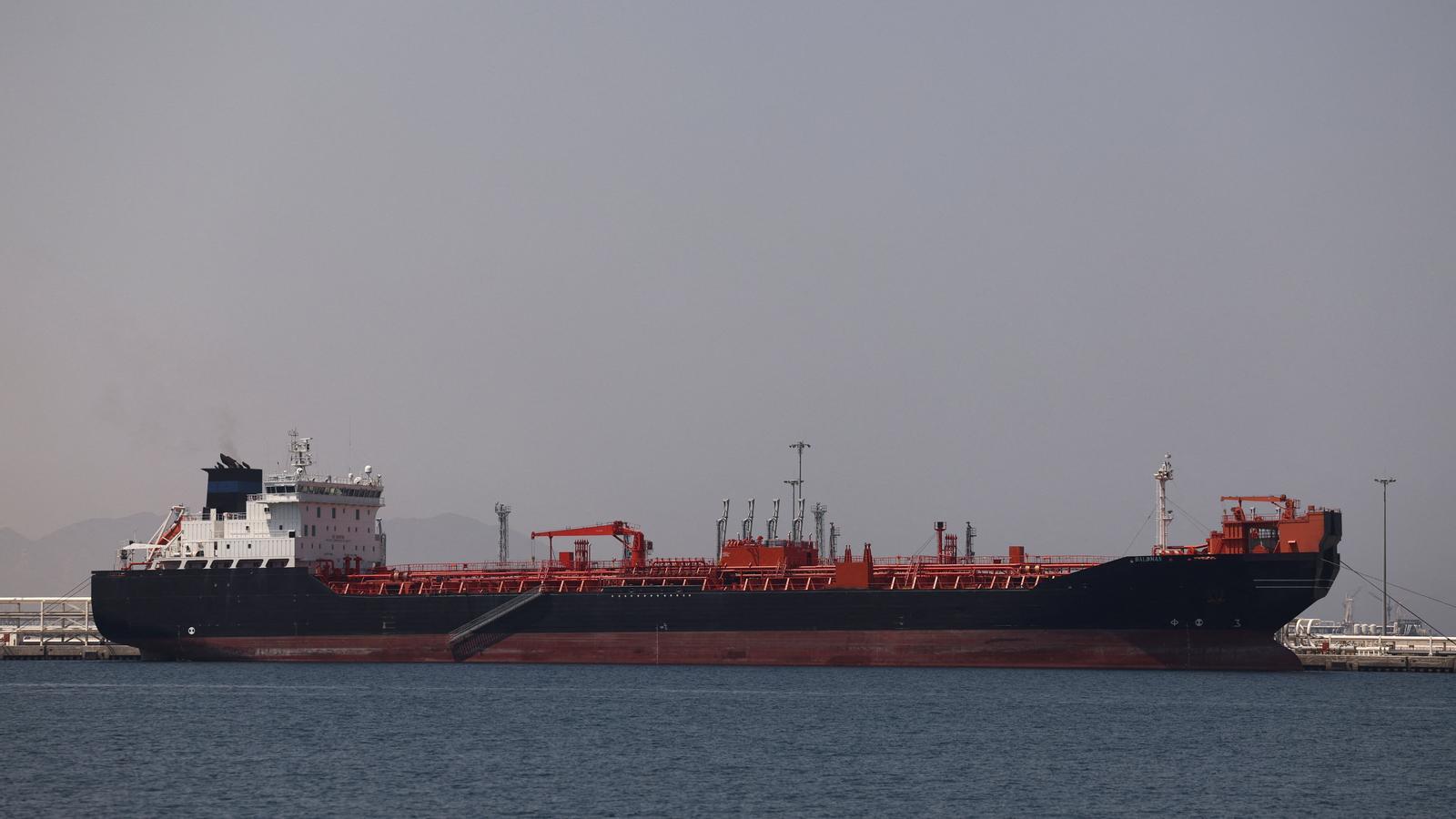

-
CAT -
CAST
LondonThe war between the United States and Israel against Iran and the consequent blockade of the Strait of Hormuz is beginning to have a direct impact on the mental health and working conditions of the sailors trapped in the area, who, according to data from the International Maritime Organization (IMO), number around 20,000. This pressure is confirmed to ARA by Amy Liebthal, spokesperson for the International Seafarers' Welfare and Assistance Network (ISWAN), an entity that operates a free, confidential, and multilingual 24-hour telephone assistance service (Seafarer Help), aimed at seafarers in situations of risk and their families.
ISWAN has detected an increase of between 15% and 20% in the volume of calls and messages received since the start of the war. Liebthal also detailed that "a little less than a third of the queries are related to repatriation," with seafarers seeking information about their rights regarding flight cancellations, delays, or difficulties in completing crew changes.
On paper, seafarers have legal mechanisms to avoid working in a declared war zone. Contracts linked to the International Transport Workers' Federation (ITF) stipulate that a crew member can refuse to sail to an area considered high-risk and can request repatriation before the ship enters it. The regulations also provide for extraordinary financial compensation for periods spent in these areas.
But the reality on board is much more ambiguous. "Many seafarers feel they cannot refuse these routes –explains Liebthal–. There is fear of reprisals, of being excluded from future contracts, or of ending up on informal blacklists within the sector." This silent pressure leads many crew members to accept continuing to work in the region despite the danger.
The remaining cases registered by ISWAN include family members seeking guidance to manage the distress caused by their relatives' insecurity, economic difficulties, or uncertainty. Liebthal, however, admits the limitations of the service offered by her organization, and has confirmed to this correspondent that the main help they can offer is emotional support and active listening for any affected seafarer or family member.
These stressful situations for sailors are also confirmed to ARA by Captain Chris O'Flaherty, from The Nautical Institute, a professional organization founded in 1971 and based in London. While the entity does not carry out operational monitoring of ships, it does maintain contact with some members of the crews on board in the Hormuz area.

But, in addition, between March 1st – one day after More than thirty incidents
Mental health problems stem from the evident risk generated by the war. The latest serious incident took place on the night of May 7-8. Iranian state media assured that Iran had attacked "enemy units" in the Strait of Hormuz with missiles after an alleged US attack on an Iranian oil tanker. They also reported explosions in Bandar Abbas and on Qeshm Island, attributed to Iranian air defense after shooting down two "hostile" drones.
However, in addition, between March 1st – one day after the start of the attacks against Iran – and May 5th, 31 maritime incidents were recorded in the Gulf of Oman, the Strait of Hormuz, and areas close to the epicenter of the conflict, according to official IMO data. Incidents that have already caused the death of ten crew members, the disappearance of an eleventh, and one death among the land personnel at the port of Bahrain. The majority of these incidents have taken place off the coasts of the United Arab Emirates, Oman, Iran, Qatar, and Iraq, affecting oil tankers, container ships, and cargo vessels.
The consequences have been structural damage, fires, or hull impacts, but without serious episodes of pollution. Only in the case of the vessel Safeen Prestige
was an oil slick detected after the vessel sank. Several ships were also abandoned, detained, or confiscated, such as the TMO Barakah, the MSC Francesca, the Epaminondas, or the Touska.
The most serious episodes occurred on March 6th at Mussafah 2
, with four sailors dead and three seriously injured; on March 11th at Mayuree Naree, with three deaths in a fire on board; and also on the same day at Safesea Vishnu, where the impact of a drone caused a fire and the death of one sailor. In early May, the incidents have continued: the San Antonio registered eight injured off Fujairah, in the United Arab Emirates, and other vessels have suffered damage without casualties or pollution.
But putting exact figures on the crisis is difficult. The Strait of Hormuz –"the funnel of the world", as Josep Pla defined it
– is also a space of informational opacity: there are estimates, names of affected vessels, and records of incidents – like the one we mentioned from the IMO –, but not a complete picture of one of the planet's main commercial arteries.
Nevertheless, available maritime traffic data allow us to draw some conclusions from the density of AIS (Automatic Identification System) signals visible on the tracking website Marine Traffic
. This Thursday, there were between 1,200 and 1,600 vessels in the area, with a clear predominance of ships carrying oil and gas. AIS is a localization signal thanks to which, in theory, vessels can be tracked and their position, course, and speed known in real time.

The image analyzed by ARA focuses on waters in the south of Iraq, Kuwait, Qatar, the United Arab Emirates, and Oman. Tankers are, by far, the most numerous group. The red symbols on the map, which mainly correspond to this type of vessel, are concentrated off Kuwait and Basra, at the oil terminals of eastern Saudi Arabia, and, above all, around Fujairah (United Arab Emirates) and at the entrance to the Strait of Hormuz. Visually, they could represent between a third and almost half of all visible ships, that is, between 250 and 400. A very significant presence of cargo ships and container ships also stands out, especially in the maritime corridor connecting Dubai with the Gulf of Oman and the Indian Ocean. However, the figures are always very approximate.
The same image from Marine Traffic also allows distinguishing a large number of auxiliary vessels: tugs and support ships operating near the large ports and offshore terminals of the United Arab Emirates and the Persian Gulf. At the same time, a considerable fishing activity is detected in the Gulf of Oman and on the Omani coast. One of the most significant data is the concentration of vessels apparently stopped or moving very slowly at the exit of the Strait of Hormuz, especially between Fujairah and northern Oman. "All this points to preventive waiting, reorganization of trade routes, and additional security measures in the face of the risk of maritime incidents," point out the International Federation of Transport Workers.
An accumulation of ships is also observed on both sides of the strait. In the Iranian zone, especially around Bandar Abbas and Qeshm Island, there is a notable concentration of vessels — many anchored or with very limited movement—. On the Omani side, near Khasab and the Musandam Peninsula, groups of ships waiting or maneuvering at low speed are also detected. Between these two points, however, the maritime corridor appears empty.
There are still some scattered ships sailing or repositioning, but the flow of transit seen before the war is not appreciated. "Many shipping companies have chosen to wait for instructions, delay crossings, or stay out of the main corridor due to military risk and operational uncertainty," assures Amy Liebthal.
Secret navigation
But the picture is incomplete: some ships may have deactivated the AIS system, and furthermore, military vessels do not usually appear in these types of public systems. In addition, on social media and specialized platforms, sailors and bridge officers have begun to report the phenomenon of GPS spoofing (signal spoofing).
And beyond the voluntary deactivation of AIS to avoid detection, many ships are reporting external interference that causes their navigation systems to show false positions, sometimes erroneously placing them hundreds of miles away from where they actually are, or even on dry land.
Neither governments nor major shipping companies publish detailed inventories of ships in the area, and commercial databases only offer a partial view. All of this prevents obtaining an accurate picture of the Hormuz crisis. This newspaper has contacted the port authorities of Saudi Arabia, Bahrain, Oman, Iraq, the United Arab Emirates, and Qatar to find out the exact number of ships anchored or docked in their waters, but all agree not to provide this information.
The paralysis of traffic due to the war and the blockade has turned waiting areas into logistical traps. And concern about rationing of provisions has begun to appear in forums supporting crews, as reported by ISWAN and The Nautical Institute. On ships that have been stopped for weeks, the management of drinking water and fresh food is critical. The region's port authorities have restricted access for supply barges for security reasons, forcing crews to stretch their reserves while waiting for a movement order that, for now, is not coming.
