Deaths skyrocket in Venezuela and the UN predicts more than 50,000 disappeared
The country's hospitals are overwhelmed by the high number of injured while rescue efforts continue
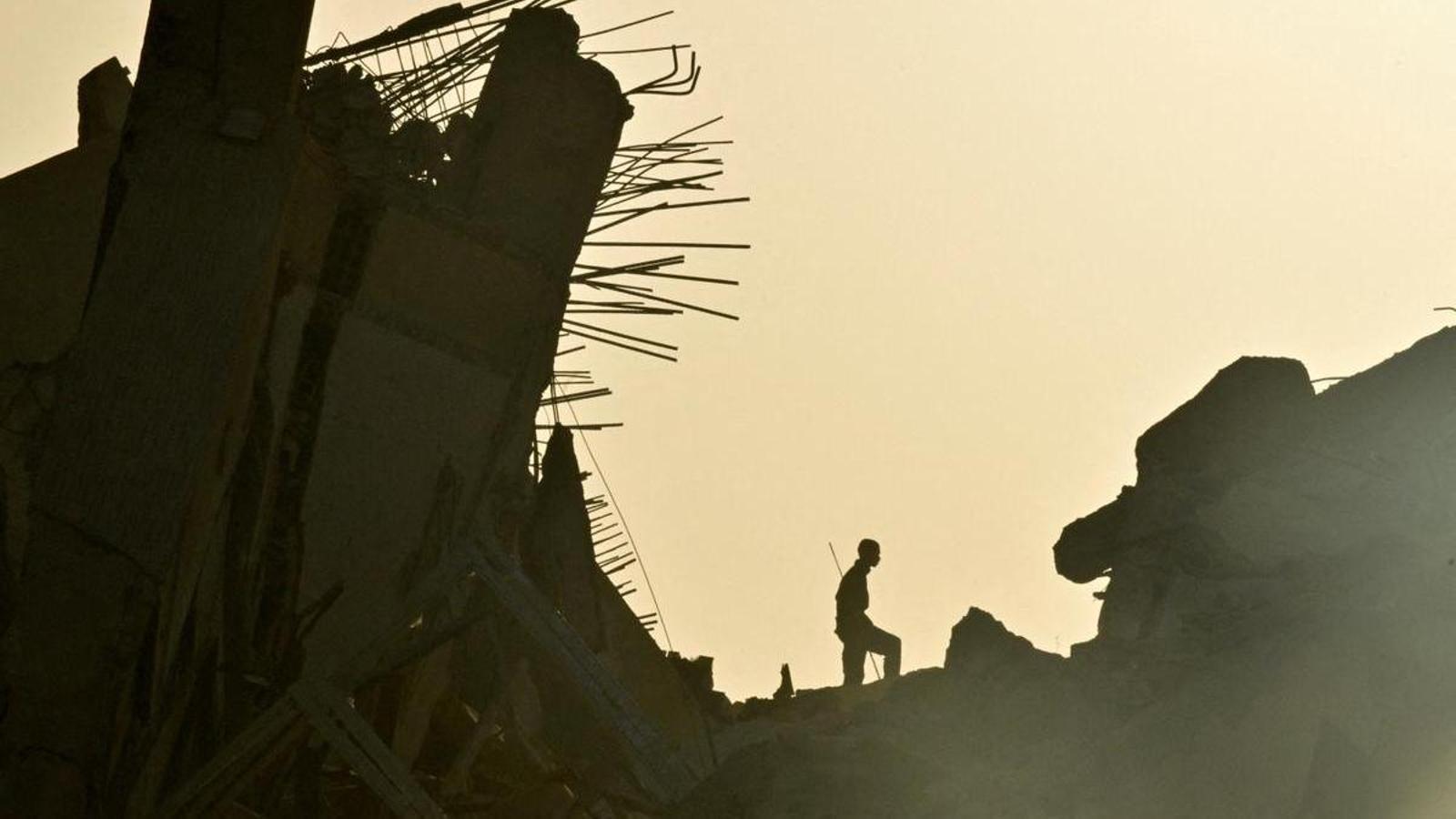
-
CAT -
CAST
BarcelonaThe scale of the tragedy in Venezuela is worsening by the hour. The images of destruction that captured the attention of the whole world on Thursday have given way this Friday to concern about the rising death toll. The day began with 235 deaths and by the end of the day the toll had risen to over 900. Mid-afternoon another piece of data set off alarm bells: the UN warned that there could be up to 50,000 missing from the double earthquake. Regarding citizens of Spanish nationality, to date, 5 deaths, 106 missing persons have been counted and 14 people have been located buried under the rubble.
The situation in the country is, evidently, very critical. Venezuelan hospitals are receiving injured people with fractures, head trauma, crush injuries, and burns, as Ciro Ugarte, director of the Pan American Health Organization, told Efe. In fact, the large number of injured has overwhelmed the health centers in the La Guaira region, the most affected state, near Caracas, where field hospitals have been set up. Outside some centers, healthcare personnel have posted lists of names of admitted patients so that friends and family can find the missing. It is estimated that there are more than 3,000 injured people across the country.
The reality outside the hospitals is not much better. The Venezuelan Minister of the Interior, Diosdado Cabello, stated that there are around 70,000 affected families in the north of the country, and that at least 250 buildings across Venezuela show damage due to the earthquakes. Emergency teams are currently focused on recovering lifeless bodies, but also on extracting Venezuelans from under the rubble who, almost 48 hours after the catastrophe, are still enduring the weight of collapsed buildings on parts of their bodies.
According to Zoe Brennan, spokesperson for the UN's International Organization for Migration, about 6.7 million people have been affected by the earthquakes: "Buildings have collapsed and critical infrastructure has been damaged, limiting access to basic services." Brennan added that there is still no clear picture of the total magnitude of the impact, but she predicted that "displacement [of people] will increase."
In the afternoon, La Guaria was still waiting for the 100 units of heavy machinery promised by the government. The interim president of Venezuela, Delcy Rodríguez, assured this morning that the government intends to "militarize" the province, but for the moment the inhabitants and volunteers who have moved to the area from other parts of the country are working with their own resources to rescue people buried under the rubble.

Wave of international solidarity
The first 72 hours after an earthquake are key to finding survivors under collapsed buildings, as the WHO recalled this Friday. In this regard, Rodríguez wanted to reassure the population and assured that the arrival of the first international rescuers is imminent, and that this should allow to "recover as many people alive as possible".
Fifteen countries have sent aid to Venezuela. So far, 25 teams from 17 different states have been deployed there, totaling more than a thousand rescuers. The teams from Switzerland, the United States, Italy, Colombia, El Salvador, Mexico, and Chile have already arrived in the country, and the rest will arrive in the coming hours or days. The spokesperson for the UN Office for the Coordination of Humanitarian Affairs, Jens Laerke, assured that the international humanitarian system is acting "with great speed and on a large scale".
The Minister of Economy of the Spanish government, Carlos Cuerpo, explained that the Spanish government will mobilize one million euros to contribute to "minimizing the consequences" of the earthquakes.
US lifts some sanctions
The United States, which since January they have controlled the country through the back door, they have also sided with Venezuela and have authorized some transactions with the South American country, previously prohibited by sanctions. The Treasury Department has made it clear, however, that it only authorizes those related to "rescue efforts" for the earthquakes. For the moment, the US administration has authorized these operations until October 23. In parallel, Washington has announced that it will allocate 150 million euros in humanitarian aid: 100 million for the United Nations Office for the Coordination of Humanitarian Affairs (OCHA) in Venezuela and 50 million for organizations working on the ground.
The European Union, on the other hand, has refused to make any changes to the sanctions it also applies to the Latin American country. "It is something separate from any other issue and from any other policy," stated the head of the European Commission, Paula Pinho. However, Brussels' sanctions, which Spain has requested to lift, are not economic in nature like those of the United States. In the European case, they are against specific personalities in the country and also focused on areas such as the military, such as the prohibition of arms sales to the country. That is to say, they hardly have a direct impact on the personal economy of Venezuelans.
