"When it seemed that it was calming down, everything has started to shake again"
Venezuelans spend the night with uncertainty and nerves as they search for missing people and try to rescue those trapped under the rubble
-
CAT -
CAST
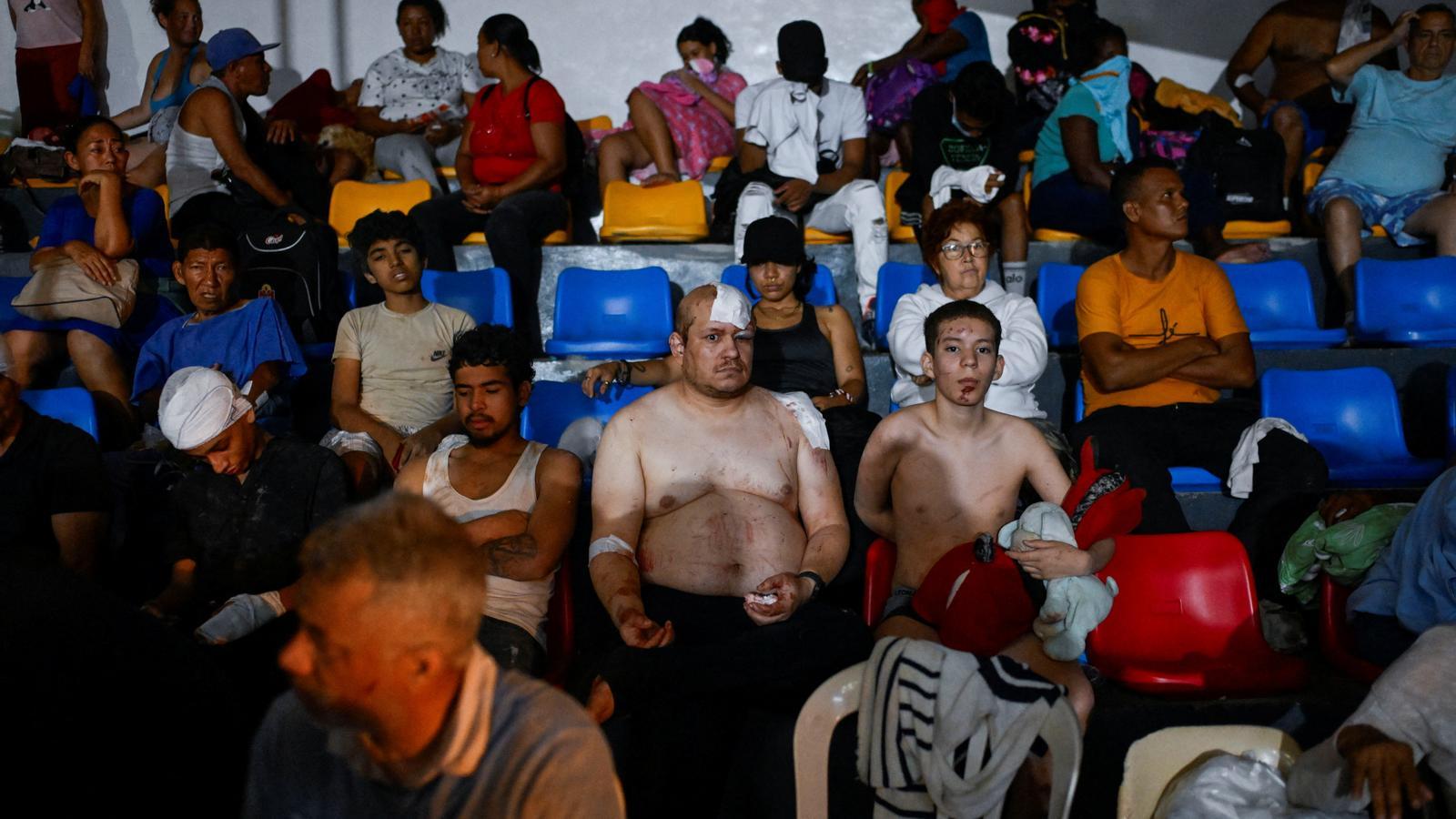
Barcelona"I was entering the house and I received a notification on my mobile warning of an earthquake. We immediately started to feel the shaking. Glasses began to fall from the cupboards and books from the shelves and we quickly went down to the street. When it seemed to be over, a second tremor shook everything again, even stronger. It was very distressing." This is how the double earthquake that has shaken Venezuela Marisol Tapia, a resident of Caracas. "My building seems undamaged, but the city is full of collapsed buildings," she tells ARA.
In La Guaira, the coastal state bordering Caracas, Amir, a 16-year-old, is one of many who, trapped under the rubble, are fighting to stay alive. "I think I'm going to be disabled. It's getting heavier and heavier [the building]," he tells Efe, while asking neighbors to stay with him: "Don't leave, don't leave me alone." The double earthquake occurred after 6 p.m. on Wednesday, local time. Just as Venezuelans were beginning to grasp the magnitude of events, the darkness of night fell over the country's streets, and emergency teams and organized neighbors had to carry out their tasks with flashlights and portable lanterns. Added to the ground operations is a web page created specifically to alert about the disappearance of people. For now, the website has accumulated over 34,000 cases where a friend or family member cannot be located, although the figure continues to rise.
Amidst the tragedy, Tapia denounces that the information reaching the population arrives drop by drop. "The government has only given generic messages, and it hasn't been until many hours later that it has started to specify some things." The uncertainty generated by the feeling of not knowing what was happening has been aggravated for many Venezuelans by the ban of the social network X in the country. It is through this channel that most videos of the events and messages from people looking for friends and family have circulated. Some Venezuelans are accustomed to using a VPN to bypass the block, but in the critical situation the country is in, Chavismo has stopped blocking the application.

Go home or sleep on the street?
As the night advanced, those who could have returned to their homes, despite the fear of new aftershocks. "We are home, awake, nervous and attentive to what is happening. I am spending the night without sleeping, but some of my relatives have managed to rest for a while," Paulino del Rosario, a resident of the Guaicoco neighborhood, east of Caracas, explains to ARA. In his building, the earthquake has left several cracked walls, but now that a few hours have passed, he is confident that the aftershocks will not bring it down.
"Many people have found themselves in open squares and places where there is no risk of collapse or falling electricity poles or urban furniture," illustrates Del Rosario. He has been able to locate most of his friends and family, but explains that people around him who have acquaintances in La Guaira are finding it harder to contact them. The interim president, Delcy Rodríguez, pointed out that this state, where Venezuela's most important airport is located, is one of the most affected by the earthquake. However, residents of the area denounce that rescue teams are scarce, and it is the population itself that is trying to find friends and family among the rubble.

Although there are more and more details about the earthquake's impact, uncertainty continues to reign among Venezuelans. The rescue of people and the search for survivors continue, amid fears that the official death toll will climb as the hours pass. And meanwhile, a sense of hopelessness invades the population: "After all we have suffered, now comes the earthquake? It can't be," laments Tapia.
