Uganda closes the border with Congo to prevent the spread of Ebola
1,077 suspected cases so far and 238 deaths raise the mortality rate to around 22%

-
CAT -
CAST
LondonThe Ebola crisis is worsening in Central Africa. Ugandan authorities ordered this Wednesday to close the border with the Democratic Republic of Congo "with immediate effect" due to the increase in cases of a rare variant of the virus in the neighboring country. The first infections have also begun to appear in Kampala, the capital of Uganda, located between 400 and 500 kilometers from the initial focus of the outbreak.
The decision to close the border was made by a local working group led by the country's vice president, Jessica Alupo, after an increase was detected in Ugandan health workers exposed to the virus by Congolese patients who had crossed the border before the outbreak was officially declared on May 15.
Two days after the outbreak was declared, the WHO declare a public health emergency of international concernThe Director-General of the WHO, Tedros Adhanom Ghebreyesus, who will arrive in the area in the coming hours, has called for a ceasefire in eastern Congo to facilitate the health response. The armed conflict in the region, which pits the Congolese army against rebel groups such as the M23, the Democratic Forces for the Liberation of Rwanda (FDLR), complicates epidemiological control efforts enormously. The massive displacement of the population towards Uganda complicates the monitoring of infections and favors the spread of the virus.
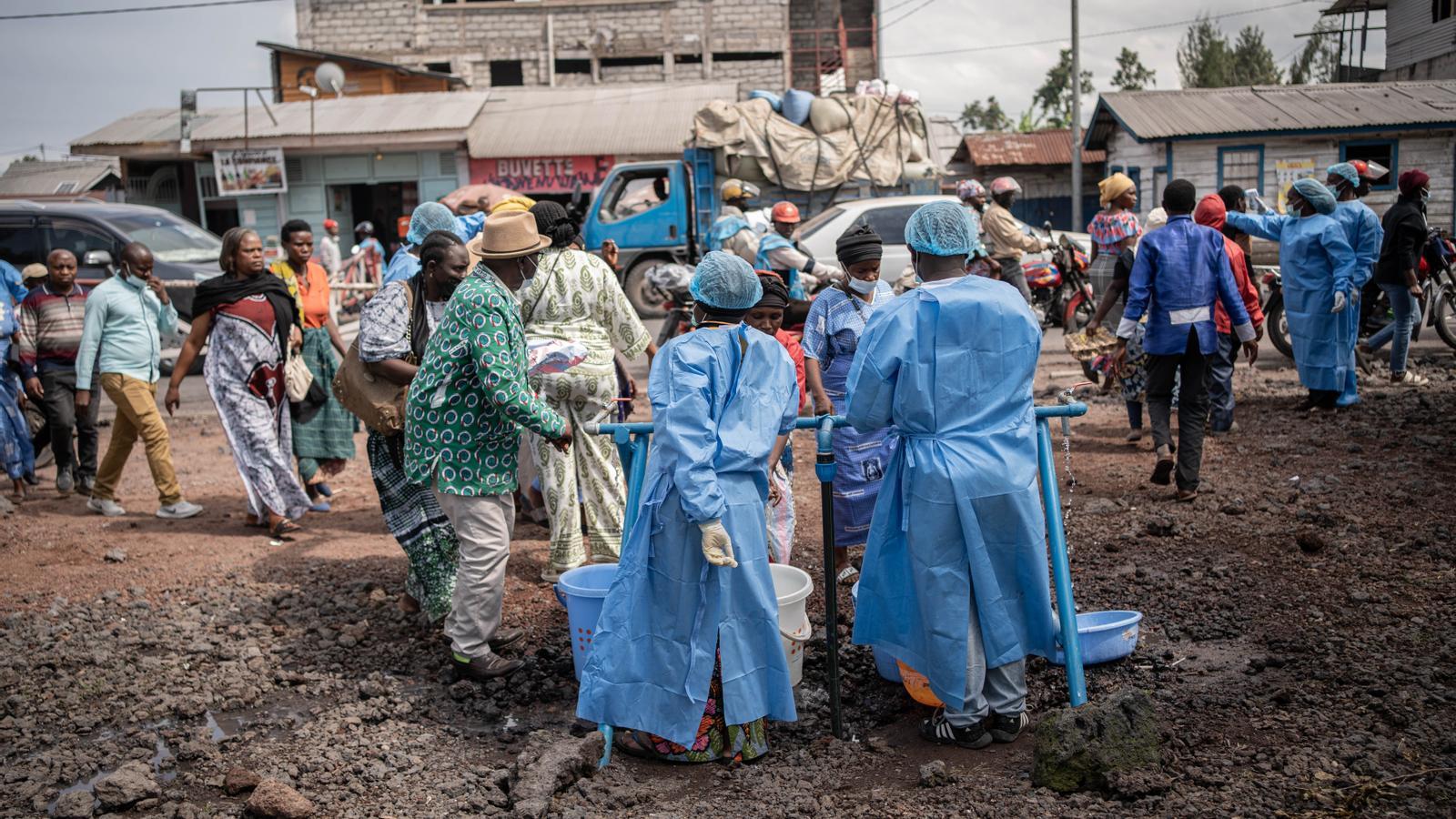
From Kinshasa, the capital of Congo, the representative of the International Federation of Red Cross and Red Crescent Societies, Cate Kamatu, has assured in statements to the BBC that "the population's trust is essential to reduce the transmission of the virus". For this reason, humanitarian organizations insist on "direct work with communities", the dissemination of clear information and coordination with health authorities.
International organizations also warn of the logistical difficulties in transporting material and protection equipment, essential to guarantee the safety of health personnel and volunteers deployed on the ground.
International emergency
Two days after the outbreak was declared, the WHO raised it to a public health emergency of international concern due to the rapid increase in cases and the appearance of the first infections in Uganda. raised it to a public health emergency of international concern amid the rapid increase in cases and the appearance of the first infections in Uganda.
Experts warn that the epidemic could be extensive and prolonged for several reasons. Among the main ones is the late detection of cases, exacerbated by the insecurity in the east of the country –especially in the Goma region– which hinders access to healthcare and the isolation of infected individuals. The difficulty of diagnosis is also a concern, as the initial symptoms can be confused with common diseases such as malaria or typhus, especially since the variant involved, the Bundibugyo strain, is less well known.
Added to this are cultural factors, such as certain funeral rituals that can facilitate transmission. The lack of international funding, which limits the response capacity in a country of large territorial size like Congo, and the state of the infrastructure, which is very unequal, also do not help at all. Specialists call for an urgent and coordinated response based on rapid detection, epidemiological surveillance, international support, and the active involvement of communities to prevent an even greater spread of the virus.
