Twelve dead and 309 injured in an attack against the Riyadh airport, the deadliest in Saudi Arabia in more than a decade
The Yemen rebels threaten to continue attacking Saudi airports, and Trump studies whether the US joins the military offensive against the group

-
CAT -
CAST
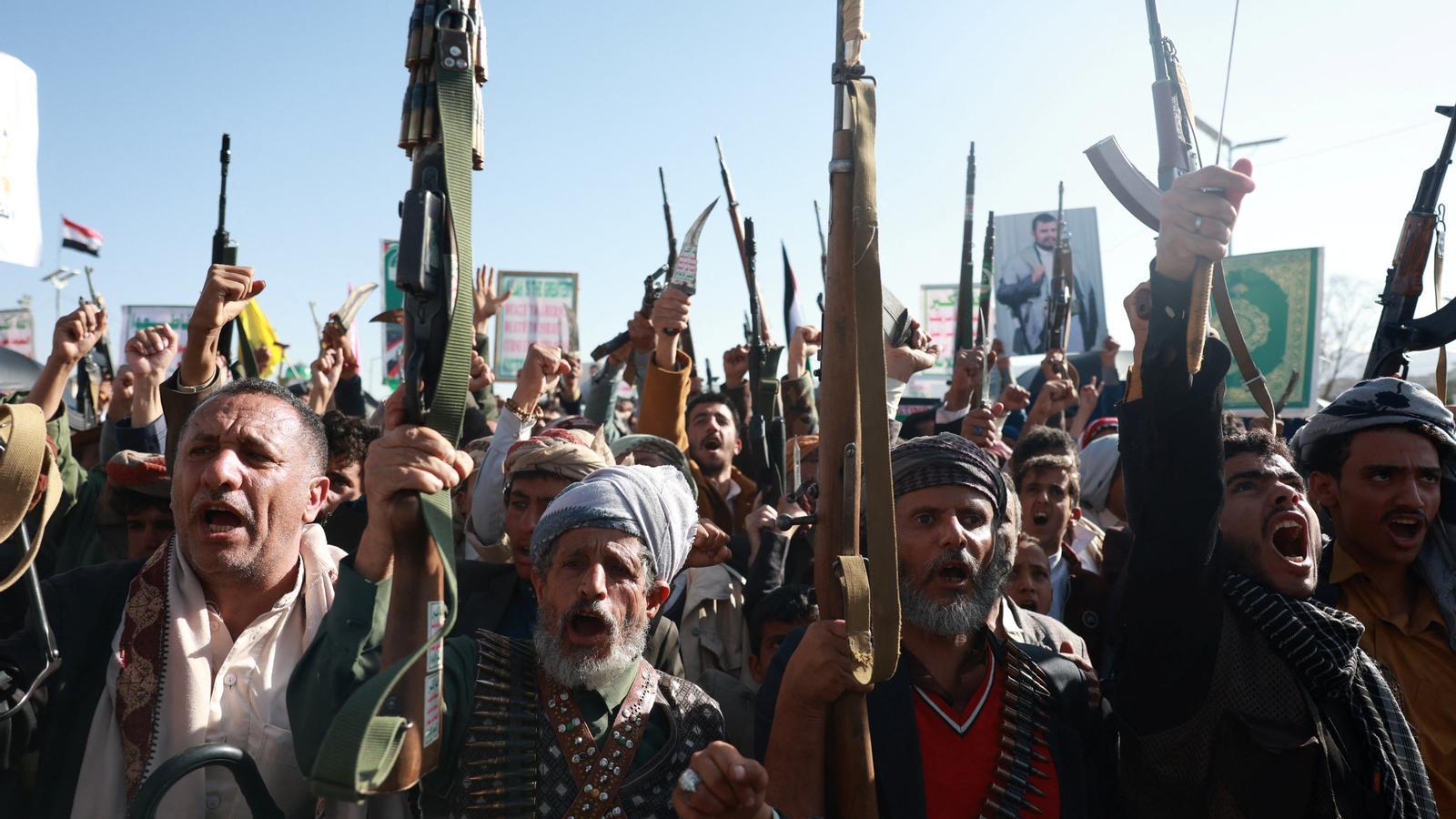
JerusalemAt least 12 people have died and 309 more have been injured in a missile attack against King Khalid International Airport in Riyadh, the capital of Saudi Arabia. The bombing, carried out on Saturday, is the third attack against the airport this week and the deadliest in the country since May 2015, when the war in Yemen had already entered a phase of intensified fighting between Saudi forces, who supported the internationally recognized Yemeni government, and the Houthi rebels. Saudi authorities attribute the offensive to the Houthis, who are aligned with Iran, and have temporarily interrupted airport operations.
According to the Saudi civil aviation authority, among the fatalities are four Saudi citizens, two from Bangladesh, and one each from the United States, Egypt, Jordan, Syria, Palestine, and Sudan. In total, 309 people have been injured, some of whom are in critical condition. The attack caused damage to airport facilities and forced the diversion of flights and the cancellation of connections with the kingdom, which today is set to begin receiving participants of the WPC Energy Congress, an international meeting that brings together high-ranking officials and executives from the energy sector.
The rebels warned airlines this Sunday not to use airports or the airspace of Saudi Arabia. In a statement released by the group's military spokesperson, Yahya Saree, they reiterated that these infrastructures are "potential targets" of their operations, with the exception of the areas of Mecca and Medina. Meanwhile, the coalition led by Saudi Arabia has described the attack as a "war crime" and has announced that it will respond to the offensive.
The escalation, however, has not been limited to the Saudi capital. The country's authorities also reported the fall of a projectile near King Fahd International Airport, in Dammam, in the east of the kingdom, although no further details have emerged. The incidents are occurring in a context of growing regional tension, marked by the fear that the United States and Israel might resume attacks against Iran.
US military intervention
The attack has once again placed the United States before the possibility of intervening directly in the conflict. The American president, Donald Trump, has left this option open and has assured that Washington will make a decision after evaluating the latest events. "It's possible. We will study it. We will make a decision. We are moving very fast," he said to reporters when asked if the United States would join Saudi Arabia in the attacks against the Houthis. Until now, the United States has not participated directly in the attacks against the rebels, although they have maintained coordination with Riyadh, especially in intelligence matters. Trump has also announced that he will speak with the country's de facto leader, the Saudi crown prince, Mohammed bin Salman.
The latest attack against the Saudi kingdom comes after weeks of intensifying bombings and a deterioration of relations between Riyadh and the rebels. Tensions had worsened in July, when the Houthis accused Saudi Arabia of bombing Sana'a airport. The Yemeni government, an ally of the Saudis, took responsibility for that operation and justified it with the argument that it intended to prevent the landing of an Iranian plane without authorization.
In this context, the Houthis announced a "blockade for a blockade" policy and declared an embargo against Saudi ships in the Red Sea, in response to the restrictions that, as they have been denouncing for years, Saudi Arabia imposes on Yemeni airspace and which they consider a blockade against the country. The episode contributed to breaking the relative calm that had been established on the front since 2022, after years of fighting, although without a formal peace agreement. Since then, aerial restrictions, military operations, and disputes over the control of maritime routes have continued to deteriorate the situation.
Last month, the group carried out a lightning offensive along the Yemeni coast of the Red Sea that allowed them to expand control over the Bab al-Mandab Strait, one of the strategic maritime passages for world trade. This strait is especially important for the transport of Saudi oil, especially since transit through Hormuz has been severely altered following the war between the United States, Israel, and Iran, which began on February 28.
The previous weekend, the conflict intensified with the announcement of a new military offensive by the Yemeni government to recover the territories controlled by the Houthis. In parallel, Saudi Arabia resumed bombings against the rebels to support the ground offensive of the government forces, in a new phase of the war that threatens to extend the clashes.
