The United Kingdom also suffers from a lack of affordable housing
Labour has promised 1.5 million homes by 2029, but the data indicate that it will not achieve it

-
CAT -
CAST
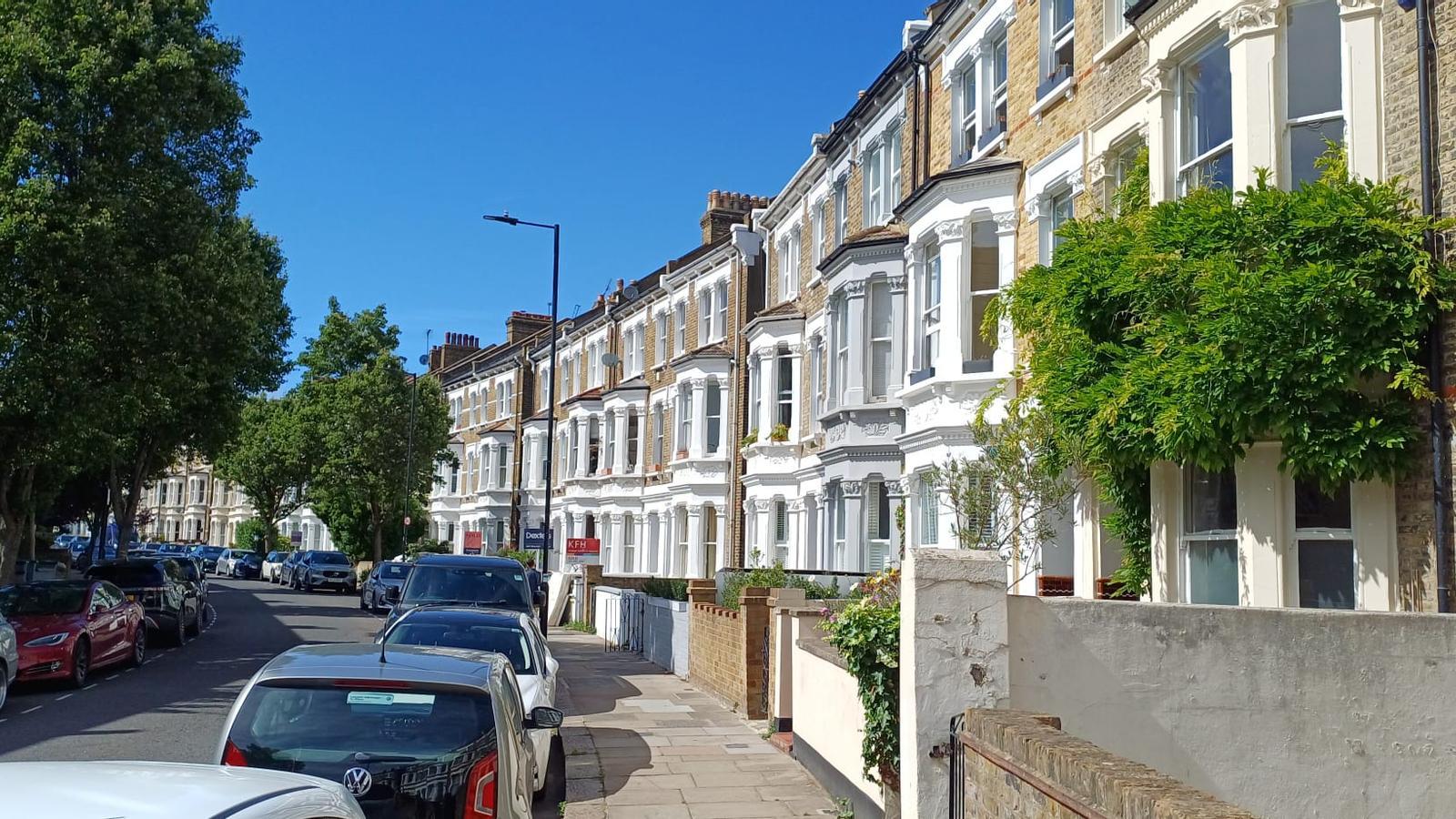
LondonIn the west of London it is common to pay more than 4,000 pounds a month –about 4,700 euros– for a three-bedroom apartment. With a lot of luck, sharing a four-bedroom apartment can allow you to lower the bill to just over 3,000 pounds –about 3,500 euros–. In Edinburgh, a five-bedroom apartment, also generally shared among students, twenty minutes' walk from the Royal Mile –the city's historic and tourist center–, does not go below 3,000 pounds: it is often a case of homes without double glazing, a serious shortcoming because winters in Scotland are long and harsh.
Housing in numbers
Wherever you look, the United Kingdom, as is also the case in the Spanish state, has a huge problem with access to housing. Often, it is not just a question of prohibitive prices. According to the National Housing Federation (NHF) –the entity that groups together social housing associations, which offer affordable and social apartments on a non-profit basis–, 8.5 million people in England cannot access the home they need. Among them are two million children who live in "overcrowded, unaffordable or inadequate" houses or apartments, they report. According to their data, more than 310,000 children share a bed with other family members due to a lack of space.
Jonathan Webb, senior research fellow at the Centre for Regional Economic and Social Research (CRESR) at Sheffield Hallam University and a specialist in housing markets and policies, puts other figures to the drama, in an interview with ARA: "There are more than 1.3 million households on a waiting list for social housing and 1.6 million private rental households receive the local housing allowance, a type of aid to help cover the monthly rent payment". While rents have continued to rise, however, "real incomes have remained practically stagnant," Webb concludes.
The social housing stock is a central piece of the system. Housing associations and local authorities provide 2.7 million affordable homes to more than 6 million people, also according to the NHF. The organization calculates that this stock allows its residents to save 18 billion pounds annually compared to what they would have to pay if they had to turn to the private market. But it is not enough: it is estimated that about 90,000 social homes are needed per year to cover the current deficit over a period of ten years. "In a broader sense –Webb asserts–, a total construction rate of 300,000 homes of all tenure regimes [ownership, private rental and social rental] would be needed in a decade to help reduce the gap between supply and demand".
The root of the problem?
One of the structural problems of the British housing market dates back to 1980, when Margaret Thatcher promoted the "right to buy" for social housing (council houses) built after the Second World War, between 4 and 5 million from 1945 to 1980. As a result of this policy, in the 1980-1997 period, 1.7 million homes left the public stock, generally sold to their occupants with large discounts. The political slogan of Thatcherism was to build "a property-owning democracy". In Francoist Spain, in a completely different economic context, the slogan of the Falangist minister José Luis Arrese in the late fifties was: "We do not want a Spain of proletarians, but of owners". The profit obtained by the councils or districts could not be used to build more apartments.
Webb points out the long-term effect this has had: "The lack of social housing puts pressure on the existing stock and forces households with lower incomes to seek shelter in the private sector, which is more expensive". However, there is no data on how many of the homes that are now part of this private market come from former social housing.
British government data show that ownership remains, by far, the majority housing regime in England. A total of 16.2 million households (65%) are owned, whether already paid off or under a mortgage. The private rental sector accounts for 4.7 million households (19%). Since the beginning of the 2000s, the number of households in this regime has more than doubled. Finally, there are 4.1 million households (16%) in social housing.
The Generation Rent association, which presents itself as the voice of private tenants in the United Kingdom, asserts that the average rent for a two-bedroom property stands at 1,243 pounds per month (1,466 euros), a figure that rises to 2,166 pounds per month (2,555 euros) when renting in London. A couple has to allocate 40% of their joint salary to have a roof over their heads. In general, a healthy family economy is considered to be one that does not have to allocate more than 30% of income to housing.
To strengthen tenant protection, Keir Starmer's Labour government pushed for a profound reform of the private market. The tenants' law, the Renters’ Rights Act, passed in October 2025 and in force since May 1st, puts an end to no-fault evictions, eliminates fixed-term contracts, and limits rent increases to once a year. They are not linked, however, to the CPI –this is only the case for social rents–, although there is some mechanism to report abusive increases. The law also prohibits landlords or agencies from accepting offers higher than the advertised price, a practice that fueled competition among candidates to secure housing, turning the market into a jungle under the law of the strongest or, in this case, the richest.
The reform strengthens tenants' rights, but, in practice, it does not solve the underlying problem: the shortage of affordable housing in a market where prices remain well above the economic capacity of many families, as Professor Webb has already pointed out. In fact, as happens in Spain, access to housing conditions is the primary factor of inequality in British society.
Broken promises
Upon coming to power in July 2024, the then Prime Minister, Keir Starmer, promised that, throughout the legislative term, his government would build 1.5 million homes. Just a few days ago, during the celebration of the Labour Party's annual conference, his successor, Andy Burnham, recommitted himself –he had already done so at the end of August and in mid-July– to promoting the most ambitious public housing construction program since the postwar period. This is one of the many challenges of his term.
Will Burnham manage to reach the promised million and a half homes? Professor Webb sees it as difficult. "It would be necessary to radically accelerate the pace of construction and strengthen the capacity of local administrations, which have lost stock, staff, and expertise since the nineties". Data indicate that, currently, about 12,000 social rental homes and 65,000 protected or affordable homes are delivered annually. A pace still very insufficient to achieve the legislative goal.

As in Spain, in the United Kingdom, the far-right also points to immigration as one of the factors explaining the current housing crisis. Nothing could be further from the truth, according to Jonathan Webb. "There is no evidence that immigration has contributed significantly to the housing supply problems. The cause of the current crisis is quite simple: for too long we have not built enough housing and, when we have, we have focused on building housing for ownership". A property also difficult to acquire at this time. Official data confirm that in 2025 the average home of this type in England cost 7.6 times the average annual income of a full-time worker: 300,000 pounds compared to 39,300 (353,000 compared to 46,000 euros).
