With the Iran war stalled, Trump and Netanyahu meet without making noise
The visit of the Israeli prime minister occurs at a low point in the relationship between the two partners

-
CAT -
CAST
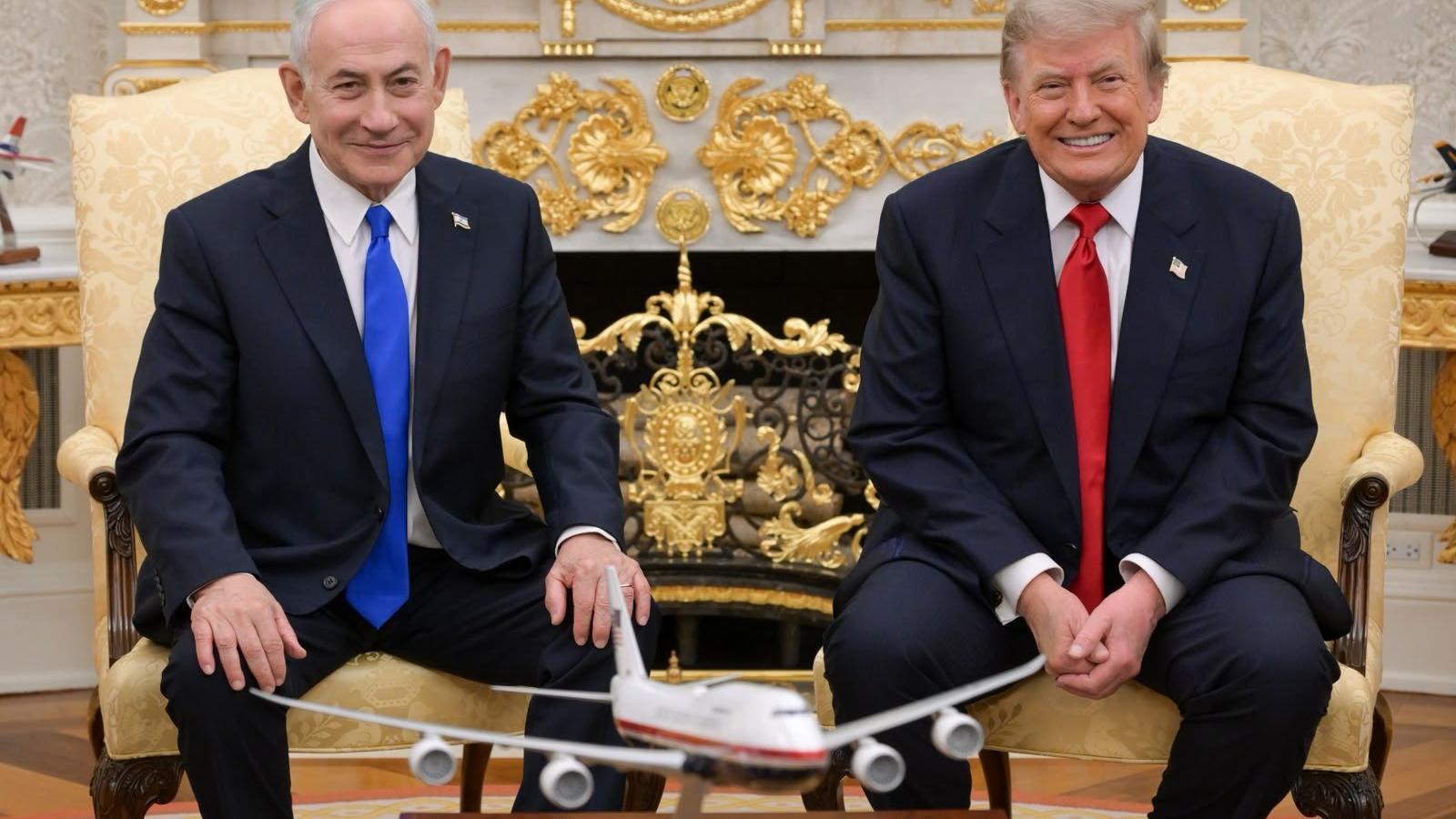
WashingtonThe US President, Donald Trump, and the Israeli Prime Minister, Benjamin Netanyahu, have positively assessed this Tuesday's meeting at the White House. Both sides have avoided making any further comments on the closed-door meeting at a time when their relationship has been visibly affected by discrepancies over the war in Iran. The entrenchment of the conflict, which has already lasted five months, has only intensified friction.
In the morning, hours before Netanyahu entered the Oval Office, the Republican once again openly belittled him on Fox News. "Bibi tells me these things because he wants me to remain involved in Iran," Trump said, referring to an alleged report that Netanyahu wanted to present to him about nuclear activity at the Iranian complex of Pickaxe. The Israeli Prime Minister would try once again to distance the magnate from the negotiating table just as Washington seeks to re-establish peace talks with the ayatollahs.
After more than ten days of consecutive cross-attacks, Washington and Tehran stopped bombing last weekend to clear the stage for diplomatic efforts. This Tuesday, the Iranian Deputy Foreign Minister, Kazem Gharibabadi, stated that the Islamic Republic has proposed to Oman that Iran manage the transit of the Strait of Hormuz that passes through its territory, and that Muscat do so on its behalf. Further south, in the Red Sea, the Houthis continue to add pressure with new attacks against a Saudi oil tanker.
Since Israel and the United States bombed Tehran in late February, Netanyahu's objective remains the same: the total destruction of the ayatollahs' regime. Tel Aviv wants to avoid a peace agreement between the Islamic Republic and the White House, as it considers that it would strengthen its power within the region. Furthermore, Israel now has even more incentives to sabotage the understanding following the nuclear agreement between the US and Saudi Arabia. The pact opens the door for Riyadh to enrich uranium, and it is emerging as a new player that can dispute Israel's aspirations to be the hegemonic power in the region.
For the moment, Trump has told the Gulf monarchy that the nuclear agreement is conditional on its adherence to the Abraham Accords. This is an initiative promoted by the Republican during his first term to achieve normalization of relations between Israel and the Arab countries of the region.
Loss of support
Netanyahu has visited the White House for the eighth time since his partner returned to power. But this time the Israeli leader was traveling with a much heavier suitcase: he was carrying a double crisis, both in his personal relationship with the magnate, and in his relationship with Americans. The entrenchment of the war in Iran has not only brought to the surface the divergences between the two allies, but has also fueled the negative perception of Americans towards Israel and its war in Gaza. On July 15, in a historic gesture, more than 100 Democrats voted in Congress in favor of ending military aid to Tel Aviv.
When Netanyahu and Trump first attacked Tehran, the polls were far away. The Republican said the military campaign would last four weeks at most, but now his ally is visiting him in the middle of summer with the war still ongoing and with the legislative elections breathing down both their necks. Polls predict that by the end of October the coalition on which the Israeli leader sits would lose its majority in the Knesset, and by early November the outlook is not much different for Republicans in the Capitol. Democrats are very likely to regain the House of Representatives, and the race for control of the Senate has become competitive for both parties.
Whatever happens in October in the Israeli legislative elections, the outcome of the American ones will remain important for the new government in Tel Aviv. If the rejection of sending weapons to Israel continues to grow within the Democratic party, and the Democrats obtain even one of the two chambers, the military aid the country receives could face real obstacles.
The disagreement in objectives has made Israel a taboo in the framework of peace talks between the US and Iran. Although the White House has left it off the table, Netanyahu has shown that he still has the capacity to influence and disrupt the Republican's plans. The bombings in southern Lebanon, which have violated one of the original points of the ceasefire with Iran, have been an example of this.
