The small South American state that has benefited from the chaos of the war in Iran
Guyana, with less than a million inhabitants, is the fastest-growing economy in the world after doubling its oil profits

-
CAT -
CAST
BarcelonaWhile the energy crisis is choking the Gulf countries, which foresee billions in losses and years of hardship due to damage to their oil infrastructure, on the other side of the Atlantic there is a country experiencing unprecedented growth. Bathed in Caribbean sun and covered in tropical forests, Guyana has benefited from the chaos resulting from the blockade of the Strait of Hormuz thanks to its oil production.
Fewer than one million inhabitants live in this state on the northeastern edge of South America—sandwiched between giants like Brazil and Venezuela. Just a decade ago, almost half lived below the poverty line. But in 2015, a crude oil deposit was discovered that would end up transforming the country's economy. In 2020, the year after it began to be exploited, Guyana's economy grew by 49%, earning it the title of the fastest-growing economy in the world.
When the boom occurred, oil was selling for an average of $69 a barrel. Today, even after the supposed ceasefire between the United States and Iran, prices are barely dropping below $100 a barrel. According to data from the British newspaper The Economist, before the war, the value of the country's production was already equivalent to about 320 million euros per week, while now it is practically double.
“Guyana's reserves are almost the same as Brazil's – Anna Ayuso, an expert from Cidob, explains to ARA – with the difference that the country has less than a million inhabitants.” She maintains that the discovery of oil has meant a “total change” for the country, which has an area of 214,970 km², and even more so considering that it is high-quality crude that is easier to market. “From one day to the next, [Guyana] has gone from being subject to the intervention of the International Monetary Fund to receiving millionaire investments, and this is difficult to absorb for such a small country,” she explains.
Guyana extracts oil from the Stabroek block, a huge deposit of about 26,800 km² located in the Atlantic Ocean, controlled by a consortium led by the North American oil company ExxonMobil. This consortium, which controls all of the country's oil production, has achieved a production rate of over 900,000 barrels per day in just seven years, an unprecedented feat. Despite the Strait of Hormuz blockade, which since the end of February has been preventing the passage of 20% of global crude oil production and a similar percentage of ExxonMobil's oil production, the company has exceeded its profit forecasts for the first quarter of this year. This is due, above all, to the increase in production that has occurred in Guyana.
An unequal distribution
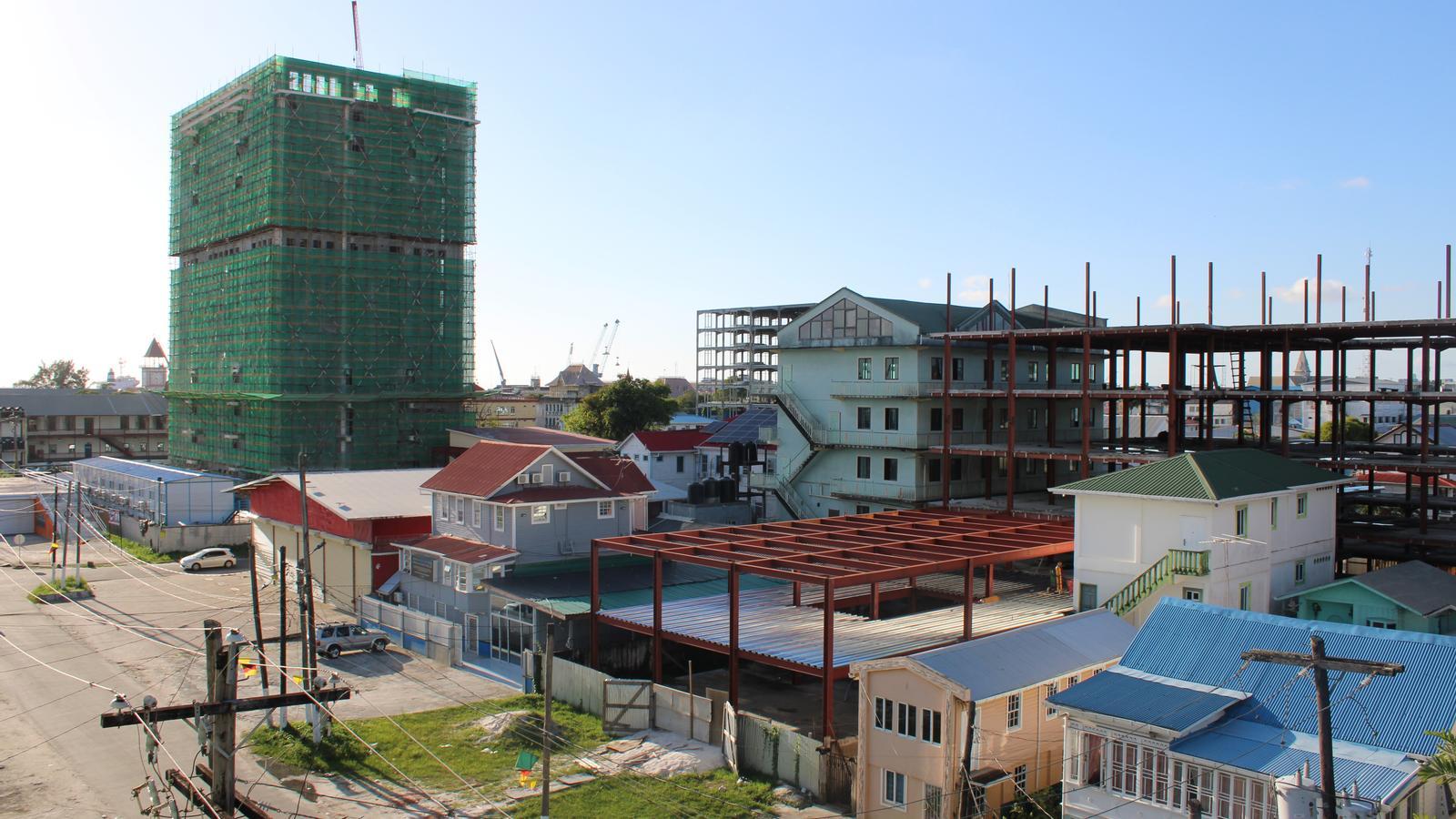
The landscape in the capital, Georgetown, has also changed following the rain of benefits that is showering the accounts of the three operators that form the oil consortium –ExxonMobil, Chevron, and China’s CNOOC–. New roads, luxury hotels, and rows of single-family homes similar to those in US suburbs have appeared. But in many neighborhoods, lacking sewage systems and with recurrent power outages, it is difficult to find signs of this wealth. "The profits from oil have not changed the social structure –Ayuso agrees–. Buildings, infrastructure, hospitals are being built... There is growth. But it is a very unequal country.
While a part of the population has benefited from the growth derived from the oil boom – the middle and more educated classes have been able to access oil-related positions – the economic boom has been accompanied by high inflation that has harmed the rest of the workers, who have not seen these improvements reflected in their paychecks and barely in public services. On the other hand, they have noticed the increase in prices for housing, food, and, ironically, also fuel, as it has no refineries and must import the gasoline and diesel it consumes.
The root cause of this inequality are the agreements signed after the discovery of oil in 2016, which are very favorable to the oil companies and have been harshly criticized by the International Monetary Fund. The agreement stipulates that the companies can keep 75% of the revenue from crude oil until they cover the costs of what they invested in the exploration and exploitation of the field. On the other hand, the royalties for the government of Guyana –the fixed percentage the state receives solely for extracting the resource– are only 2%, an extraordinarily low figure. And, to top it off, in practice, companies are exempt from paying taxes in the country. These "unilateral" agreements make Guyana very attractive to energy multinationals, according to industry experts. The average production costs are around $30 per barrel, making Guyana one of the cheapest and most profitable countries in the world to extract oil.
The government is aware of the risk of depending almost exclusively on oil and has tried to diversify the economy with measures such as the creation of a sovereign fund – similar to Norway's – or a law that obliges oil companies to contract certain services from local companies. For now, however, the impact on the productive fabric remains limited.
However, the coming years could mark a turning point in resource management. At present, if the price of oil remains close to 100 dollars, the government will earn around 4,000 million euros from oil, according to Reuters calculations, a figure that exceeds the entire annual budget of the Barcelona City Council. And the figure could still fall short. Exxon plans to recover the exploitation costs of the fields in 2026. When this happens, the share of profits corresponding to Guyana will go from 12.5% to 50%, which will multiply the state's revenues. It remains to be seen whether these resources will serve to correct the imbalances derived from the oil boom. Be that as it may, even with a possible fall in crude oil prices, experts agree that Guyana has become a new significant player on the world energy map.
