The fine print that can make peace between the United States and Iran fail
Trump assures that he has suggested to Israel to let Syria deal with Hezbollah because it would do a "better job"

-
CAT -
CAST
BeirutThis Tuesday's statements from Tehran and Washington show that the battle to interpret the agreement between the United States and Iran has only just begun. While the official signing of the memorandum of understanding remains scheduled for next Friday in Geneva, the Iranian Minister of Foreign Affairs, Abbas Araghchi, has increased pressure on Israel by stating that the end of the war in Lebanon constitutes an inseparable condition for the end of the conflict with Iran.
According to Araghchi, the agreement is divided into two parts: one relating to Iran and Israel and another focused on Iran and Hezbollah. Furthermore, the Iranian official maintained that the Israeli withdrawal from Lebanese territory is part of this understanding and warned that any attack by Tel Aviv or the continuation of the occupation would constitute a violation of the memorandum.
This same idea was reinforced a few hours later by the President of the Iranian Parliament, Mohammad Bagher Ghalibaf, during a phone conversation with his Lebanese counterpart, Nabih Berri. Ghalibaf called on the United States and the guarantor countries of the agreement to assume the responsibility of obliging Israel to end the war and respect Lebanese sovereignty.

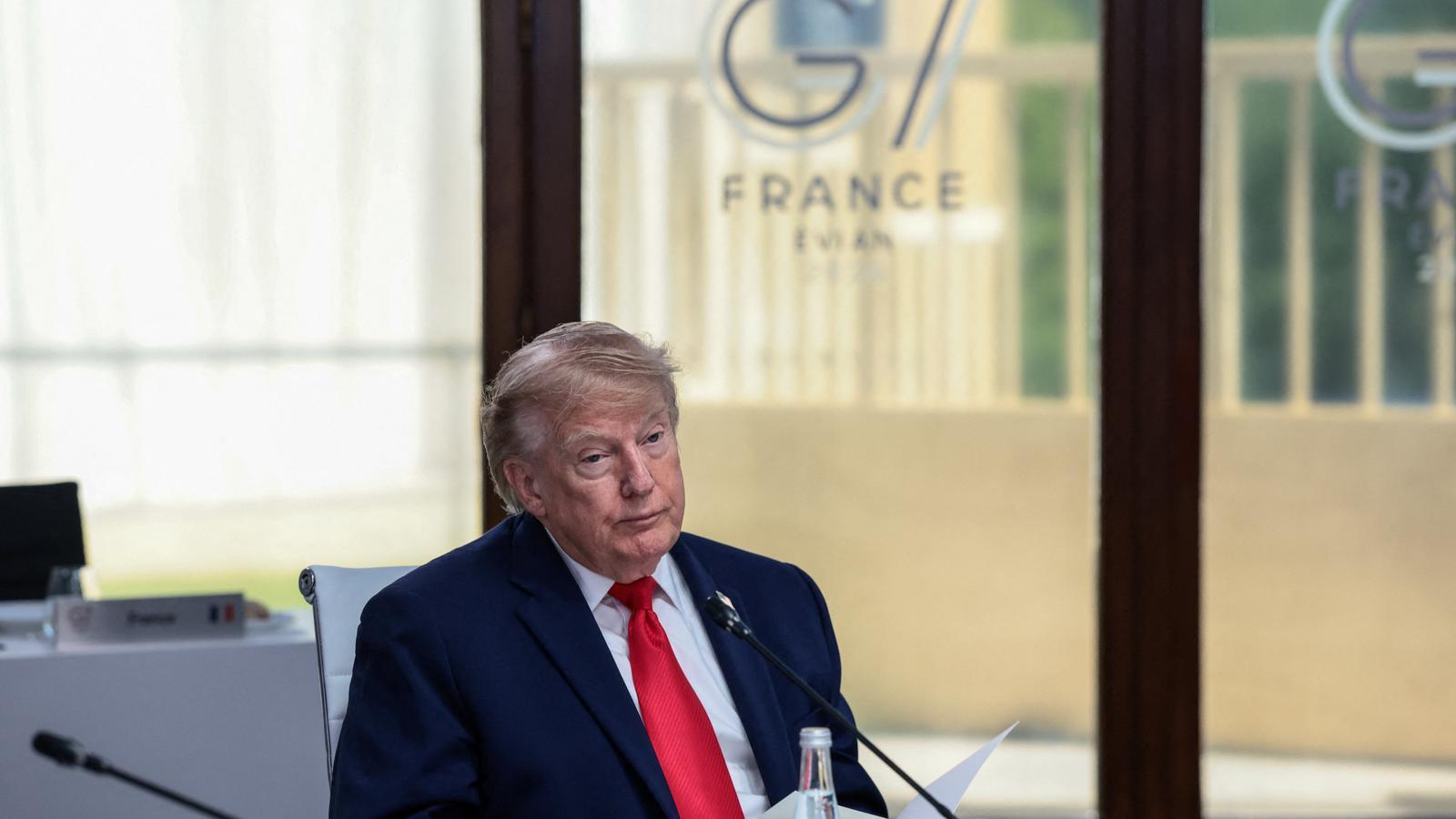
The most striking response has come from the United States. Within the framework of the G-7 summit in France, Donald Trump has openly criticized Israeli operations in Lebanon, questioned the destruction of residential buildings during attacks against Hezbollah, and stated that he has suggested Israel let Syria handle the Shiite group. "I think they would do a better job," stated the American president, thus practically inciting a confessional civil war between Shiites and Sunnis in the country. Although he insisted on maintaining an excellent relationship with Benjamin Netanyahu, the tone used reflects a growing discomfort from the White House with Israeli actions at a particularly delicate moment for American diplomacy.
The coincidence of the two messages does not seem accidental. Iran is trying to publicly link the survival of the memorandum with the end of the war in Lebanon, while Trump hints that the Israeli campaign has become an obstacle to consolidating the main diplomatic success he hopes to showcase in the Middle East. But the statements by Araghchi and Trump reveal more than just differences in tone. They also expose the ambiguities of a memorandum whose full content remains unknown and which each party seems to interpret differently.
Lebanon, included in the agreement?
If there is a point where interpretations diverge, it is precisely the Lebanese front. Tehran maintains that the end of the war and the Israeli withdrawal are part of the agreement. However, none of the information known so far unequivocally confirms that this commitment is included in the text. The difference is not minor. "It is one thing for the Israeli withdrawal to be part of the obligations assumed by the parties and quite another for it to become an objective subject to future negotiations," Lebanese retired General Yussef Haydar tells ARA.
The issue is particularly sensitive because southern Lebanon has become one of the main scenarios where the credibility of the memorandum will be tested. "If Iran interprets that Israel must withdraw and end all its military operations, while Israel considers that it maintains freedom of action against Hezbollah, the grounds for future tensions would already be present even before the official signing of the agreement," warns Haydar.
"For Iran, the strategic objective is not to achieve a military victory, but to prevent Israel from consolidating a new security reality in southern Lebanon based on permanent attacks against Hezbollah," says, for his part, Mohanad Hage Ali, a researcher at the Carnegie Middle East Center in Beirut. From the Iranian perspective, the agreement will only have value if it manages to curb this dynamic and forces Israel to modify its behavior on the ground.
The other big unknown is in Jerusalem. Although Benjamin Netanyahu has not directly participated in the negotiations between Washington and Tehran, much of the agreement's viability will depend on his decisions. As the Lebanese analyst recalls, Israel argues that the security of its northern border "requires maintaining the capacity for intervention against Hezbollah and preventing the group from rebuilding its military infrastructure." "This position has not disappeared with the signing of the memorandum," says Hage Ali.
Recent statements by Trump suggest that the White House may be willing to exert greater pressure on its ally. The American president needs the agreement to produce tangible results. The reopening of the Strait of Hormuz, the stabilization of energy markets, and the reduction of regional tensions are part of a strategy that Trump hopes to present as one of the main successes of his foreign policy. But a new escalation between Israel and Hezbollah would directly threaten this objective.
The nuclear program and economic sanctions
To this is added the other major pending dossier: the Iranian nuclear program. According to the head of Iranian diplomacy, issues related to uranium enrichment and the lifting of sanctions have been postponed to a second phase of negotiations of 60 days. That is to say, precisely the issues that led to the confrontation between the two countries remain unresolved.
"The real challenge is not to achieve a ceasefire, but to build a sustainable agreement on the nuclear program", warns Hage Ali. Differences over the fate of enriched uranium reserves, the scope of future inspections, and the pace of sanctions relief promise to become some of the most complex points of negotiation, he lists.
More than resolving the causes of the war, the memorandum seems to have postponed them. The nuclear issue remains open. The future of Hezbollah continues to be a cause for dispute. Israel's withdrawal from southern Lebanon remains shrouded in uncertainty. And each of the parties presents the agreement as a confirmation of their own positions.
