Iran and the US close a preliminary agreement that will be made official on Friday in Switzerland
The US President reproaches Netanyahu that he "has lost his head" for having endangered the understanding with a bombing in Beirut
-
CAT -
CAST
Beirut / BarcelonaThe United States and Iran have finally closed a deal that provides for the reopening of the Strait of Hormuz and the cessation of military operations in the region. The first to announce the pact was Pakistan, which is acting as mediator, and then it was confirmed by the US President, Donald Trump, and the Iranian regime.
The Pakistani Prime Minister,Donald Trump planned to sign a preliminary agreement with TehranA few minutes later, US President Donald Trump published a message in which he also assured that the agreement has been reached and has "authorized" the lifting of the blockade on Iranian ports. "Ships of the world, start your engines. Let the oil flow!" he wrote on Truth Social.
Finally, Iran has confirmed it. State television reported that Tehran "has forced" the US to accept an agreement that establishes the end of hostilities "on all fronts, including Lebanon" starting tonight. The Ministry of Foreign Affairs said that the text with the details of the memorandum of understanding will be published after the official signing and that a 60-day period is now opening to negotiate a definitive peace agreement. He stressed that these talks will begin after the Iranian funds frozen in foreign banks are released and the blockade on Iranian ports is lifted, and that during these two months the lifting of economic sanctions will be negotiated.
Regarding the reopening of the Strait of Hormuz, the Fars agency said it has been decided that naval traffic "will be regulated by Iran in coordination with Oman," something that Trump had repeatedly said he would not allow. The passage of ships through Hormuz has been blocked since February 28, with a notable impact on global hydrocarbon trade.
Instead, the issue of Iran's nuclear program and the fate of enriched uranium, which should be negotiated over the next two months, is expected to be left out of this preliminary agreement.
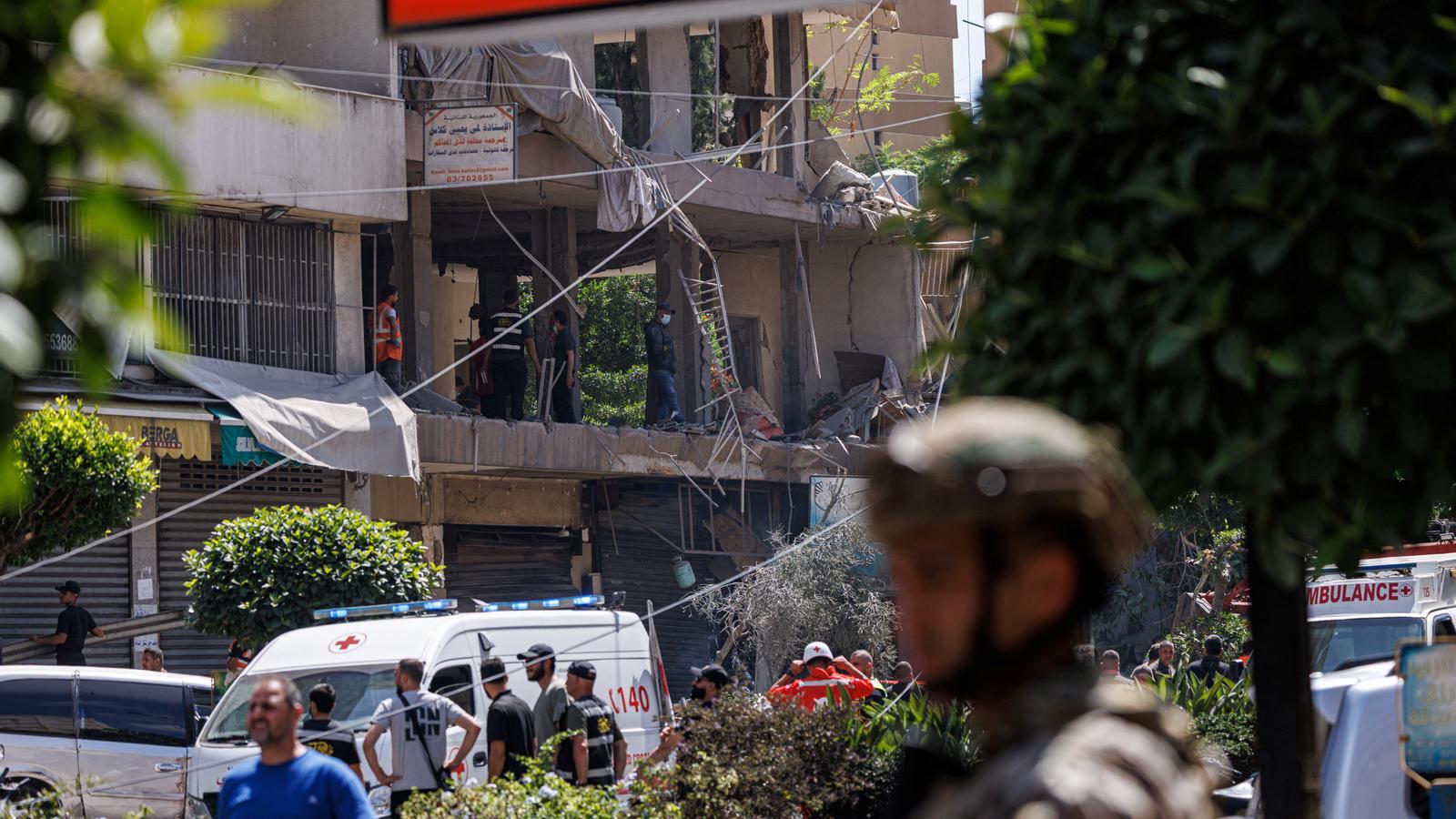
During the afternoon, the messages arriving from Tehran were not very optimistic, and it seemed that the Israeli bombing of Beirut would derail the understanding. The Israeli army has attacked the Ghobeiri neighborhood, in the southern suburbs of Beirut, and has once again placed the Lebanese capital at the center of the regional escalation at a time of high diplomatic sensitivity. The bombing, which was carried out without a prior evacuation order, has left at least three dead and sixteen injured. The Israeli air force attacked a building in the Dahieh neighborhood, a bastion of Hezbollah in the Lebanese capital, with two missiles in an operation that the Israeli army has justified as an attack on a "command center" of the Shiite group.
The operation took place on the day that Donald Trump planned to sign a preliminary agreement with Tehran. According to various diplomatic sources, the text would include indirect provisions on the Lebanese front, as the Iranian regime has made it clear that it also demands an end to attacks against Lebanon. Therefore, this latest bombing in the country's capital endangered the negotiations.
Trump criticizes Netanyahu
at a time when he is trying to close a deal with Iran. Israel threatens more attacksAxios, he regretted that this operation has caused a delay "of a few hours" in the signing of the agreement with Iran. But he maintained that it will be ratified soon: "Now it is scheduled to be in a few hours".
Nevertheless, Trump expressed great anger at the Israeli prime minister, Benjamin Netanyahu. "It's so serious... I couldn't believe it. An hour before we were to sign the agreement," he told "Axios. "Why did Bibi have to launch a fucking attack? I was so angry... I let him know. He's lost his mind," Trump insisted.
The Iranian reaction was not long in coming either. Mohammad Bagher Ghalibaf, president of the Iranian Parliament and Iran's chief negotiator, stated that the bombing demonstrates that the United States "has neither the will nor the capacity to fulfill its commitments." For Tehran, the attack on Beirut questions the credibility of any agreement if Israel maintains freedom of action on the ground. The Foreign Ministry considered Washington "directly responsible" for Israel's breach of the truce.
More severe was Iranian General Mohammad Jafar Asadi, who warned that the attacks on the southern suburbs of Beirut "will not go unanswered." In Iran, it is taken for granted that the attacks against Dahieh are a strategic red line, and, in recent weeks, various officials have warned of possible reprisals if the bombings on the Lebanese capital are repeated.
From the negotiation environment, an American diplomat cited by Fox News maintained that the attack could be interpreted as an attempt to "sabotage the agreement" between Washington and Tehran and to drag the United States back into a dynamic of open confrontation. The assertion reflects the growing perception that the Lebanese front is directly linked to the diplomatic process between the two powers. At the same time, it exposes Washington's "difficulty in imposing effective restrictions on Israel" at a time when it is trying to close an agreement with Iran.
Israel threatens more attacks
The Israeli ambassador to the United States, Yechiel Leiter, stated that the Israeli army has eliminated Ali Moussa Daqdouq, head of Hezbollah's so-called Golan dossier and considered directly responsible for an attack against American soldiers in 2007. Leiter added that the United States had previously imprisoned him and that there was a five-million-dollar reward for his capture.
However, the Israeli army later confirmed that it was last week that they eliminated Daqdouq, during an attack in southern Lebanon. Among the three people killed in Sunday's bombing in Beirut are two women, according to the country's Ministry of Health.
Following the operation, the chief of staff of the Israeli army, Eyal Zamir, stated that Lebanon is Israel's "main strategic priority," although he warned that the armed forces are also preparing for possible developments on other fronts. Zamir added that the army "will expand its attacks against Hezbollah," as part of the ongoing offensive to strengthen the security of northern Israel.
Sunday's attacks were not limited to Beirut. During the day, Israeli drones and aircraft attacked multiple points in southern Lebanon, where at least two more deaths were registered. Among the victims is journalist Ali Mohammad, killed in an attack in Shaqra, in the Bint Jbeil district. In parallel, Hezbollah has claimed six operations against Israeli positions deployed in Lebanese territory, in an exchange of fire that continues along the border.
The question now is whether this bombing in Beirut will lead to a new point of military escalation or if the response will be contained. So far, Hezbollah and Iran have tried to contain their actions to avoid an open regional war, but the recent sequence shows that an attack on the Lebanese capital could escalate beyond Lebanon and simultaneously provoke a diplomatic rupture.

