Neither regime change nor dismantling of the nuclear program: Trump's failed agreement
The US president has renounced the majority of objectives that he had set for himself when he declared war against Iran
-
CAT -
CAST
Washington"Ships of the world, start your engines. Let the oil flow!", the American president wrote this Sunday on his network, Truth Social. On his 80th birthday, Donald Trump celebrated that the agreement with Iran had been "completed", congratulated all those involved and boasted of having gone much further than any other leader of the United States.
"The great deal will bring peace and security to the entire region. Many presidents have tried to make peace with Iran, and all have failed until they reached me. The leaders of the region have found, for the first time, a president who can help them achieve real peace. With the opening of the Strait of Hormuz after the signing of the agreement this Friday, to achieve the removal of mines, oil will flow again on both sides of the region and the world!", Trump wrote.
The next day, experts do not see Trump's victory so clearly. The full text of the agreement has not yet been released, but it is known that the American president started the war against Iran with the objective of dismantling its nuclear program forever, and this part of the negotiation has been postponed. He promised that he would help the country's protesters to overthrow the regime, but this regime remains standing. And he proclaimed that he would ensure that the US stopped sending "terrorists" to other countries. "We will destroy their navy and ensure that the Iranian regime cannot continue arming, financing, and directing terrorists outside its borders," Trump said in March, another objective that now seems set aside.

"Trump is wrong. He is the first president to have led the US into war with Iran and, therefore, the first to have needed a truce to avoid it. The peace that his predecessors sought and did not achieve has not yet arrived," opines Bloomberg columnist Marc Champion, former director of the Wall Street Journal. "This is not a peace agreement that rethinks US-Iran relations or brings stability to the region. The fact that all the problems that preceded it have been left pending for the future is a sign of the war's failure," he argued.
The Trump administration has heavily criticized the agreement that former President Barack Obama reached with Iran in 2015 after years of negotiations, an agreement that did include measures to limit Tehran's nuclear program. This time, the agreement foresees deciding in the next 60 days what to do with Iran's enriched uranium reserves, which the US and Israel fear could be used to build an atomic weapon. Trump claims that Iran has agreed not to continue with its nuclear race, but this point is not clear, and the little information that Tehran filters about it suggests that this part has not been closed.
What analysts, experts, Democratic congressmen, and also some Republicans were asking themselves this Monday is what sense it makes to start a war if its outcome has been to return to square one, that is, the reopening of a commercial shipping route that was open before the conflict began. For many, the feeling now is that Trump has been forced to take a step back, defeated by an Iran that has shown itself to be very resilient in the face of attacks from the world's largest army, an Iran capable of strangling the world economy.
"Since the United States launched into this war, its objectives have changed. It has not managed to provoke a regime change and, instead, has strengthened the position of the most intransigent sectors. And although the agreement seems to include the reopening of the Strait of Hormuz, closing the strait continues to be a powerful weapon with which Iran will threaten in the future," opines Victoria J. Taylor, director of the Atlantic Council, who served as Deputy Assistant Secretary for Iraq and Iran during the Biden and Trump administrations.

"There is a possibility that this ceasefire could pave the way for a more permanent agreement, but it is more likely to be a temporary and fragile understanding that at best will avoid a new war until the end of this administration," predicts Taylor.
Many also wondered if the terms of the agreement are really what the United States is communicating. Doubts also come from their side. Republican Senator and staunch Trump follower Lindsey Graham has expressed his doubts about this. "I am concerned because Iran's view of the agreement seems different from what the US negotiating team is proclaiming," he wrote on X.
The Hormuz Strait enigma
The same Trump has shown that he has backed down on some of his objectives. "I never cared about regime change," he said in an interview this Sunday, contradicting his statements during the start of the war and affirming that the current regime is the "most rational" of all the regimes with whom the US has negotiated.
On the other hand, it is also not clear that the agreement will allow a rapid reopening of the Strait of Hormuz, as the American president promises. Although Trump said on Sunday that ships were already circulating, government sources warned that the US blockade of Iranian ports would remain in force until the agreement signing ceremony. At the same time, shipping companies warn that they will not allow their ships to cross the waterway until both parties guarantee that it is safe and that there are no mines.
"The shipping industry needs to feel confident to move out," says Rockford Weitz, professor of maritime studies at Tufts University, in conversation with Al-Jazeera. In his opinion, returning to normality is a task that could take months, "because the disruption has been much more prolonged than anyone expected".
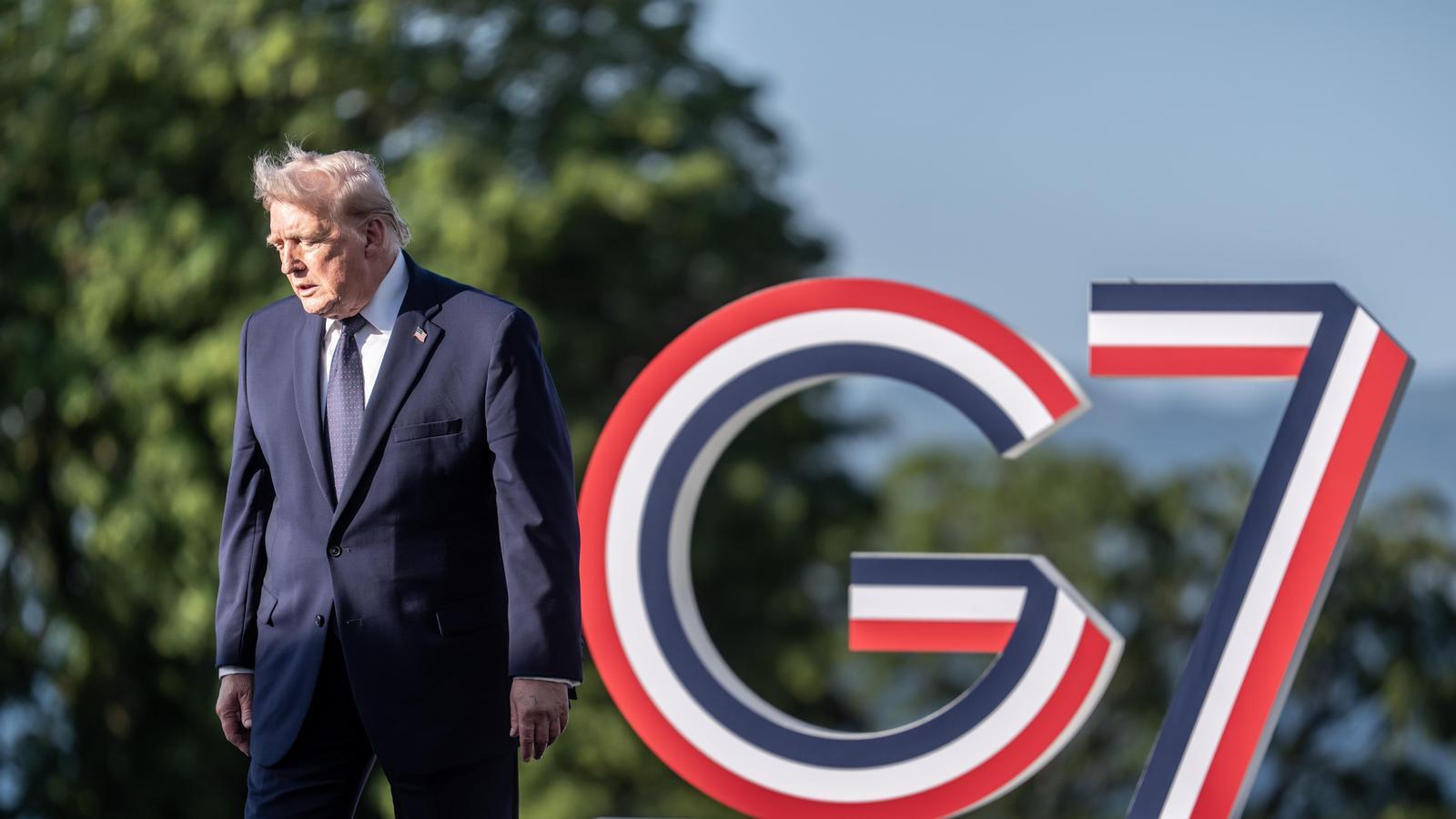
The International Chamber of Shipping has declared that about 500 ships are awaiting instructions to cross the strait, with about 20,000 crew members stranded inside. Trump has said he will speak about these demining operations at the G-7 summit, which is being held this week in France. In total, during the war, 46 attacks on international ships in the strait have been recorded, according to data from the International Maritime Organization.
