The EU lashes out at Trump for extending a hand to Putin: "We must pressure the aggressor, not the victim"
EU leaders discuss ways to increase support for Kyiv in the face of the uncertainty of the Trump administration

-
CAT -
CAST
BrusselsA clear message from the European Union to Donald Trump. Community leaders disapprove of the US administration's decision to relax sanctions on Russia with the release of Russian diesel. Trump's move, which aims to lower fuel prices with one month to go before the midterm elections in the United States, has landed like a bucket of cold water in Europe, as it puts its entire sanctions architecture against the ropes.
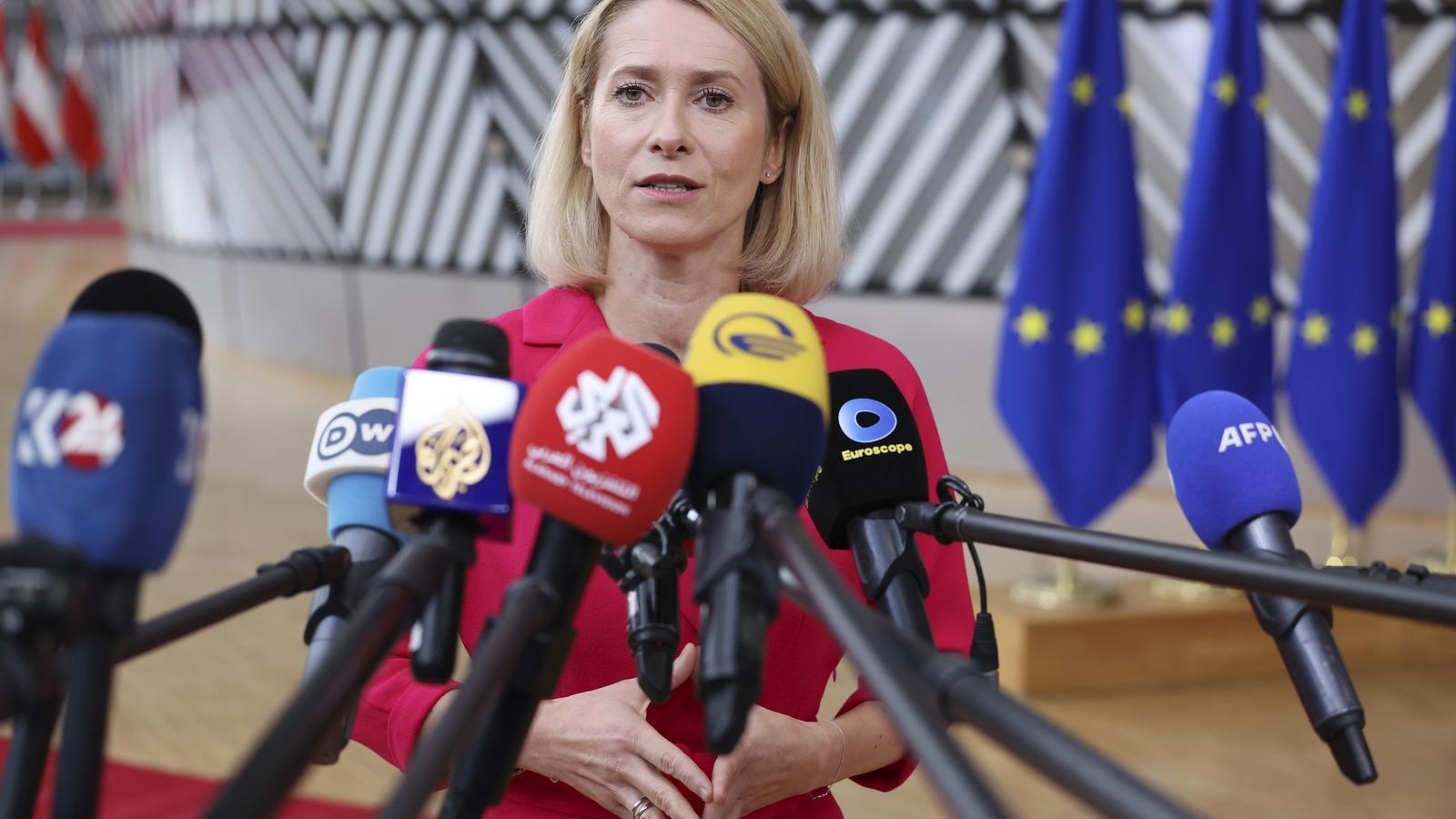
"We definitely have a different approach regarding this war," said the head of European diplomacy, Kaja Kallas, at the entrance to the EU leaders' summit, who argued that "we must pressure the aggressor to stop the war, not the victim to surrender." "Drowning Ukraine is not the right approach," she added.
Ukrainian President Volodymyr Zelenskyy has traveled to Brussels today to meet with European Union leaders at a time when support from the US administration is faltering. Kyiv has watched with concern as the Trump administration has placed its own particular political interests above firmness with Moscow. The latest decision that has caused a stir features the Starlink satellites – a vital network for communications on the battlefield and with drones – which Kyiv claims Washington has blocked.
Given these circumstances, the member states have rallied to support Ukraine. While avoiding direct confrontation with the United States, they have made it clear, however, that they disapprove of its strategy. "I see the US as a partner, they are a strong ally, as is NATO, [...] but sometimes good friends need a reminder of what is right," stated Kristen Michal, the Prime Minister of Estonia, in reference to Trump. In the same vein, Danish Prime Minister Mette Frederiksen expressed her regret that Trump's agreement worsens the alliance with Washington. "We are worse off than we were a few days ago," she said.
Less beer, more defense
To cope with the expenses linked to the defense of Ukraine –especially in a context where support from the United States is in doubt–, some leaders have called for increasing the budget for this item. The Netherlands, for example, has asked partners to increase their contributions. "I ask all European leaders to do more financially [...], because many European countries are lagging behind in support for Ukraine," stated its prime minister, Rob Jetten.
One of the most curious claims in this regard has been made by the Prime Minister of Latvia, Andris Kulbergs, who has proposed giving up drinking beer to allocate more resources to defense. He said that "one less beer for every European per year" would help cover the cost of the war. While for Europeans beer is just "an expense", in Ukraine, he says, "it is a matter of life and death". "If we drink less, lives are saved. It's as simple as that," he stressed.
During the meeting in the community capital, EU leaders must address how to provide an outlet for the urgent needs of Ukrainian critical infrastructure in the face of Russian attacks, especially against energy plants, and must review European financial and military support, including the 90 billion euro loan agreed for Ukraine.
They will also talk about instruments of response against Russia's hybrid actions, such as drone incursions, sabotage, cyberattacks, and disinformation operations. The EU wants to develop systems to strengthen surveillance and prevention at the borders and ways to coordinate to provide a unified response. In this sense, the Bulgarian Prime Minister, Rumen Radev, has stated that his country will work with Romania to present a proposal to EU leaders to stop drone attacks against civilian ships in the Black Sea.
After the interview published this Thursday in the Financial Times, in which Zelensky lashes out at Trump and describes him as an admirer of Vladimir Putin, the same newspaper reports that European leaders want to ask the Ukrainian president to moderate his public criticism of his American counterpart. They fear that the deterioration of the relationship between Washington and Kyiv will end up harming Ukraine, which remains dependent on American intelligence and Western military support.
