The EU expands sanctions against Jewish settlers in the West Bank
Spain maintains pressure on the European bloc so that it applies restrictions to Netanyahu's government

-
CAT -
CAST
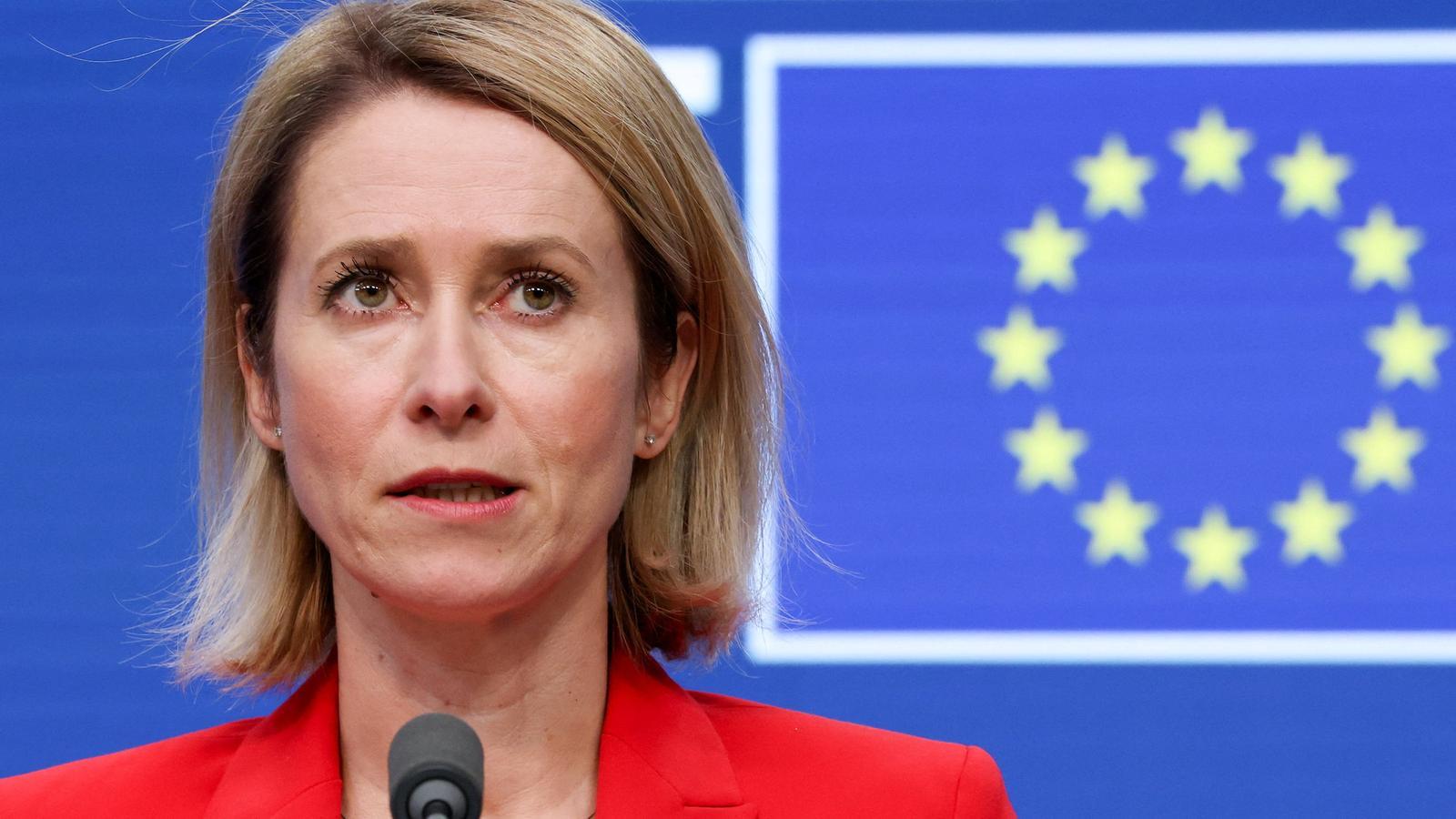
BrusselsThe European Union continues without applying sanctions against Benjamin Netanyahu's government, but this Monday it agreed to extend restrictions against violent Israeli settlers in the West Bank, as well as against Hamas personalities. "Violence and extremism have consequences," remarked the head of European diplomacy, Kaja Kallas.
The initiative had long had the support of all member states, with the exception of Viktor Orbán's Hungarian government, which vetoed it. However, the executive led by the new prime minister Péter Magyar has given the green light, and therefore, the European Union has been able to approve the measure.
Kallas has not publicly stated exactly how many and which individuals and entities the European club's new sanctions will apply to, but diplomatic sources indicate that at least seven more names related to the settlements of violent Israeli settlers in the West Bank will be included in the blacklist. Being included on this list entails a ban on entering European territory and operating there economically, as well as the freezing of funds that those sanctioned have within the community club.
Nevertheless, this is a sanction that several member states, especially Spain, consider to be minimal, and they are calling for more significant restrictions from the EU. Also regarding violent Israeli settlers in the West Bank, Kallas herself admitted that at the EU Foreign Affairs Council this Monday, several Foreign Ministers called for economic sanctions against these illegal settlements.

Some member states, such as France or Sweden, already asked last week for tariffs to be applied or for trade relations with Israeli settler settlements in the West Bank to be suspended. Thus, the head of European diplomacy has pointed out that she will analyze with the European Commission what kind of legal proposal can be presented to the member states in this regard, as she already pointed out in the previous EU Foreign Affairs Council without it having been finalized in anything.
More pressure from Spain
Although the majority of member states refuse to apply sanctions against Israel, Spain advocates for increasing diplomatic pressure against Tel Aviv. The Spanish Minister of Foreign Affairs, José Manuel Albares, has requested that the suspension of the association agreement between the EU and Israel, which establishes a framework for trade and priority political dialogue between the two parties, be put to a vote. "We ascertain how many [member states] agree and how many do not. [...] The best way to ascertain this is for it to be put to a vote," insisted the Spanish head of Foreign Affairs.
However, Kallas's response has once again been categorical, and she has defended not putting it to a vote because it does not have sufficient support among the member states for it to be approved. This is a decision that, at the very least, must have a qualified majority; that is, 55% of the countries representing at least 65% of the EU's demographic weight. And, at this time, there are several large member states that openly oppose it, especially Germany and Italy.
