Starmer attempts the restart: rebellion postponed but not aborted
The 'premier' continues wanting to square the circle: he promises to place the United Kingdom "at the heart of Europe" without breaking the red lines on Brexit
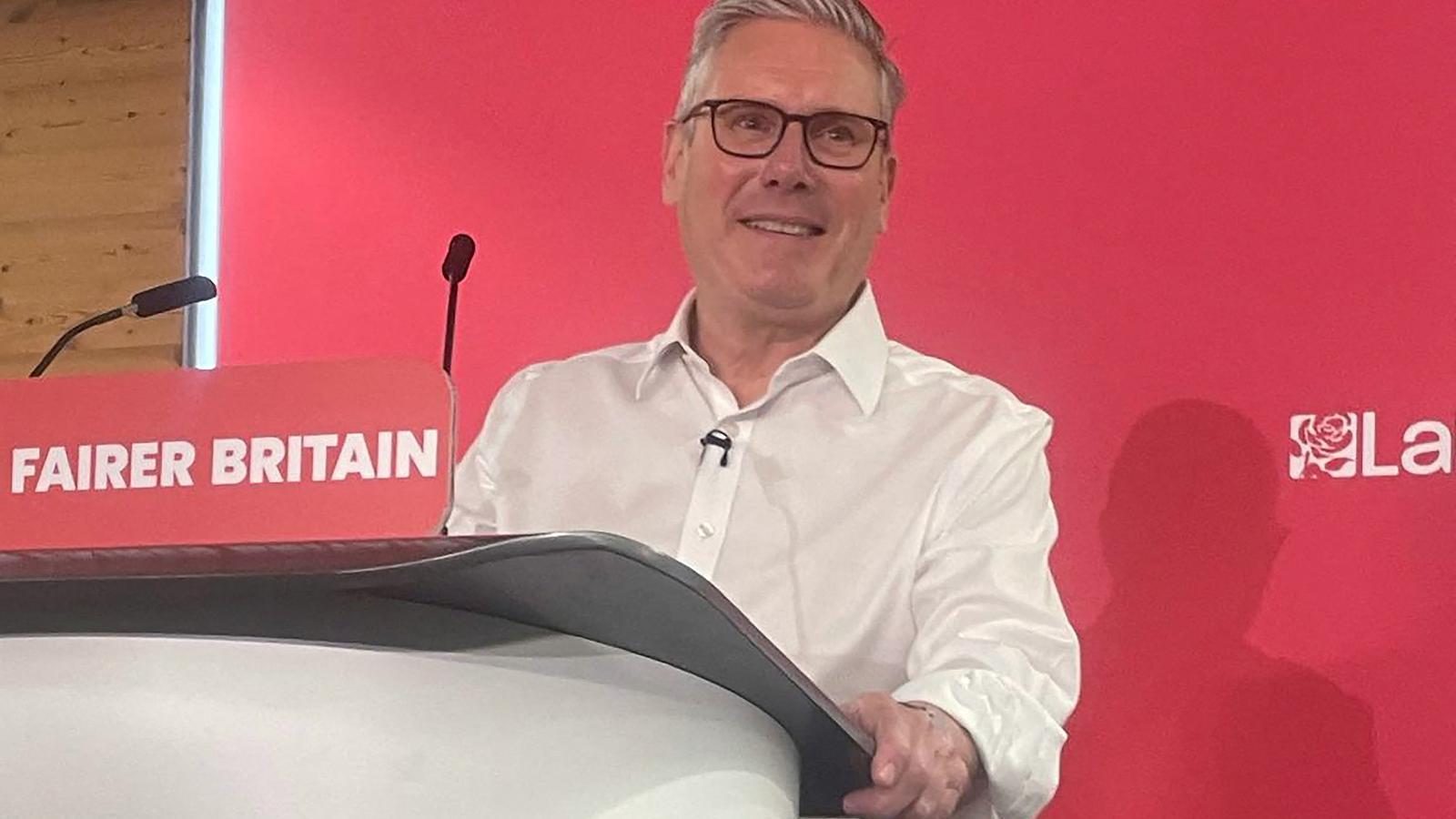

LondonBritish Prime Minister Keir Starmer has borrowed some words from the ad hoclaw.
Starmer has admitted that he is being questioned: "Some people are frustrated with me, I have detractors, and I know I have to prove them wrong." But his words have not been well received by his critics. Immediately after the speech ended, both Labour MPs and union leaders – the largest financiers of the Labour Party – have renewed calls for his orderly departure from power. By midday this Monday, forty-three MPs had actively joined a rebellion that is neither appeased nor, for now, has any guarantee of success, at least in the coming days or weeks.
The only good news for the premier after his speech is that the north London MP Catherine West, who on Saturday threatened to trigger a challenge to his leadership, has slowed it down for the moment. West has expressed disappointment with the Prime Minister's words, calling them "insufficient and late," and has urged the premier to set a timetable for an orderly departure by September, just as the party celebrates its annual congress.
Furthermore, postponing the replacement process for a few months would allow Andy Burnham, the mayor of Manchester and currently the party's preferred candidate to replace Starmer, to stand in a by-election for one of the constituencies in the north of England and return to the House of Commons. Burnham was recently vetoed by the party's national executive committee from doing so, which everyone interpreted as a way to block Starmer's main rival. In this regard, former Deputy Prime Minister Angela Rayner, one of the most powerful figures among the party's traditional base, stated this Monday that "it was a mistake" to rule out Burnham.
Correct and little more
In general terms, Starmer's speech has been correct, passionate at times, referring to his family background as on previous occasions, and with an accurate diagnosis of the many difficulties the country is going through. He has also admitted the mistakes his government has made. But he has sinned by what the prime minister often sins by: political vagueness which, in the end, paralyzes his action. It seems difficult, therefore, for him to overturn "a statu quo that has failed the British people, who see that the change [that Labour promised in 2024] cannot come soon enough and who, to tell the truth, I'm not sure they believe we care".
The clearest example of the difference between Labour's words and deeds is the reference to Europe and Brexit. Starmer, rightly, and almost exceptionally, has very harshly criticised Nigel Farage, the leader of the far-right Reform Party, who provoked the divorce from the European Union in the referendum held ten years ago. "I want to remind you what Nigel Farage said about Brexit: that it would make us richer. False: it has made us poorer. He said it would reduce immigration. False: immigration soared. He said it would make us safer. False again: it has made us weaker. He deceived the United Kingdom, and now he talks about almost anything except the consequences of the only policy he actually managed to implement."
But the response to these effects – returning the United Kingdom "to the heart of Europe" – is impossible without his government deciding to break its red lines. These are not returning to the single market or the customs union, let alone considering the possibility of proposing a new referendum. This is also how Anand Menon, professor of European politics and foreign affairs at King's College London, and director of the think tank UK in a Changing Europe, has assessed it. "You cannot make a diagnosis that calls for bold action and offer a response that has been more rhetorical and an empty slogan". Slogans that, when John Major formulated them, made much more sense. At that time, the United Kingdom was still part of the EU and Major was trying to reverse the confrontational situation that his predecessor, Margaret Thatcher, and a part of the Conservative party had taken with Brussels.
Starmer, for the moment, and despite the electoral earthquake that has hit the party, has saved his skin. But in no case is his continuity beyond the September congress guaranteed. The big debate facing the Labour Party is as much about policies as about names. Policies that correct the great inequalities that continue to affect large sectors of the British population.
Otherwise, with Starmer, Burnham or any other prime minister in Downing Street, Labour runs the risk of handing over the keys of power to Nigel Farage and the far-right. "If we don't do things right, our country will take a very dark path," the prime minister himself acknowledged in his speech. He believes he is the right man to do them right. The majority of Britons, at least for the moment, do not agree.
