A bombing at Kuwait airport challenges Trump and revives tensions in the Gulf
The US president assures that he wants to meet with the Iranian supreme leader, Mojtaba Khamenei
BarcelonaTensions in the Persian Gulf have flared up again this Wednesday, following a bombing of Kuwait International Airport, with one person dead and at least 63 injured, according to health sources, seven of whom required surgical interventions. The United States has attributed authorship to Iran, accusing it of a "deliberate, calculated, and unjustified attack." But Tehran insists that the detonation was a consequence of the impact of an American missile interceptor on the airport. This is the deadliest attack exchanged between the US and Iran in recent days, and moreover, it occurred at a civilian infrastructure, further jeopardizing Donald Trump's attempt to reach a new ceasefire agreement with Tehran to save face.
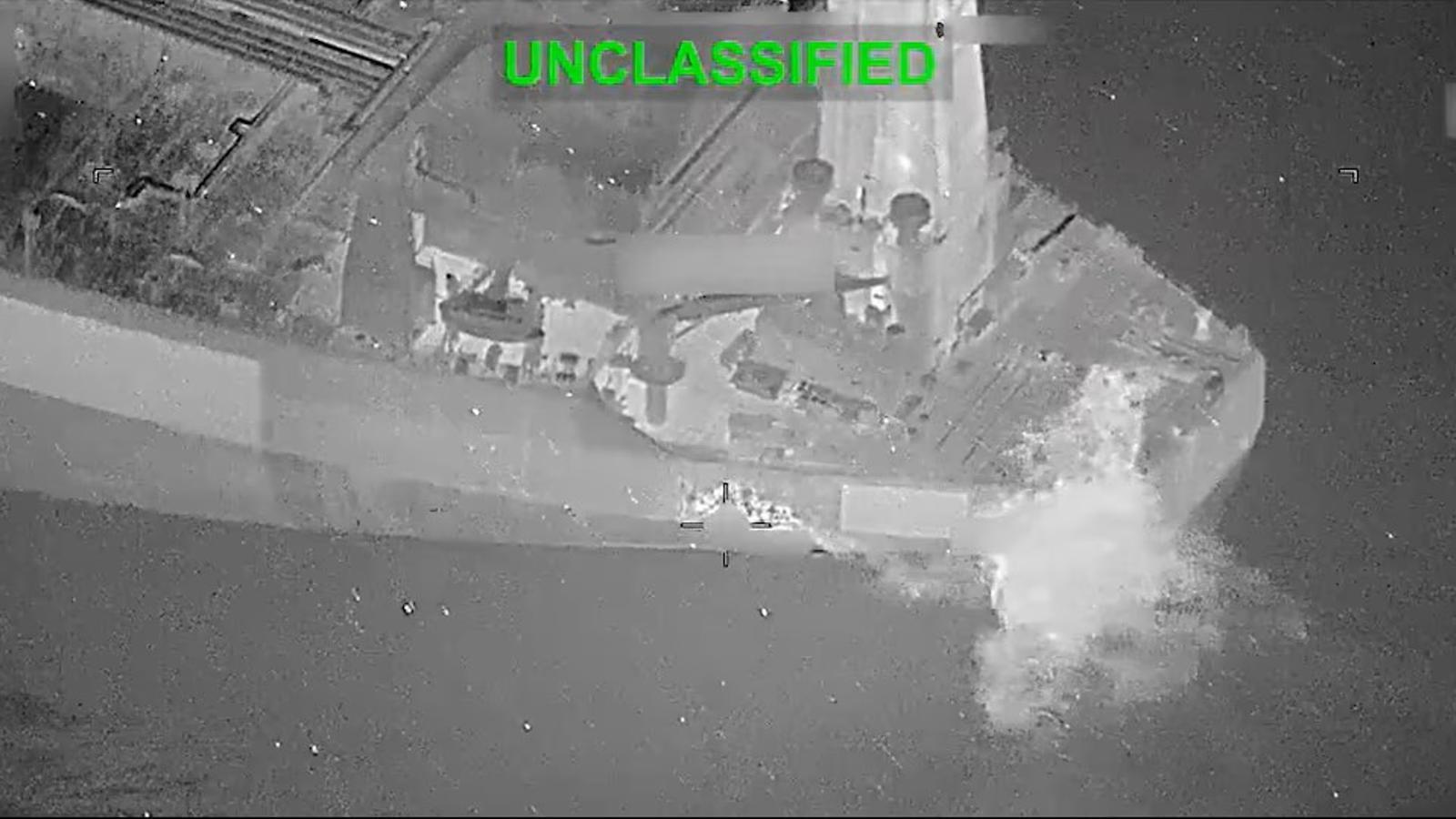
Kuwait has reported intercepting 13 ballistic missiles and 17 drones. The attack on the airport forced a temporary suspension of flights, but operations resumed hours later. The latest exchange of fire began when the US military announced it had attacked a Botswana-flagged tanker sailing in international waters towards the Iranian island of Kharg, north of the Strait of Hormuz and near Kuwait, which had ignored repeated warnings for 24 hours.
The central command of the US military (Centcom) reported carrying out a new round of "defensive strikes" against Iranian missile launch sites and ships attempting to lay mines, and launching retaliatory attacks on the Iranian island of Qeshm. The Iranian Revolutionary Guard, for its part, stated it had attacked the US Fifth Fleet headquarters in Bahrain with missiles and drones in response to the attack on Qeshm. The Bahraini army reported intercepting three missiles and several drones targeting civilian infrastructure.

The Iranian Foreign Minister, Abbas Araghchi, also defended that the attacks on Kuwait and Bahrain were in "self-defense", against places that the US forces "use to attack civilian ships and violate the ceasefire".
Trump wants to meet with Khamenei
Right now there are contradictions about the very existence of negotiations. While the United States assures that talks are ongoing, Tehran claims that the exchange of messages has been paralyzed for days. However, the White House continues to insist that there is progress and that an agreement could be announced soon. In an interview on a New York Post podcast, Trump assured that Iran has agreed not to develop nuclear weapons, the reason the American president used as justification to start the war. But he himself has put this claim in quarantine and assured that the Islamic regime "could change its mind".
The Republican also denied that Tehran has the military initiative. "They don't have a navy, they don't have an air force, they have very few soldiers, they have no leadership, and their economy is collapsing, with 250% inflation," he declared.
And, in a new change of stance, he said he "would like" to meet Iran's supreme leader, Mojtaba Khamenei, who he said is "absolutely involved" in negotiations to find a way out of the conflict. "We will probably meet at some point, it depends on how everything goes," he added.
This Tuesday, Secretary of State Marco Rubio also assured that the regime had agreed to negotiate aspects of its nuclear program that it had refused to discuss even a month ago, which made him appear optimistic about an agreement. "It could happen today, it could happen tomorrow, it could happen next week," he said in his first appearance before the Senate Foreign Relations Committee since the US and Israel started the war.
Netanyahu admits "tactical disagreements" with Trump
On the other hand, Iran has threatened to walk away from the table if Israel does not stop attacking Lebanon, but Israeli Prime Minister Benjamin Netanyahu has ordered the offensive on the south of the country to continue. "There is no ceasefire for our troops, we are working to maximize the operational freedom that has been guaranteed to us," stated the head of Israel's general staff, Eyal Zamir.
In an interview with the American network CNBC, Netanyahu acknowledged that he has "tactical disagreements" with Trump, "like in the best of families," regarding the war strategy in Iran, but assures that he has very good rapport with the American president – he claims they call each other every two days and that he is "Israel's best friend" – and that they agree on the main points.
In this way, he tries to downplay the comments of the American president, who admitted to calling him "crazy" in a phone conversation. "I was a little annoyed by his constant clashes with Lebanon," he said in the interview with the New York Post.The Israeli Prime Minister has stated that it will be Trump who decides whether the large-scale offensive against Iran is resumed, but warned that both American and Israeli forces are prepared. The Israeli leader remains convinced that the Iranian regime will fall and maintains that it "has been greatly weakened," but admitted that this may not happen in this offensive: "I believe we have to help the Iranian people overthrow this regime, and that has not changed, but it will not happen exactly at the time we choose," he said.

