The Congo's fight against Ebola: "It has already beaten it 16 times, it will contain this epidemic again"
There are almost 250 deaths linked to the outbreak, which has already spread to Uganda
-
CAT -
CAST
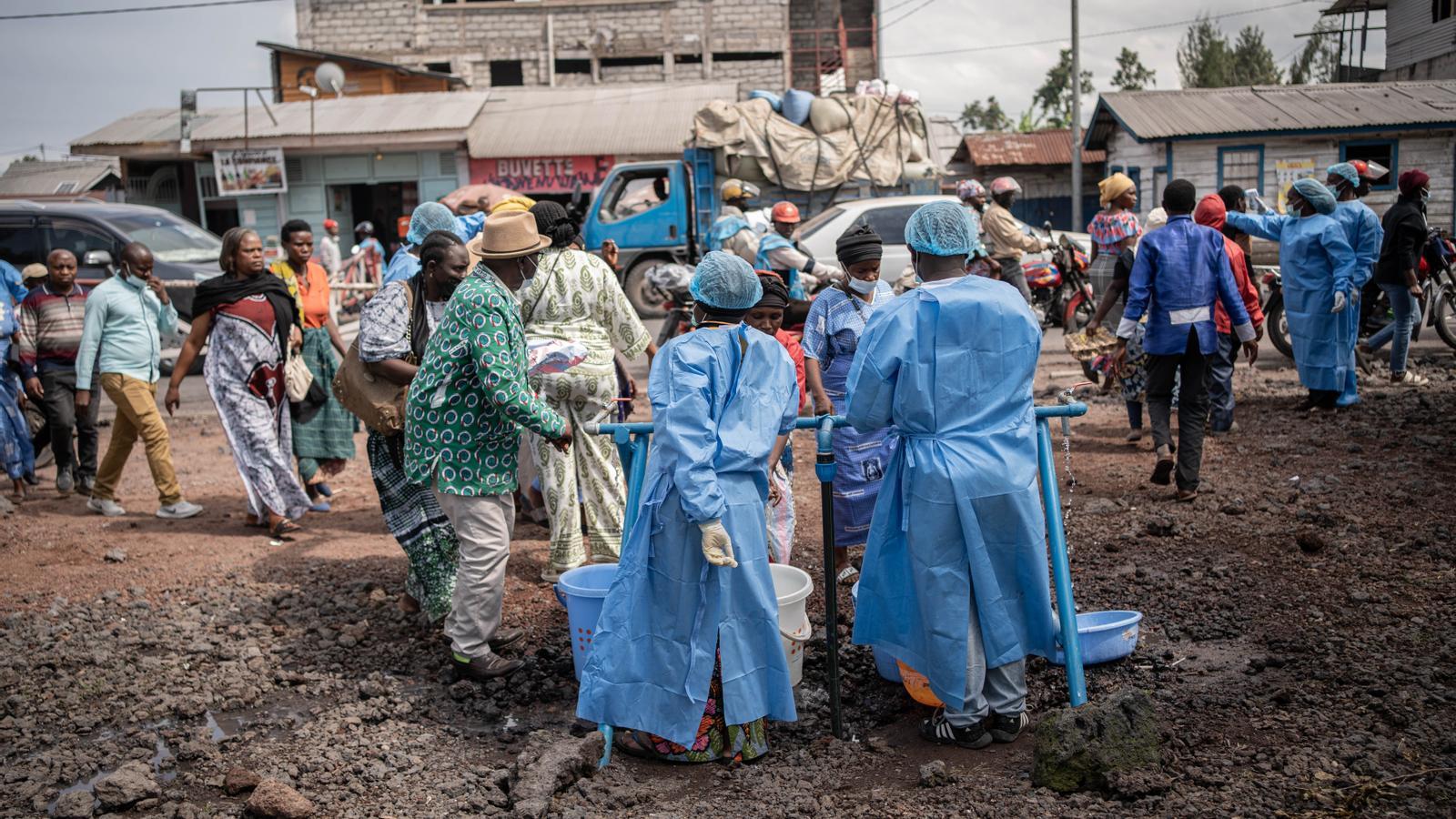
BarcelonaThe World Health Organization (WHO) is closely monitoring the worrying Ebola outbreak originating in the Democratic Republic of Congo (DRC) which has already spread to Uganda. This Saturday, the organization's Director-General, Tedros Adhanom Ghebreyesus, arrived in Bunia, the capital of the eastern province of Ituri and the epicenter of the epidemic, to meet with local and provincial authorities and with WHO staff deployed on the ground. The director championed the country's fight against this disease as it faces its seventeenth epidemic: "This country has extensive experience in fighting Ebola and has already overcome it 16 times. We know that the DRC will contain this epidemic again."
The public health agency of the African Union (AU) estimates 246 "suspected deaths" registered in the DRC, and in Uganda, nine cases have already been confirmed, including one death from an imported case of a Congolese national. The outbreak corresponds to the Bundibugyo strain, which has a fatality rate of between 30% and 50% and for which there is no vaccine or treatment. Faced with this scenario, the WHO Director-General believes that solutions are needed that are tailored to the needs of each of the communities affected by the outbreak. "Communities understand their own challenges better than anyone and are often best able to propose solutions adapted to their realities."
Three affected communities
In this regard, the Congolese Minister of Health, Roger Kamba, has shown some optimism regarding the evolution of the epidemic, as well as the effectiveness of the measures taken to contain it. "The best possible scenario is that all these combined interventions allow us to gradually reduce transmission in the three affected provinces," Kamba assured. These three provinces are Ituri, North Kivu, and South Kivu. However, Ituri is the one that concentrates almost all the infections, while North Kivu has "around twenty" cases and South Kivu only one.
That said, the areas affected by the virus are immersed in a long conflict between the Congolese army and rebel groups operating in the area, which is why the WHO has reiterated the call for a ceasefire to facilitate the response to the epidemic. "While we fight this epidemic by your side, we remain committed to ensuring that other essential services, as well as humanitarian assistance, continue to be provided to communities and beyond," he said.
